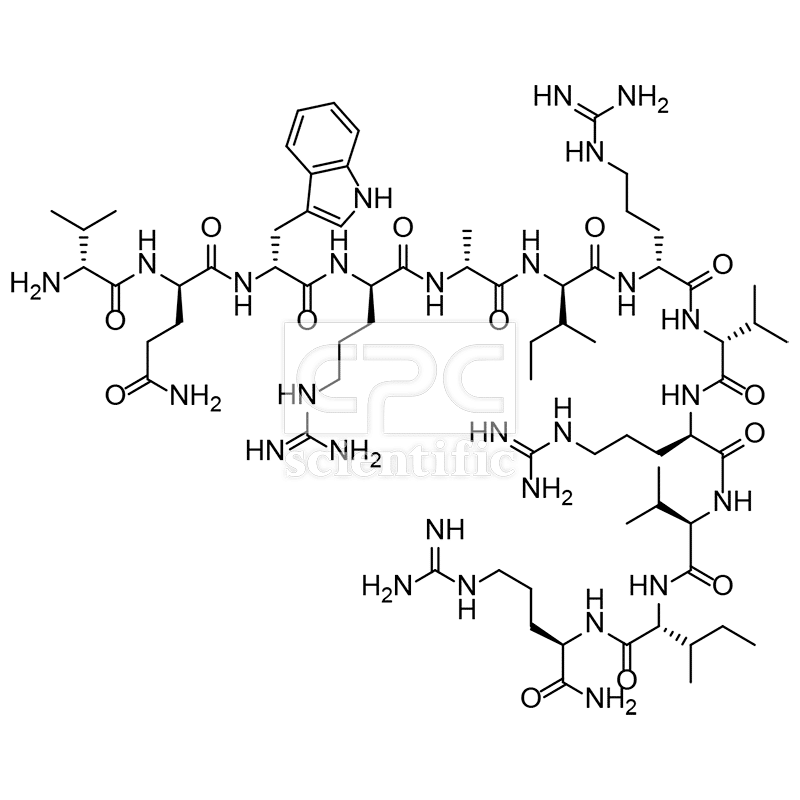
Natural peptides have limited use as therapeutics because they are very susceptible to degradation by host and bacterial protease enzymes. Natural peptides have limited use as therapeutics because they are very susceptible to degradation by host and bacterial protease enzymes. D-enantiomeric peptides are effective in inhibiting biofilm growth and eradicating certain types of multiply antibiotic-resistant Gram-negative bacteria.
DFK is an all D-enantiomeric, protease-resistant peptide with broad-spectrum anti-biofilm activity.
DJK-5 Citations
-
- Zhang, Tian, et al. Journal of Endodontics (2021).
- Alford, M. A., et al. Frontiers in Cellular and Infection Microbiology 2021, 11, 75.
- Kłodzińska, Sylvia N., et al. Nanomedicine: Nanotechnology, Biology and Medicine 20, 102022 (2019).
- Huang, Xiangya, et al. Journal of Endodontics 45.12 (2019): 1522-1528.
- Reffuveille, Fany, et al. Frontiers in Microbiology 9 (2018): 2865.
- Wang, Dan, et al. Bioactive Materials 3.4 (2018): 418-425.
- Pletzer, Daniel, Sarah C. Mansour, and Robert EW Hancock. PLoS Pathogens 14.6 (2018): e1007084.
- Haney, Evan F., et al. Biomolecules 8.2 (2018): 29.
- Pletzer, Daniel, et al. Frontiers in Microbiology 8 (2017): 1867.
- Zhang, Tian, et al. PloS One 11.11 (2016): e0166997.
- Mansour, Sarah C., et al. EBioMedicine 12 (2016): 219-226.
- Ribeiro, Suzana Meira, et al. Antimicrobial Agents and Chemotherapy 59.7 (2015): 3906-3912.
- De La Fuente-Núñez, César, et al. Chemistry & Biology 22.2 (2015): 196-205.