
Peptides play a key role in the pharmaceutical industry and drug therapeutic development; however, their in vivo applications are sometimes limited due to fast degradation by proteases, poor solubility, antigenic responses, and glomerular filtration in the kidney. The covalent attachment of polyethylene glycol (PEG) chains to peptides is one approach that can reduce immunogenicity, improve solubility, and reduce renal clearance. The addition of monodispersed PEG chains may be a factor in the development of safe and effective PEGylated peptide therapeutics and can be crucial for achieving optimal therapeutic results.
PEGylation Chemistry
PEGylation is now a well-established technique in the field of targeted drug delivery systems. As more PEGylated therapeutic agents receive FDA approval, more attention has been given to site-specific PEGylation of discrete or monodispersed PEG chains. Polydispersed PEG chains conjugated to biological molecules can have variations in dispersity and be difficult to characterize creating additional hurdles for FDA approval.
CPC Scientific can perform site-specific PEGylation at a variety of sites on the peptide. N-terminal PEGylation can be accomplished by direct PEG carboxylic acid coupling or native chemical ligation with PEG thioester and a cysteine residue. C-terminal is more complicated, but can be achieved through a thiocarboxylic acid modification and sulfone-azide PEG reagent. Hydrazide modifications combined with a pyruvoyl PEG reagent is also a useful approach to C-terminal PEGylation. In addition to the N- and C-terminal, PEGlyation is also possible at virtually any amino acid side chain bearing the appropriate functional group.
Common PEG Abbreviations
| Abbrev. | Full PEG Chain Name |
|---|---|
| PEG | monoethylene glycol |
| PEG2 | diethylene glycol |
| PEG3 | triethylene glycol |
| PEG4 | tetraethylene glycol |
| mini-PEG2 | 8-amino-3,6-dioxaoctanoic acid |
| mini-PEG3 | amino-3,6,9-trioxaundecanoic acid |
| NH2-PEG2-acid | 3-(2-(2-Aminoethoxy)ethoxy)-propanoic acid |
| PEG750 | Poly(ethylene glycol) methyl ether (average Mn 750) |
| PEG1000 | Poly(ethylene glycol) methyl ether (average Mn 1000) |
| PEG2000 | Poly(ethylene glycol) methyl ether (average Mn 2000) |
| PEG5000 | Poly(ethylene glycol) methyl ether (average Mn 5000) |
In this context, three methodologies are often used for site-specific PEGylations:
- Click Chemistry, which takes place between an azide group of the PEG reagent and an alkyne group of the peptide, or vice versa.
- Suzuki-Miyaura Coupling, which takes place between the iodophenyl group of the PEG reagent and an aryl boronic acid group of peptide, or vice versa.
- Sonogashira Coupling, which takes place between an iodophenyl group of the PEG reagent and an alkyne group of the peptide, or vice versa.
Common PEG Linkers for Peptide Conjugation
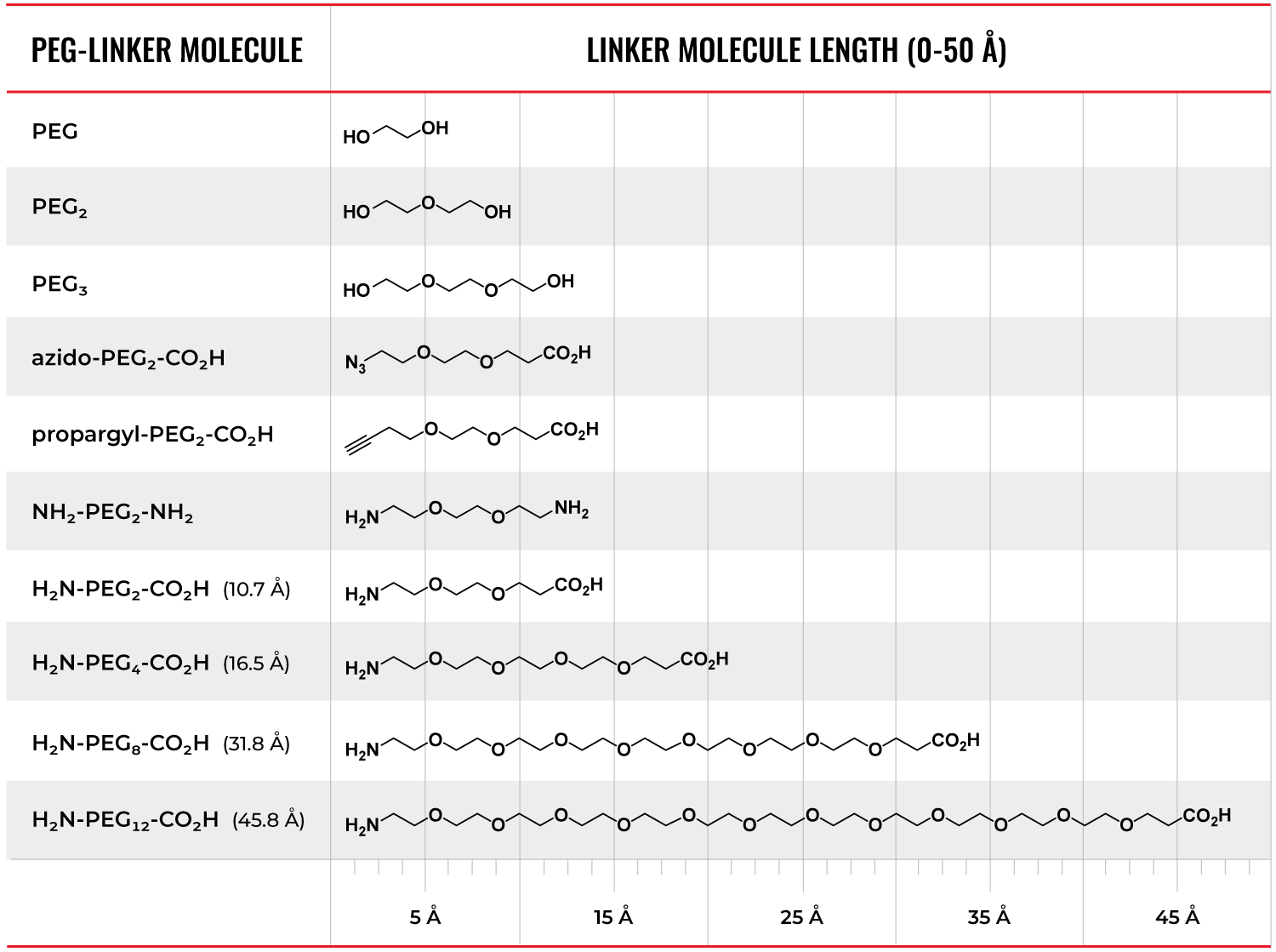
PEGylation and Peptide Bioavailability
PEGylation offers multiple physiochemical and pharmacokinetic benefits to peptide-based therapeutics. Following covalent attachment of a PEG chain to a peptide, the PEG-peptide conjugate has longer blood circulation times, increased solubility, and reduced immunogenicity. Longer circulation times (i.e., enhanced bioavailability) also results in a lower frequency of dosings and lower dosing amounts. The increased steric hindrance from the PEG chain can hinder much of the non-specific protease interactions. N-terminal PEGylation can specifically block endopeptidases and provide steric hindrance to proteolytic enzymes. In a similar fashion, PEG chains can block epitope sites on the peptide from antibody binding.
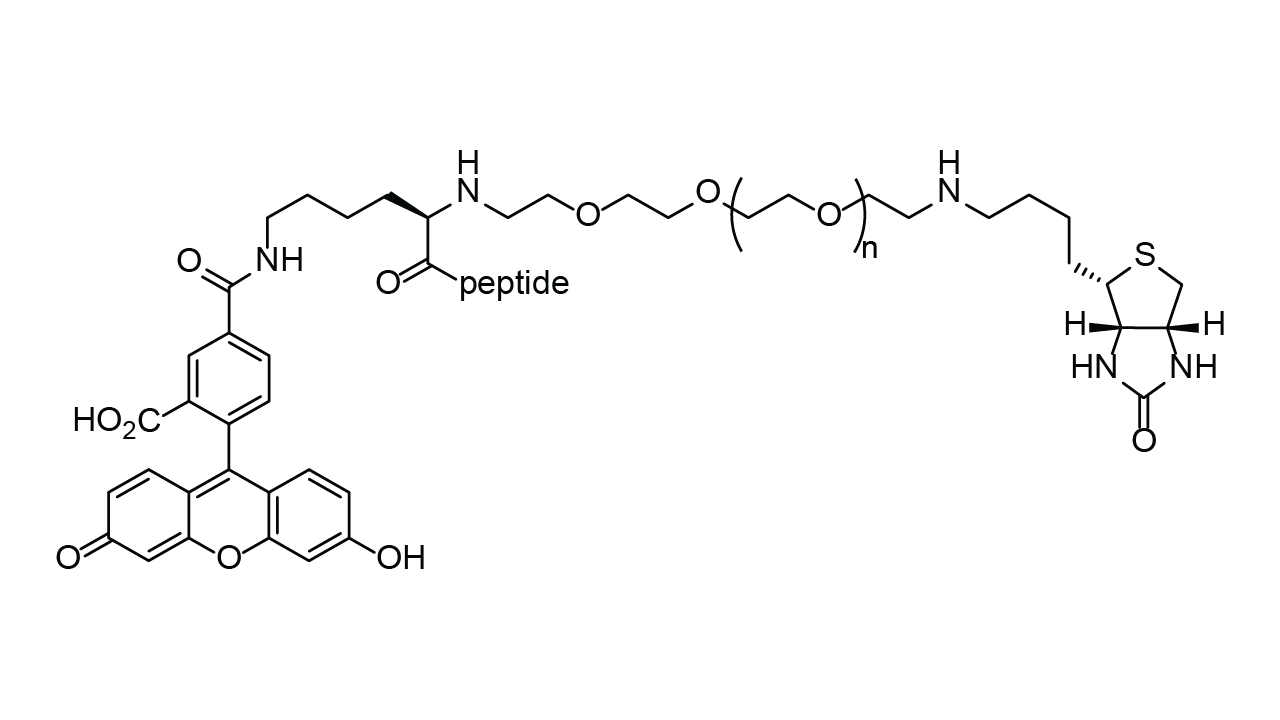
Warren, Andrew D., et al. Journal of the American Chemical Society 136.39 (2014): 13709-13714.
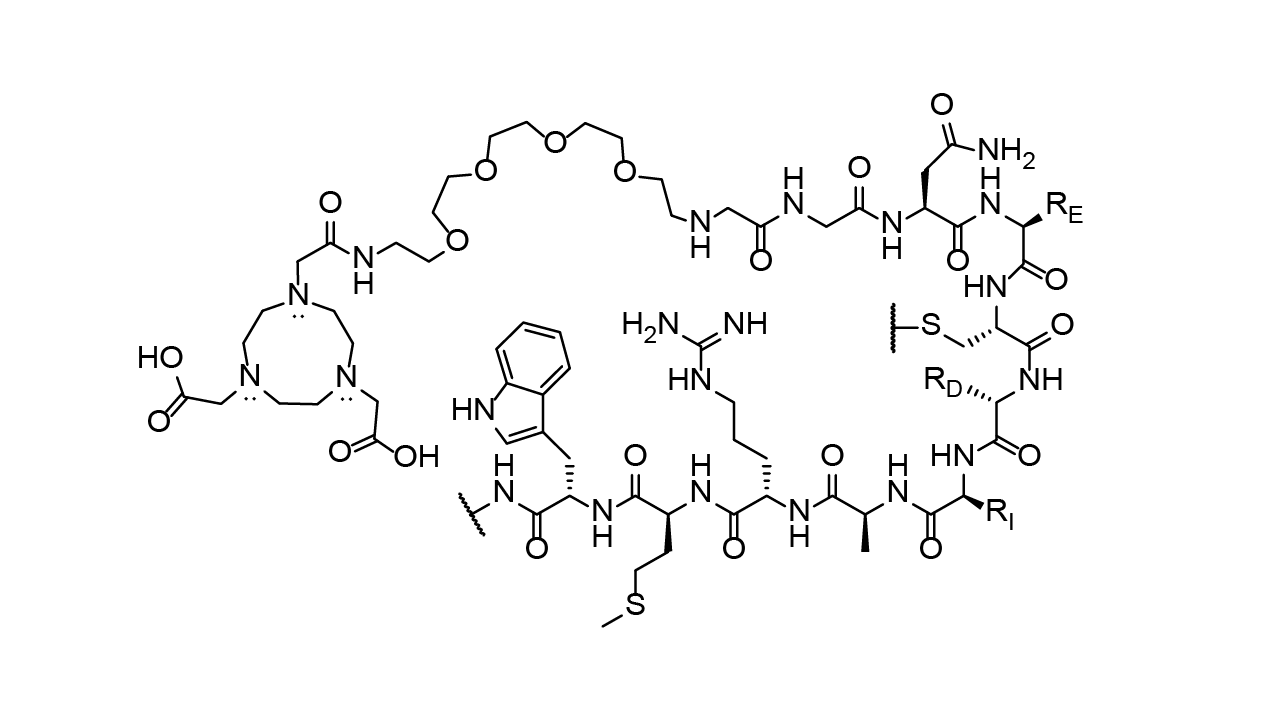
Marquez, B. V., et al. J Nucl Med 2014, 55 (6), 1029-34.
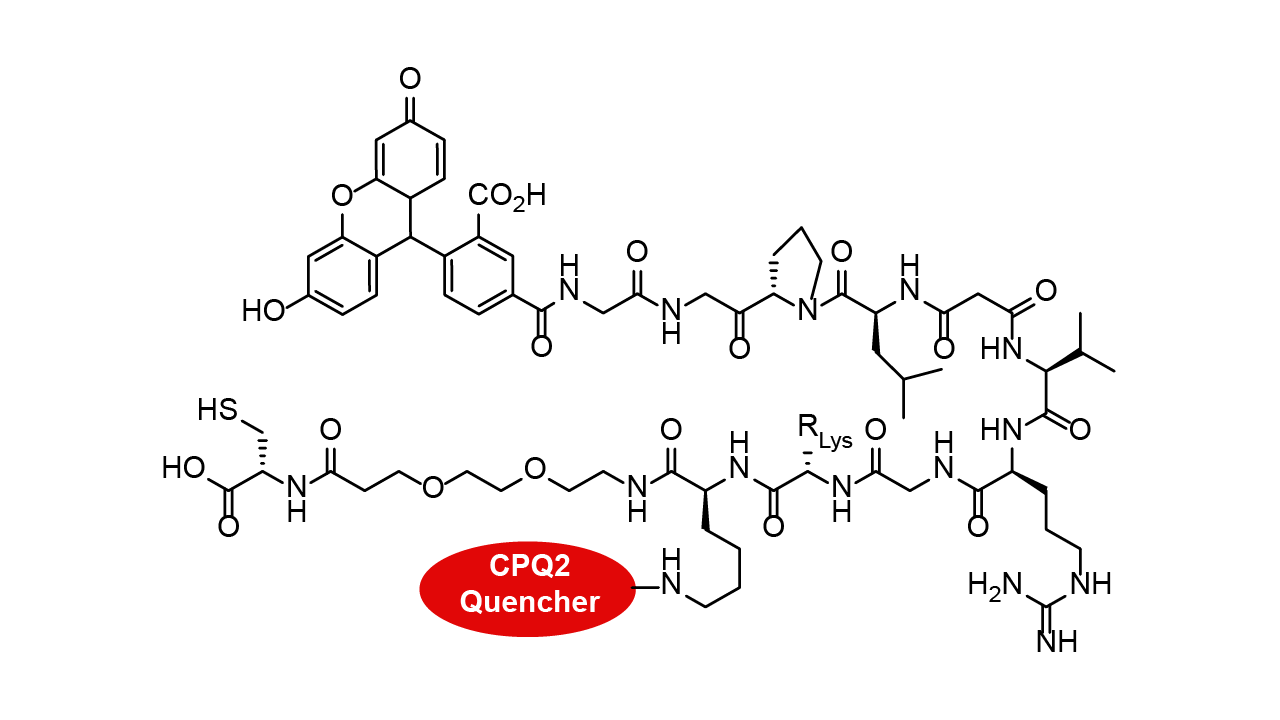
Kwon, Ester J., Jaideep S. Dudani, and Sangeeta N. Bhatia. Nature Biomedical Engineering 1 (2017): 0054.
With the advancement of more sensitive and non-invasive imaging techniques (e.g. PET, SPECT), more interest has focused on the drugability of targeting peptide-chelate conjugates. Spacers between the peptide and chelate (e.g., DOTA, NOTA, etc) are often incorporated to improve the peptide binding affinity. PEG spacers offer advantages over hydrocarbon spacers due to their increased hydrophilicity. Profound increases in tumor uptake and retention have been observed in PEGylated RGD-based probes.[1]
Imaging peptide-based probes can be easily modified to improve and extend the duration of target uptake. Vascular endothelial growth factor (VEGF) is an important target for imaging probes because it is over-expressed in cerain cancer cells that stimulate angiogenesis. Anti-VEGF monoclonal antibody, bevacizumab, successfully targets VEGF and has been approved by the FDA for noninvasive PET and SPECT imaging of VEGF. The v107 peptide also binds to VEGF, but only with micromolar affinity that is insufficient for targeted molecular imaging. Marquez and co-workers redesigned the peptide by substituting leucine-19 for a lysine residue and incorporating a chelating moiety, 1,4,7-triazacyclononane-1,4,7-triacetic acid (NOTA), at the N-terminus separated by a PEG4 spacer (above on left). The resultant sequence, NOTA-PEG4- GGNECDIARMWEWECFERK-NH2, was then cross-linked with 5-fluoro-2,4-dinitrobenzene to form a covalent bond with lysine-19 (L19K-FDNB). This modification increases binding affinity because it enables the peptide probe to irreversibly bind to VEGF by a covalent attachment to a site inside the binding pocket of the protein. The inert and flexible characteristic of the PEG linker provides distance between the peptide cargo carrier (e.g., NOTA) for optimal binding to the receptor.
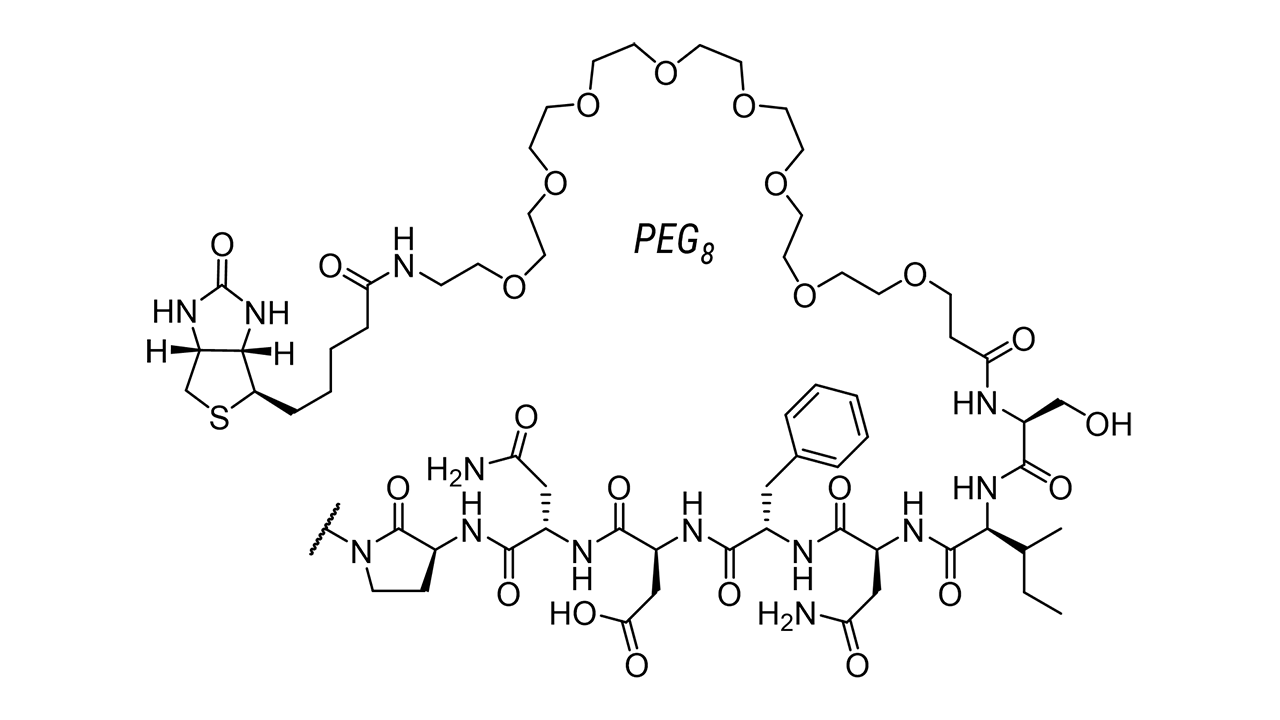
Dvir, Hay, et al. Proceedings of the National Academy of Sciences 109.18 (2012): 6916-6921.
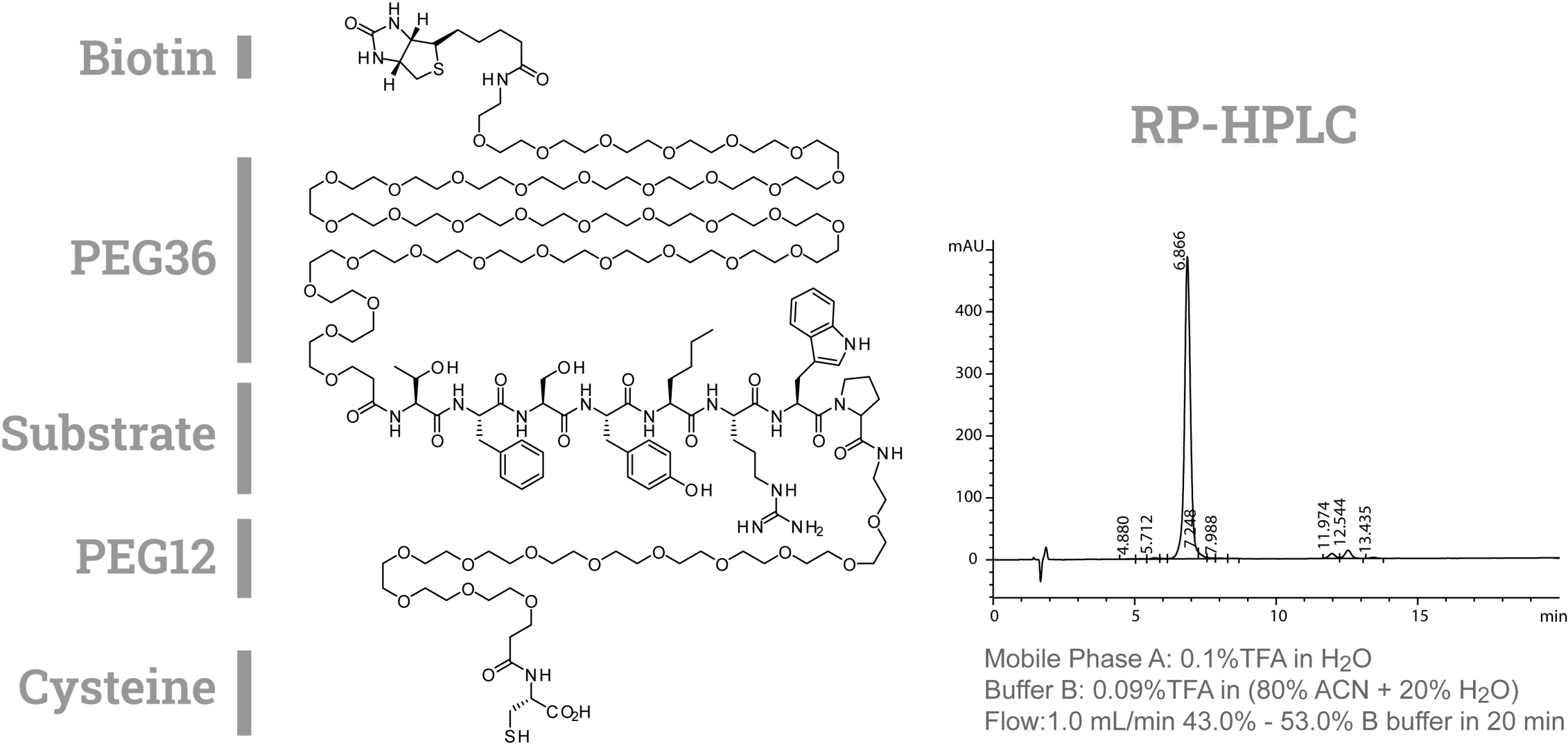
Adem, Sandeep, Sonal Jain, Michael Sveiven, Xiahan Zhou, Anthony J. O’Donoghue, and Drew A. Hall. Scientific Reports 10, no. 1 (2020): 1-10
Peptide PEGylation Citations
Chen, D., Mirski, M. A., Chen, S., Bryden, W. A., McLoughlin, M., Kiser, K. M., Caton, E. R., Haddaway, C. R., Cetta, M. S., & Pan, Y. PNAS nexus (2024), 3(9).
PEG36-Nle(O-Bzl)-Met(O)2-Oic-Abu-ACC was designed in house and synthesized by CPC Scientific Inc (San Jose, CA, Fig. S1). Amino-PEG36-acid (CAS: 196936-04-6) and 2-(7-amino-2-oxochromen-4-yl)acetamide (CAS:296236-23-2) were used for the synthesis. The synthesized sensor was resuspended in high-performance liquid chromatography (HPLC)-grade water with a concentration of 200 µM.
The synthesis of the linear RP-182 analog, bicyclo[6.1.0]non-4-yn-9-ylmethyloxycarbonyl-PEG2-Lys-Phe-Arg-Lys-Ala-Phe-Lys-Arg-Phe-Phe-Lys(azido-PEG)-NH2, was achieved using standard solid-phase peptide synthesis (SPPS) protocols. After cleaving the linear peptide from the resin, macrocyclization was performed in the liquid phase through a strain-promoted click reaction. BCN introduces extra ring strain due to its fused cyclopropane structure. The combined effect of ring strain, the selection of BCN, and copper catalysis significantly increases the macrocyclization efficiency of longer peptides like RP-182.
Singh, S.S., Calvo, R., Kumari, A., Sable, R.V., Fang, Y., Tao, D., Hu, X., Castle, S.G., Nahar, S., Li, D. and Major, E. Molecular Cancer Therapeutics (2024).
- CPC Scientific Inc., 160E Tasman Dr., Suite 200, San Jose, CA 95134
[..] assembling the peptide on the Rink Amide resin and attaching the PEG azide moiety to the N-terminal Lys, the Dde group was removed as previously shown and coupled to the Fmoc-PEG2-acid. Removal of the Fmoc followed by simultaneously click/coupling to bicyclo[6.1.0]non-4-yn-9-ylmethyl (2,5-dioxopyrrolidin-1-yl) carbonate gave 1c which was deprotected and cleaved from the resin to give 1c.
Bekdemir, Ahmet, Eden EL Tanner, Jesse Kirkpatrick, Ava P. Soleimany, Samir Mitragotri, and Sangeeta N. Bhatia Advanced Healthcare Materials (2022): 2102685.
Peptides [TDN-qFAM, C-(PEG)2-K(CPQ2)-GGGSRPfGG-5FAM] were obtained from Tufts University Peptide Core Facility or CPC Scientific, Inc (USA)
Soleimany, Ava P., [..] Sangeeta N. Bhatia. Cancer Research 81, no. 1 (2021): 213-224.
All peptides were synthesized by CPC Scientific (Sunnyvale, CA) and reconstituted in dimethylformamide (DMF) unless otherwise specified. Sequences are provided in Supplementary Table S1.
Ramasubramanian, Anusuya, Riya Muckom, Caroline Sugnaux, Christina Fuentes, Barbara L. Ekerdt, Douglas S. Clark, Kevin E. Healy, and David V. Schaffer. ACS Biomaterials Science & Engineering 7, no. 4 (2021): 1344-1360.
A cyclic 11-MUA adhesion peptide (CPC Scientific Inc., Sunnyvale, CA) was also synthesized via standard Fmoc chemistry and cyclized via a lactam bond between Asp(1) and Lys(9) to form (11-MUA)-GG-PEG 2 -cyclo(DMGDGRPRK)-NH 2 or 11-MUA-cyclic (7C-1).
Paul S. Marinec, Kyle E. Landgraf, Maruti Uppalapati, Gang Chen, Daniel Xie,‡ Qiyang Jiang, Yanlong Zhao, Annalise Petriello, Kurt Deshayes, Stephen B. H. Kent, Dana Ault-Riche*, and Sachdev S. Sidhu* ACS Chem. Biol. 2021, 16, 3, 548–556.
- Chinese Peptide Company, Hangzhou Economic and Technical Development Zone, China, 310018.
"The D-VEGF-A polypeptide chain (COOH acid, residues 8-109 (1)) was chemically synthesized using solid phase peptide synthesis (SPPS) and native chemical ligation, and folded to form the protein covalent homodimer, using methods adapted from our previous work [..]"
Chan, Leslie W., Melodi N. Anahtar, Ta-Hsuan Ong, Kelsey E. Hern, Roderick R. Kunz, and Sangeeta N. Bhatia. Nature Nanotechnology (2020): 1-9.
HFA-modifed peptides were synthesized by CPC Scientifc (>95% purity). Briefy, the peptide substrate, Ac-CKKK(Cy5)-PEG4-Nle(O-Bzl)-Met(O)2-Oic-Abu-OH, was synthesized on Fmoc-Abu-CTC resin via standard Fmoc solid phase peptide synthesis.
Hao, Liangliang, Renee T. Zhao, Chayanon Ngambenjawong, Heather E. Fleming, and Sangeeta Bhatia. bioRxiv (2020).
All peptides were chemically synthesized by CPC Scientific, Inc. [..] K(N3)-ANP-GPVPLSLVMGGC [..] 5FAM-GGf-Pip-KSGGGK(CPQ2)-PEG2-GC
Buss, Colin G., and Sangeeta N. Bhatia. Proceedings of the National Academy of Sciences (2020).
Tandem Peptides. Tandem peptides were purchased from CPC Scientific. Sequences are: mTP-TAMRA-LyP1 (Myr-GWTLNSAGYLLGKINLKALA-ALAKKILGGGGK(5TAMRA)-CGNKRTRGC (C-C bridge)); [..] PEGylated formulations of these peptides were synthesized as previously described (49). The sequences are: [..] mTP-PEG-ARAL (Myr-GWTLNSAGYLLGKINLKALA-ALAKKILC-PEG5K-GGGARALPSQRSR).
Kudryashev, Julia A., Lauren E. Waggoner, Hope T. Leng, Nicholas H. Mininni, and Ester J. Kwon. ACS Sensors (2020).
Calpain substrate peptide (QSY21-QEVYGAMP-K(Cy5)-PEG2-GC- NH2) was synthesized by CPC Scientific Inc. (Sunnyvale, CA …
Adem, Sandeep, Sonal Jain, Michael Sveiven, Xiahan Zhou, Anthony J. O’Donoghue, and Drew A. Hall. Scientific Reports 10, no. 1 (2020): 1-10
Biotin-PEG36-Thr-Phe-Ser-Tyr-Nle-Arg-Trp-Pro-PEG12-Cys (known as peptide) was synthesized by CPC Scientific..
Melgar-Asensio, Ignacio, et al. Investigative Ophthalmology & Visual Science 59.10 (2018): 4071-4081.
Thio-peptide: NH2-Cys-PEG4-Sar-YNLYRVRS-NH2, MW 1,490 g/mol was custom synthesized, via solid state methods by CPC Scientific (Sunnyvale, CA, USA).
Marquez, B. V., et al. J Nucl Med 2014, 55 (6), 1029-34.
"L19K was synthesized by CPC Scientific and comprised the sequence NO2A-PEG4-GGNECDIARMWEWECFERK-CONH2, with Cys-Cys disulfide bridge and polyethylene glycol (PEG4) as a spacer between peptide and chelator. "
Kwon, Ester J., Jaideep S. Dudani, and Sangeeta N. Bhatia. Nature Biomedical Engineering 1 (2017): 0054.
[..] MMP substrate, 5-FAM–GGPLGVRGKK(CPQ2)–PEG2–C; thrombin substrate, 5-FAM–GGfPRSGGGK(CPQ2)–PEG2–C; where 5-FAM is the 5-carboxyfluorescein fluorophore, CPQ2 is the quencher, PEG2 is the linker polyethylene glycol, [..] dye for urinary detection (biotin–CGPLGVRGKK(Cy7)eGvndneeGffsar; Cy7 is cyanine7). Targeting peptides were [..] cyclized: LyP1, C–K(5-FAM)–C6–CGNKRTRGC; iRGD, C–PEG2–CRGDKGPDC; where C6 is the 6-aminohexanoic acid linker [..]
Novel theranostic nanoporphyrins for photodynamic diagnosis and trimodal therapy for bladder cancer.
Lin, Tzu-Yin, et al. Biomaterials 104 (2016): 339-351.
"Our previously reported PLZ4-PEG 5k -CA 8 telodendrimer was synthesized by the conjugation of alkyne-derivatized bladder cancer targeting ligand PLZ4 (CPC Scientific, Sunnyvale, CA)"
Skerratt, Sarah E., Sian Humphreys, Rita Ferreira, Csilla Jorgensen, Joe Warmus, Lei Zhao, Xiaohe Tong, and Sarah A. Nickolls. MedChemComm 7, no. 8 (2016): 1564-1571.
- Pfizer Neusentis, The Portway Building, Granta Park, Cambridge, UK.
- Pfizer Worldwide Research & Development, Eastern Point Road, Groton, Connecticut 06340, USA.
- CPC Scientific Inc., 1245 Reamwood Avenue, Sunnyvale, CA 94089, USA.
"antipeptide (EGVYVHPV), angiotensin II, human (DRVYIHPF), and isotopically (13C) labeled heptapeptide (AAAAHAA-NH2 [where “A” indicates a carbon thirteen (13C) "Synthesis was conducted at CPC Scientific Inc. Ac-Asp(OtBu)-Thr(tBu)-His(Trt)-Phe-Pro-Ile-Cys(Trt)-Ile-PhePEG3-Arg(Pbf)-Arg(Pbf)-Lys(Boc)-wang resin (2).. Ac-Asp-Thr-His-Phe-Pro-Ile-Cys-Ile-Phe-PEG3-Arg-Arg-Lys(BODIPY_TMR_C6)."
Dudani, Jaideep S., et al. ACS Nano 9.12 (2015): 11708-11717.
"...protease activity are focused on functionalizing synthetic peptide substrates with reporters that emit ... In vivo, veiled nanosensors are selectively activated at the ..... sized by CPC Scientific, Inc. (V1: Biotin-PEG(5 kDa)-(KFAM)-..."
Mastren, Tara, et al. Molecular Imaging 14.10 (2015): 11-22.
"Two versions of the peptide L19K were synthesized by CPC Scientific (Sunnyvale, CA) consisting of the sequence DO3A- or NO2A-PEG4-GGNECDIARMWEWECFERK-CONH2, with a Cys-Cys disulfide bridge and polyethylene glycol (PEG) as a spacer between peptide and chelate."
Kwong, Gabriel A., et al. Proceedings of the National Academy of Sciences 112.41 (2015): 12627-12632.
"Cysteine-terminated peptides (Q1 = 5FAM-GGPLGVRGKK(CPQ-2)-PEG2-C, CPC Scientific.."
Fu, Shushu, et al. Microbes and Infection 17.9 (2015): 665-670.
"The peptides P20A (Ac-AAASGINAEWPLWPGEAGWGRLEGRRTYEAEI-NH 2 ) and biotin-P20A (biotin-PEG4-AAASGINAEWPLWPGEAGWGRLEGRRTYEAEI-NH2 ) were synthesized by CPC Scientific."
Oliveira, E. A., and B. L. Faintuch. Nuclear Medicine and Biology 42.2 (2015): 123-130.
"...4 -c(GX1) 774.9 μM or HYNIC-E-[c(RGDfk)-c(GX1)] 569.5 μM (μg/mL) (CPC Scientific Inc., CA ... 5 /well) were seeded into well culture plates, and it was added the radiotracers 99m Tc-HYNIC-PEG 4 -c ... For nonspecific binding assays, cold conjugate (1 mmol/L/well) was also ..."
Warren, Andrew D., et al. Journal of the American Chemical Society 136.39 (2014): 13709-13714.
"Thrombin-sensitive reporter 1 (R1) was synthesized by CPC Scientific, with the sequence Biotin-PEG5kDa-Lys(5FAM)-Gly-Gly-DPhe-Pro-Arg-Ser-Gly-Gly-Gly-Cys, where PEG5kDa is 5 kDa poly(ethylene glycol)."
Yu, Yang, et al. Science China Life Sciences 57.1 (2014): 117-127.
"The peptides, shown in Figure 1, were designed and synthesized. MPER (RRRNEQELLELDKWASLWNWFDITNWLWYIRRRR), TT peptide (FNNFTVSFWLRVPKVSASHLE), T10HE peptide (FNNFTVSFWLRVPKVSASHLE-PEG2-LWNWF-S5-ITN-S5-LWYIR-PEG2-KK), and T10E peptide (FNNFTVSFWLRVPKVSASHLEPEG2-LWNWFDITNWLWYIR-PEG2-KK) were purchased from CPC Scientific Inc. (Sunnyvale, CA, USA)."
Dvir, Hay, et al. Proceedings of the National Academy of Sciences 109.18 (2012): 6916-6921.
"The biotinylated synthetic LDLR peptide [Biotin-PEG8-SINFDNPVYQKT (CPC Scientific)] was captured to ≈20–50 RU, whereas ≈200 RU of the J.D. mutant peptide (Biotin-PEG8-SINFDNPVCQKT) was required for proper detection of ARH binding."