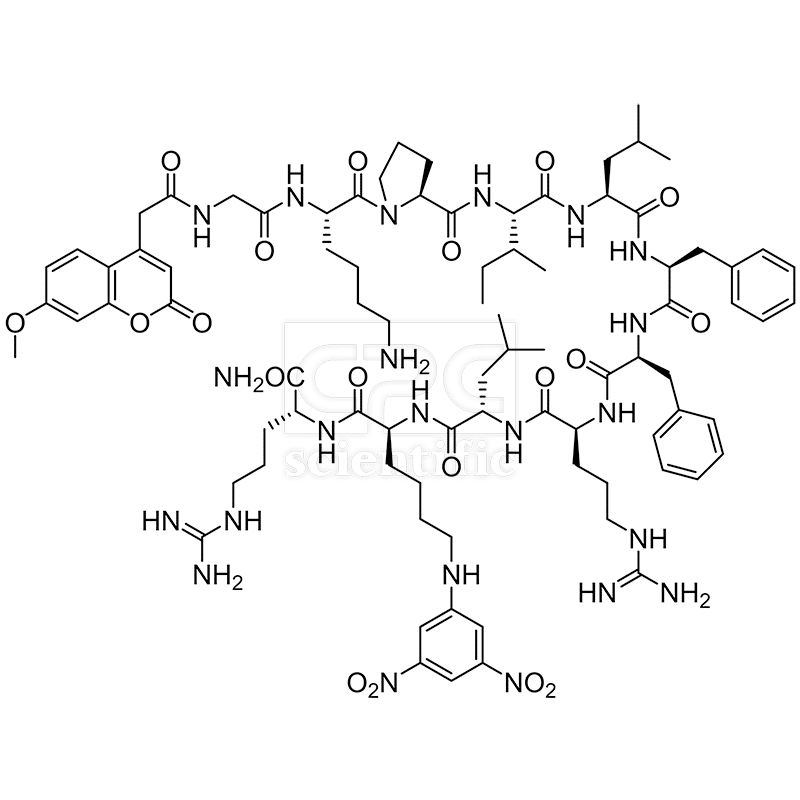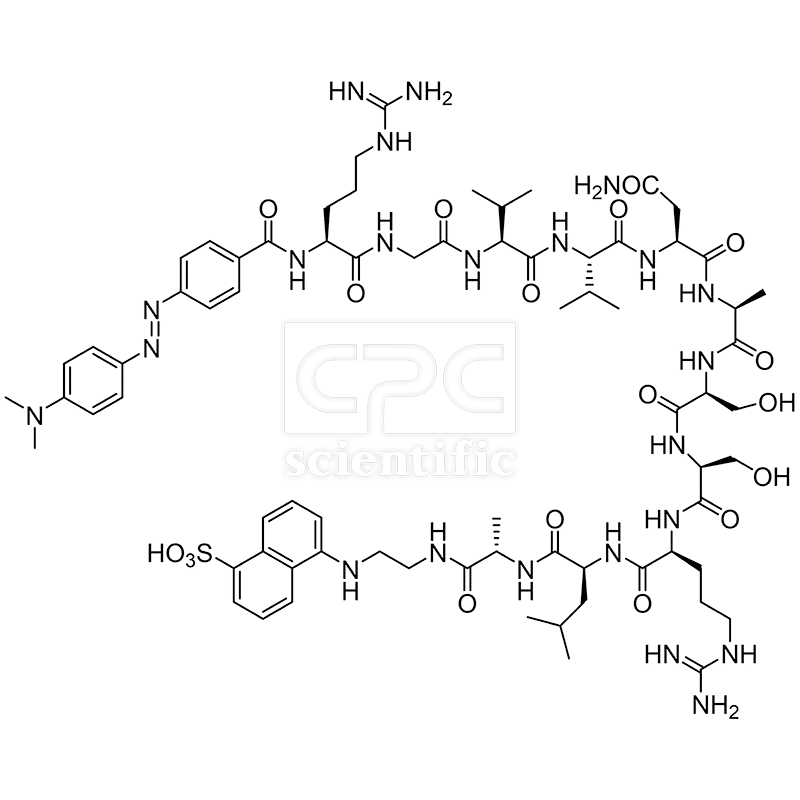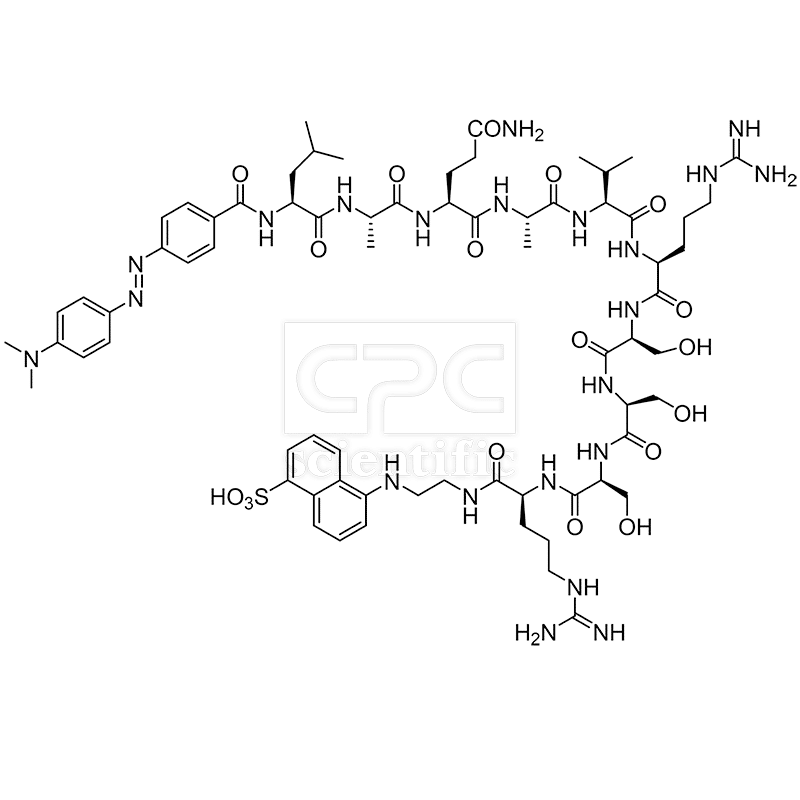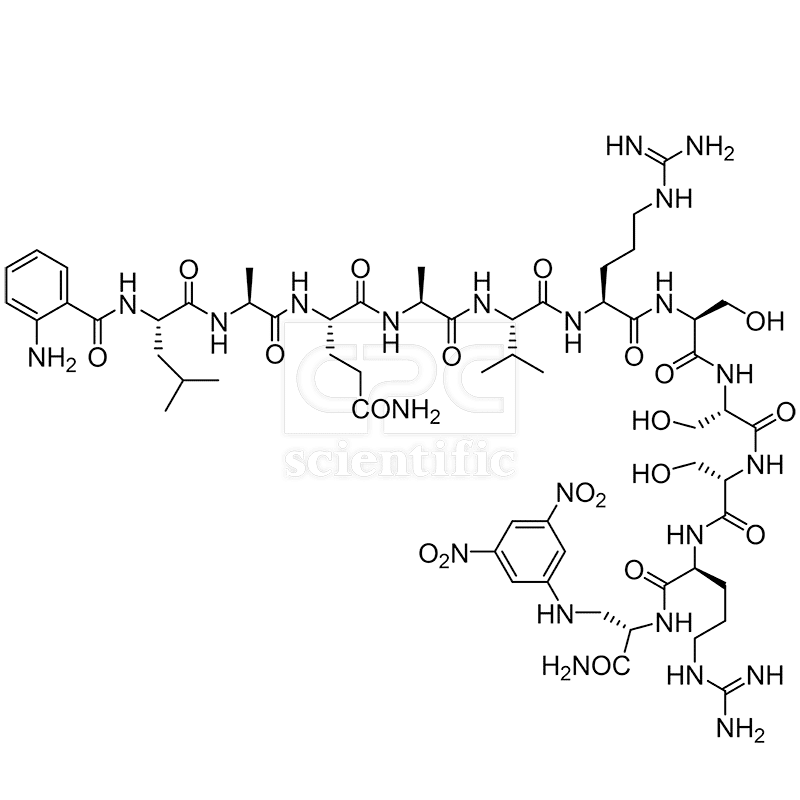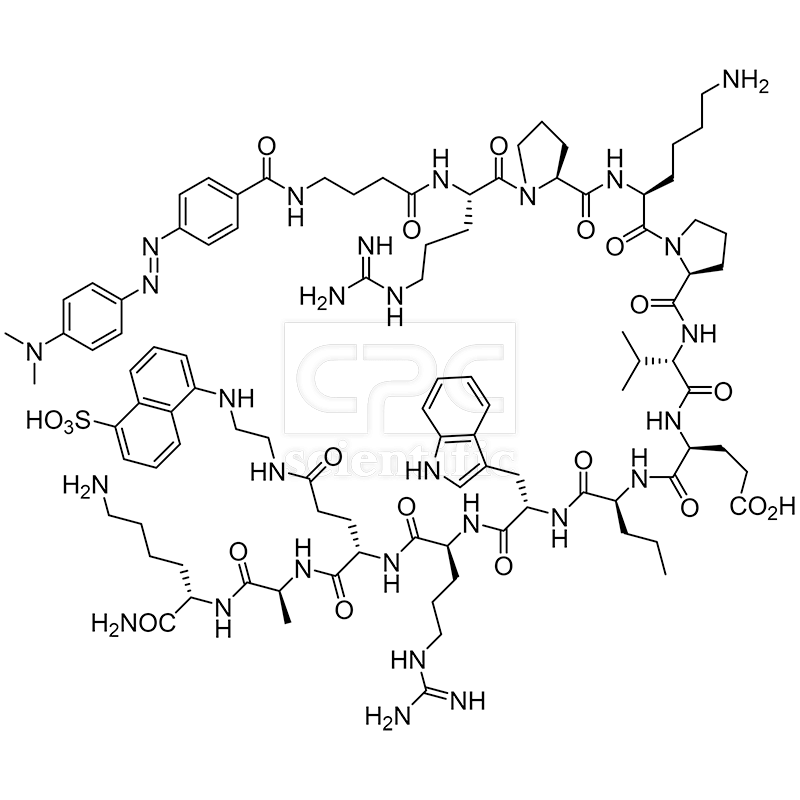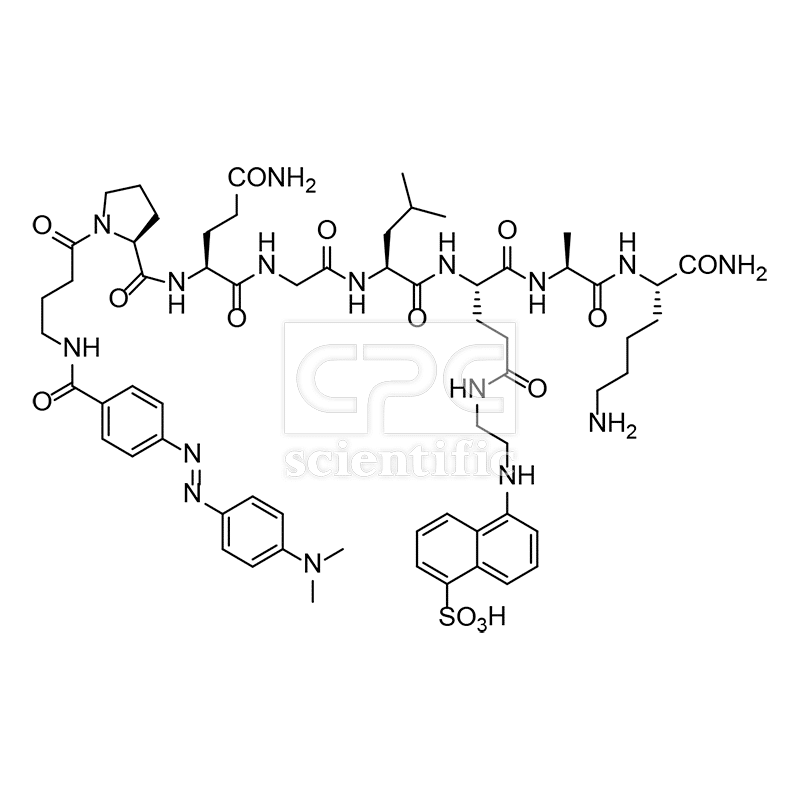
FRET (Fluorescence Resonance Energy Transfer) is a distancedependent dipole-dipole interaction without the emission of a photon, which results in the transfer of energy from an initially excited donor molecule to an acceptor molecule. It allows the detection of molecular interactions in the nanometer range. FRET peptides are labeled with a donor molecule and an acceptor (quencher) molecule. In most cases, the donor and acceptor pairs are two different dyes. The transferred energy from a fluorescent donor is converted into molecular vibrations if the acceptor is a non-fluorescent dye (quencher). When the FRET is terminated (by separating donor and acceptor), an increase of donor fluorescence can be detected. When both the donor and acceptor dyes are fluorescent, the transferred energy is emitted as light of longer wavelength so that the intensity ratio change of donor and acceptor fluorescence can be measured. In order for efficient FRET quenching to take place, the fluorophore and quencher molecules must be close to each other (approximately 10-100 Å) and the absorption spectrum of the quencher must overlap with the emission spectrum of the fluorophore. While designing a donor-quencher FRET system, a careful comparison of the donor’s fluorescence spectrum with the quencher’s absorption spectrum is required.
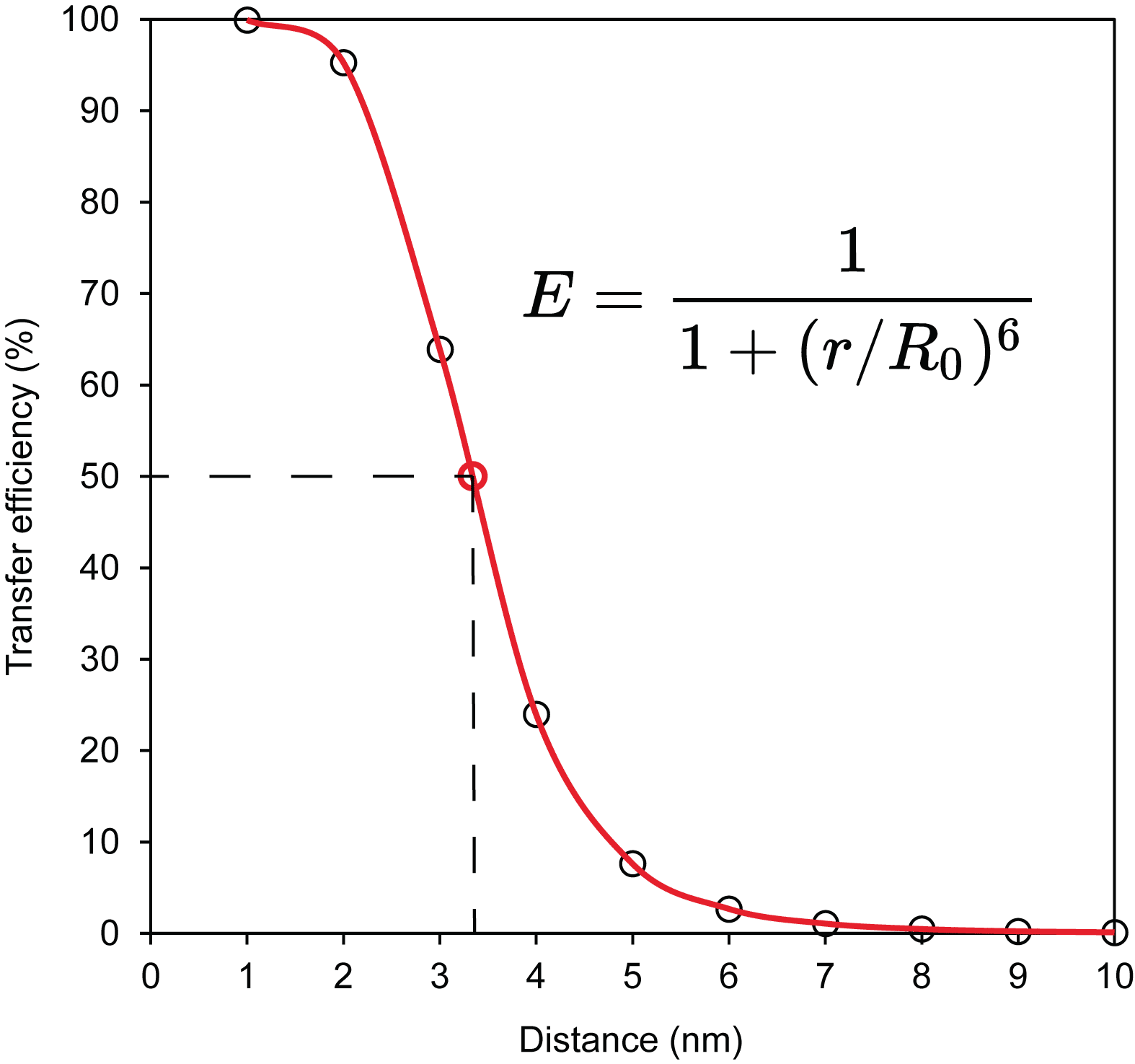
Förster Equation. According to the Förster equation, energy transfer efficiency = 1/(1+r6/Ro6) where r is the distance between the donor and acceptor groups and Ro is distance at which there is 50% energy transfer from donor to acceptor. Ro, also termed Förster radius, for the donor-acceptor pair EDANS-dabcyl is calculated at 3.3 nm.
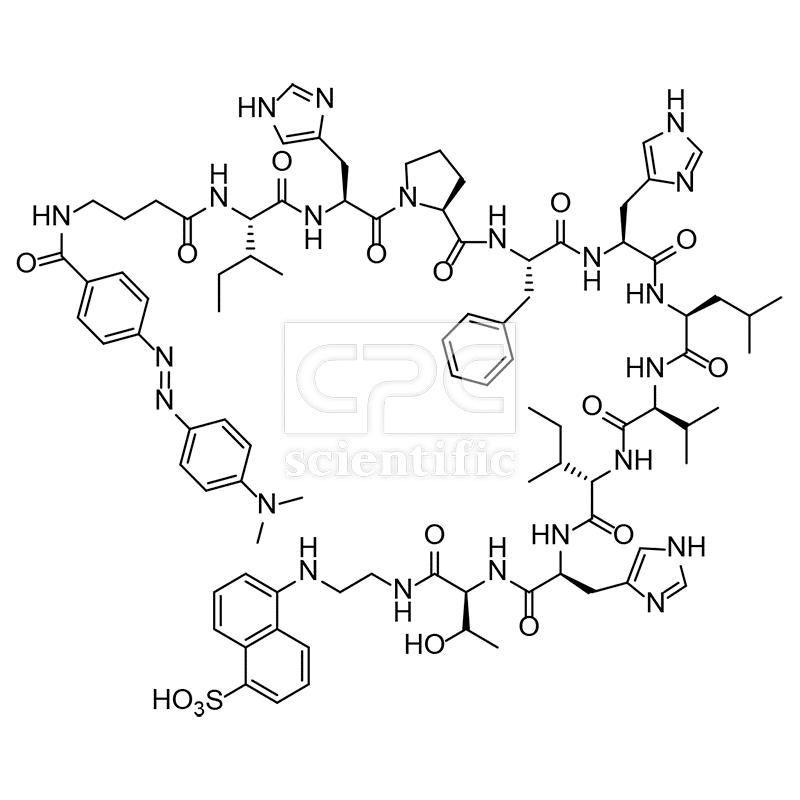
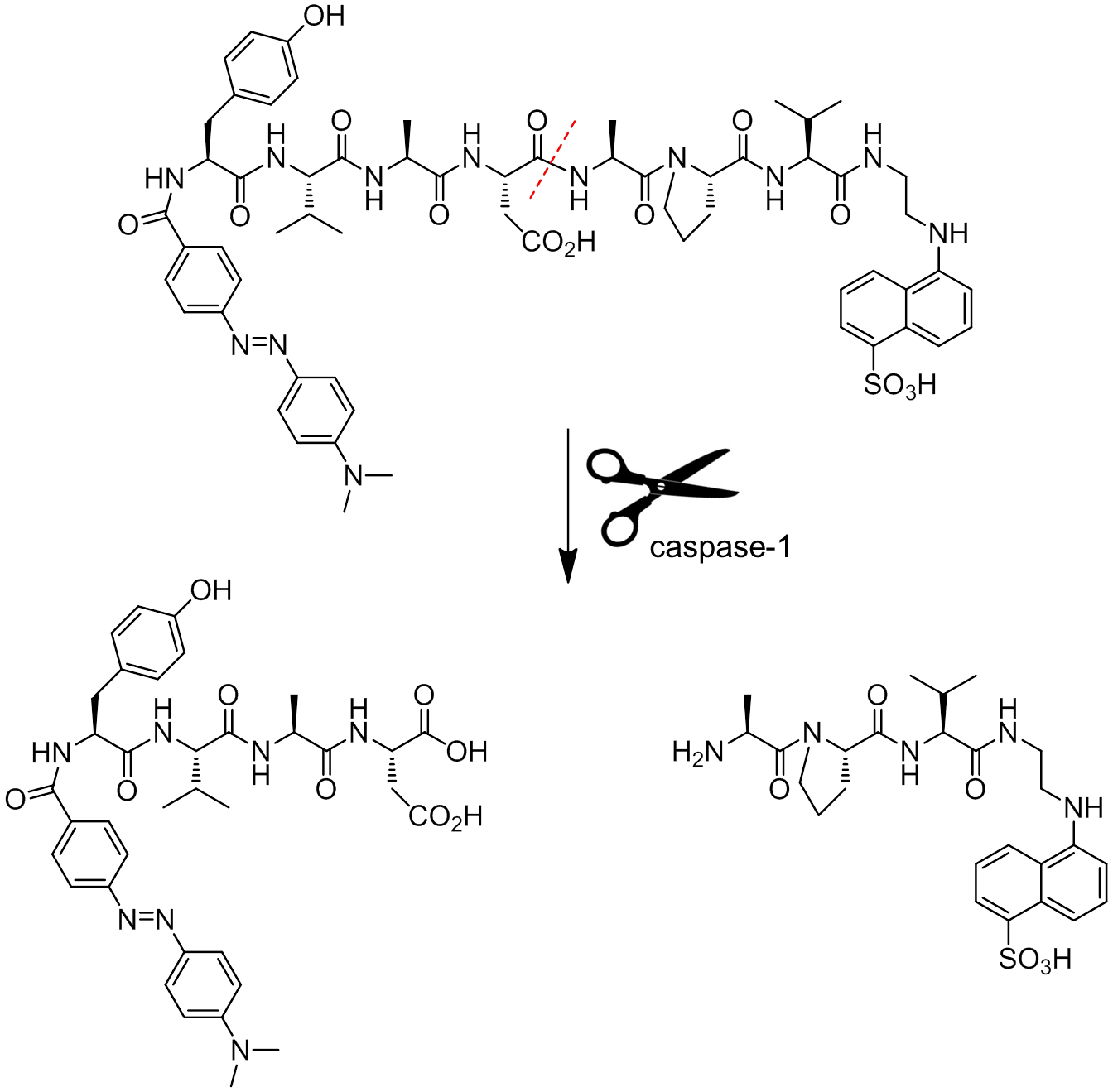
Figure 1. FRET caspase-1 substrate, Dabcyl-Tyr-Val-Ala-Asp-Ala-Pro-Val-EDANS (CASP-023). This fluorogenic caspase-1 substrate enables a continuous assay of caspase-1 helpful in the screening of inhibitory compounds (Km = 11.4 µM, kcat = 0.79 s-1)
CPC Scientific has extensive knowledge in the design and synthesis of peptide FRET substrates. We offer a wide range of FRET substrates to suit your research needs as pre-manufactured FRET peptides or as custom FRET sequences. As part of our services, we provide a free consultation to help you design your FRET peptide and select the appropriate FRET pair (see Table of Common FRET Pairs). We often recommend our trade-marked highly efficient quencher, CPQ2TM, to pair with the fluorescent donor 5-carboxyfluorescein (5-FAM). This efficient pair, 5-FAM/CPQ2,TM has been cited in a variety of publications in research areas spanning from cancer therapeutics to diabetes.
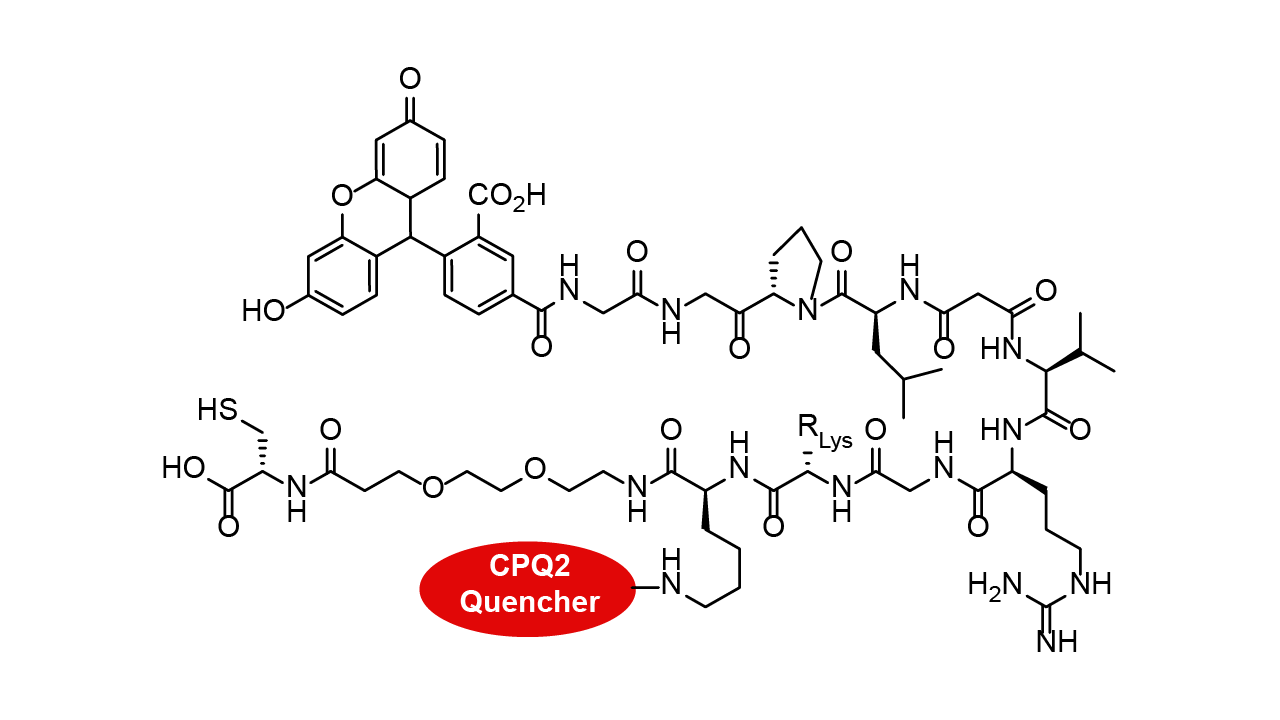
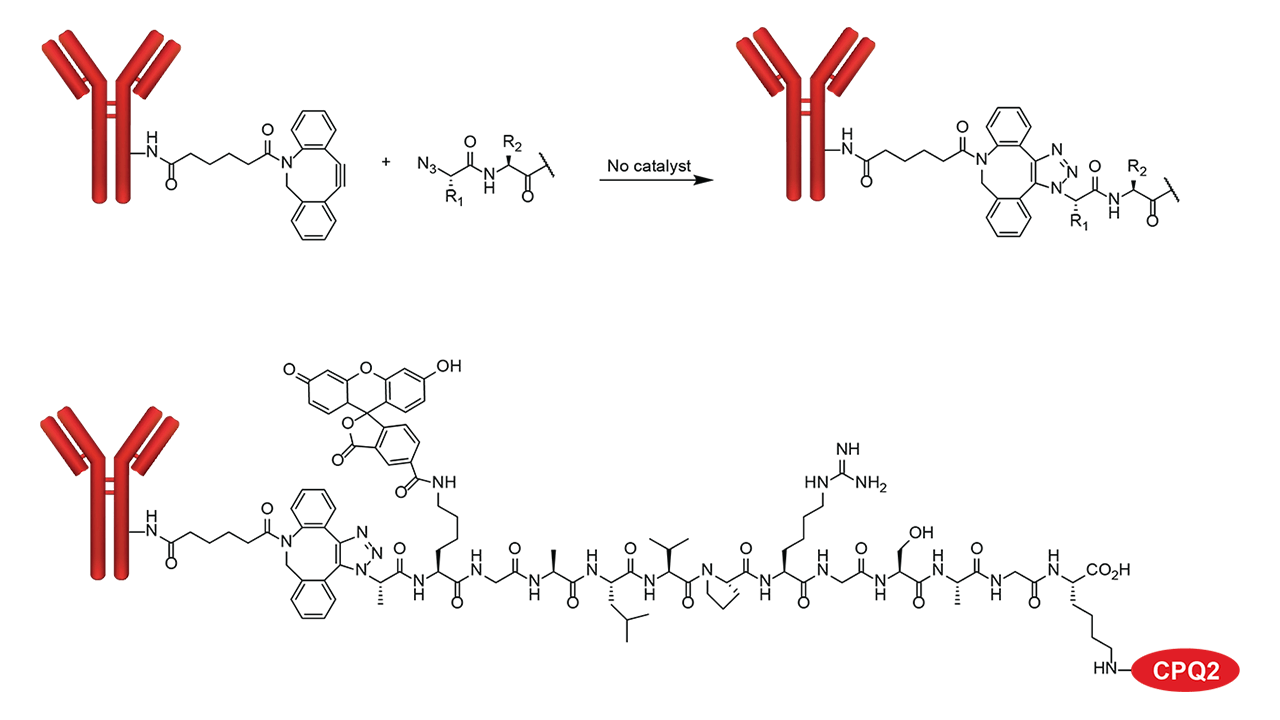
FRET Substrate Design
The design and synthesis work at CPC for FRET and TR-FRET peptide substrates include modification of sequences, selection of donor/quencher pairs, improvement of FRET substrate solubility and quenching efficiency. CPC has experience with a wide range of protease peptide substrates including:
- Aggrecanase
- ADAMs
- ACE-2
- APCE
- 2A protease
- BACE1
- Calpains
- Caspases
- Carboxypeptidases
- Caspases
- Cathepsins
- Chymopapain
- Complement component C1s
- CMV protease
- ECE-1
- Factor Xa
- Furin
- Granzyme K
- HCV protease
- HIV protease HRV1
- Kallikreins
- Interferon-alpha A
- Lethal Factor Protease
- Malaria Aspartyl Proteinase
- MMPs
- Pepsin
- Plasmin
- Plasmepsin II
- Proteinases Protein Tyrosine Phosphatase
- Renin
- SARS
- TACE
- Thrombin
- TEV protease
- Trypsin
- West Nile Virus Protease
Time-resolved FRET (TR-FRET) Peptides
Time-resolved FRET (TR-FRET) has emerged as a method that utilizes long-lived fluorophores (characteristic of lanthanide elements) to delay measurements by 50–150 µs. Consequently, TR-FRET peptides are labeled with a well-defined fluorescent donor (a fluorophore) that delays the measurements by this timeframe. This time delay allows the signal to be cleared of most nonspecific short-lived emissions. TR-FRET eliminates background fluorescence resulting in better data quality. Eu(III) Chelate and QSY-7 (Ex/Em = 340/613 nm) is an ideal FRET pair for TR-FRET HTS assays.
Table of Common FRET Pairs
| DONOR (FLUOROPHORE) | EX (nm) | EM (nm) | EM COLOR | EXTINCTION COEFFICIENT M-1 cm-1 (ε) | ACCEPTOR (QUENCHER) |
|---|---|---|---|---|---|
| Trp (Tryptophan) | 280 | 360 | ▉ | 5,600 | Dnp (2,4-Dinitrophenyl) |
| Trp (Tryptophan) | 280 | 360 | ▉ | 5,600 | 4-Nitro-Z (4-Nitro-benzyloxycarbonyl) |
| Mca (7-Methoxycoumarin-4-yl)acetyl) | 325 | 392 | ▉ | 11,820 | Dnp (2,4-Dinitrophenyl) |
| Abz (2-Aminobenzoyl) | 320 | 420 | ▉ | pNA (para-Nitroaniline) | |
| Abz (2-Aminobenzoyl) | 320 | 420 | ▉ | 3-Nitro-Tyr (3-Nitro-tyrosine) | |
| Abz (2-Aminobenzoyl) | 320 | 420 | ▉ | 4-Nitro-Phe (4-Nitro-phenylalanine) | |
| EDANS (5-[(2-Aminoethyl) amino] naphthalene-1-sulfonic acid) | 340 | 490 | ▉ | 5,900 | Dabcyl (4-(4-Dimethylaminophenylazo)benzoyl) |
| 5-FAM (5-Carboxyfluorescein) | 492 | 518 | ▉ | 83,000 | CPQ2TM (proprietary structure) |
| CP488 | 495 | 519 | ▉ | CPQ2TM (proprietary structure) | |
| Lucifer Yellow | 430 | 520 | ▉ | 11,000 | Dabsyl (4-(4-Diethylaminophenylazo)-benzenesulfonyl) |
| FITC (Fluorescein isothiocyanate) | 490 | 520 | ▉ | 73,000 | Dnp (2,4-Dinitrophenyl) |
| Dansyl (5-(Dimethylamino)naphthalene-1-sulfonyl) | 342 | 562 | ▉ | 3,300 | 4-Nitro-Phe (4-Nitro-phenylalanine) |
| 5-TAMRA (Carboxytetramethylrhodamine) | 547 | 573 | ▉ | 90,000 | QSY7 |
| Eu(III) Chelate | 340 | 613 | ▉ | QSY7 | |
| Cy5 | 647 | 665 | ▉ | QSY21 | |
| Cy5.5 | 678 | 701 | ▉ | QSY21 |