
Coauthored Publications
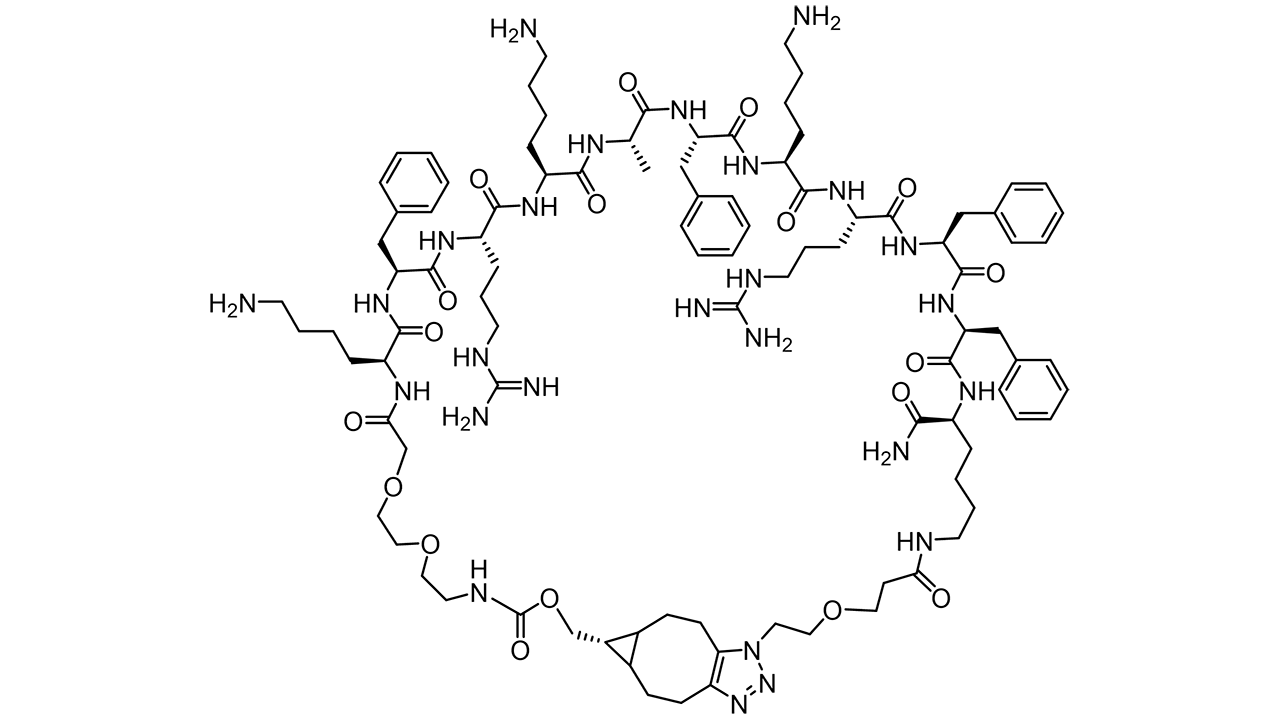
Singh, S.S., Calvo, R., Kumari, A., Sable, R.V., Fang, Y., Tao, D., Hu, X., Castle, S.G., Nahar, S., Li, D. and Major, E. Molecular Cancer Therapeutics (2024).
- CPC Scientific Inc., 160E Tasman Dr., Suite 200, San Jose, CA 95134
[..] assembling the peptide on the Rink Amide resin and attaching the PEG azide moiety to the N-terminal Lys, the Dde group was removed as previously shown and coupled to the Fmoc-PEG2-acid. Removal of the Fmoc followed by simultaneously click/coupling to bicyclo[6.1.0]non-4-yn-9-ylmethyl (2,5-dioxopyrrolidin-1-yl) carbonate gave 1c which was deprotected and cleaved from the resin to give 1c.
Paul S. Marinec, Kyle E. Landgraf, Maruti Uppalapati, Gang Chen, Daniel Xie,‡ Qiyang Jiang, Yanlong Zhao, Annalise Petriello, Kurt Deshayes, Stephen B. H. Kent, Dana Ault-Riche*, and Sachdev S. Sidhu* ACS Chem. Biol. 2021, 16, 3, 548–556.
- Chinese Peptide Company, Hangzhou Economic and Technical Development Zone, China, 310018.
"The D-VEGF-A polypeptide chain (COOH acid, residues 8-109 (1)) was chemically synthesized using solid phase peptide synthesis (SPPS) and native chemical ligation, and folded to form the protein covalent homodimer, using methods adapted from our previous work [..]"
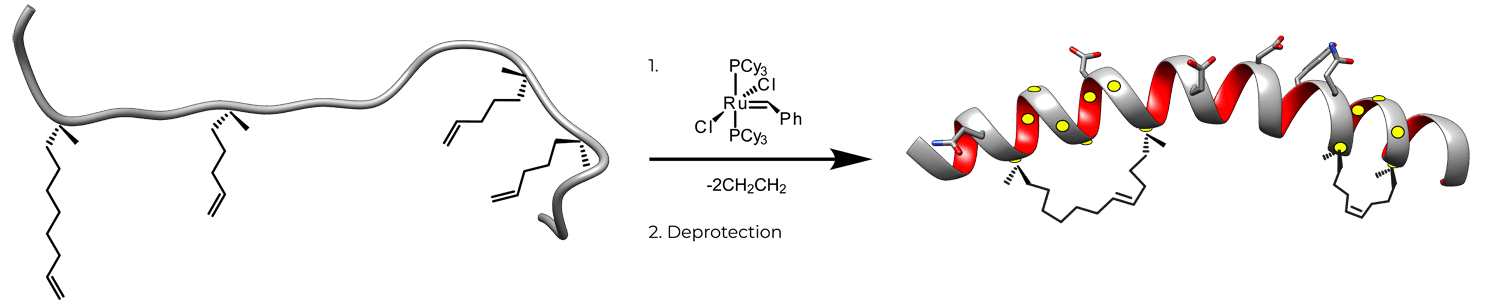
Curreli, Francesca, Sofia MB Victor, Shahad Ahmed, Aleksandra Drelich, Xiaohe Tong, Chien-Te K. Tseng, Christopher D. Hillyer, and Asim K. Debnath. Mbio 11, no. 6 (2020): e02451-20.
We have synthesized (CPC Scientific, Inc.) four stapled peptides, as depicted in Figure 2. We also synthesized the linear peptide, NYBSP-C, as a control. Besides, we purchased a linear peptide, SBP1, to use as a control, which was reported recently to bind to SARS-CoV-2 RBD with high affinity (KD = 47nM).
Skerratt, Sarah E., Sian Humphreys, Rita Ferreira, Csilla Jorgensen, Joe Warmus, Lei Zhao, Xiaohe Tong, and Sarah A. Nickolls. MedChemComm 7, no. 8 (2016): 1564-1571.
- Pfizer Neusentis, The Portway Building, Granta Park, Cambridge, UK.
- Pfizer Worldwide Research & Development, Eastern Point Road, Groton, Connecticut 06340, USA.
- CPC Scientific Inc., 1245 Reamwood Avenue, Sunnyvale, CA 94089, USA.
"antipeptide (EGVYVHPV), angiotensin II, human (DRVYIHPF), and isotopically (13C) labeled heptapeptide (AAAAHAA-NH2 [where “A” indicates a carbon thirteen (13C) "Synthesis was conducted at CPC Scientific Inc. Ac-Asp(OtBu)-Thr(tBu)-His(Trt)-Phe-Pro-Ile-Cys(Trt)-Ile-PhePEG3-Arg(Pbf)-Arg(Pbf)-Lys(Boc)-wang resin (2).. Ac-Asp-Thr-His-Phe-Pro-Ile-Cys-Ile-Phe-PEG3-Arg-Arg-Lys(BODIPY_TMR_C6)."
Francesca Curreli, Kashfia Haque, Lihua Xie, Qian Qiu, Jinfeng Xu, Weizhong Yong, Xiaohe Tong, Asim K. Debnath. Bioorganic & Medicinal Chemistry 23.24 (2015): 7618-7628.
To date only two entry inhibitors are available, Maraviroc which targets the co-receptor CCR5 3;4 and Enfuvirtide, a peptide drug which interacts with the N-terminal heptad repeat of gp41 of HIV to form an inactive hetero six-helix bundle preventing infection of host cells 5;6. Despite the success achieved with the HAART the emergence of resistant viruses and the side effects of these therapies highlight the need of novel anti-retroviral agents to overcome these problems.
Hongtao Zhang, Francesca Curreli, Abdul A Waheed, Peter Y Mercredi, Mansi Mehta, Pallavi Bhargava, Daniel Scacalossi, Xiaohe Tong, Shawn Lee, Alan Cooper, Michael F Summers, Eric O Freed & Asim K Debnath Retrovirology 10.1 (2013).
In this report, we expanded the study to i,i+7 hydrocarbon-stapled peptides to delineate their mechanism of action and antiviral activity. We identified three potent inhibitors, NYAD-36, -66 and -67, which showed strong binding to CA in NMR and isothermal titration calorimetry (ITC) studies and disrupted the formation of mature-like particles. They showed typical α-helical structures and penetrated cells; however, the cell penetration was not as efficient as observed with the i,i+4 peptides.
Magee, T.V., Brown, M.F., Starr, J.T., Ackley, D.C., Abramite, J.A., Aubrecht, J., Butler, A., Crandon, J.L., Dib-Hajj, F., Flanagan, M.E. and Granskog, K. Journal of Medicinal Chemistry 56, no. 12 (2013): 5079-5093.
- Pfizer Worldwide Research & Development, Pfizer, Inc., Groton, Connecticut 06340, United States
- CPC Scientific, Hangzhou, P.R. China
Capon, D.J., Kaneko, N., Yoshimori, T., Shimada, T., Wurm, F.M., Hwang, P.K., Tong, X., Adams, S.A., Simmons, G., Sato, T.A. and Tanaka, K. Proceedings of the Japan Academy, Series B 87, no. 9 (2011): 603-616.
All peptides used in this study (Table 1) were synthesized by an Fmoc/t-Butyl solid-phase strategy on a 2-chlorotrityl chloride resin preloaded with the Fmoc-Thr(tBu)-OH. Amino acid derivatives were obtained from CPC Scientific (Sunnyvale, CA)
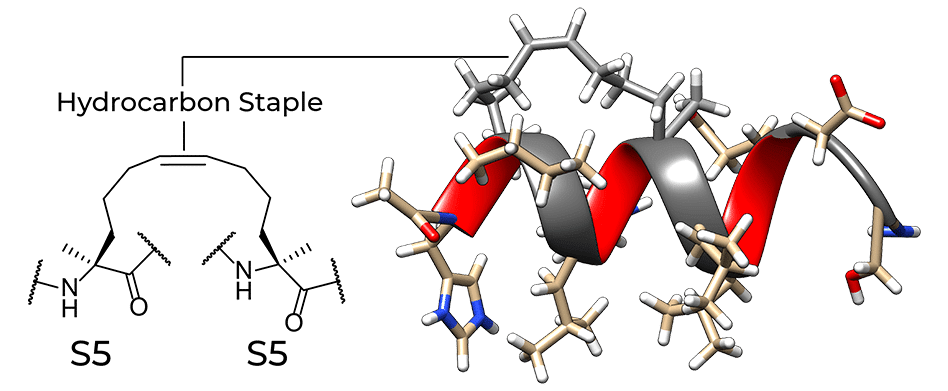
Phillips, Chris, et al. Journal of the American Chemical Society 133.25 (2011): 9696-9699.
"Synthetic peptides that specifically bind nuclear hormone receptors offer an alternative approach to small molecules for the modulation of receptor signaling and subsequent gene expression. [..] Using a number of biophysical techniques, including crystal structure analysis of receptor–stapled peptide complexes, we describe in detail the molecular interactions and demonstrate that all-hydrocarbon staples modulate molecular recognition events."
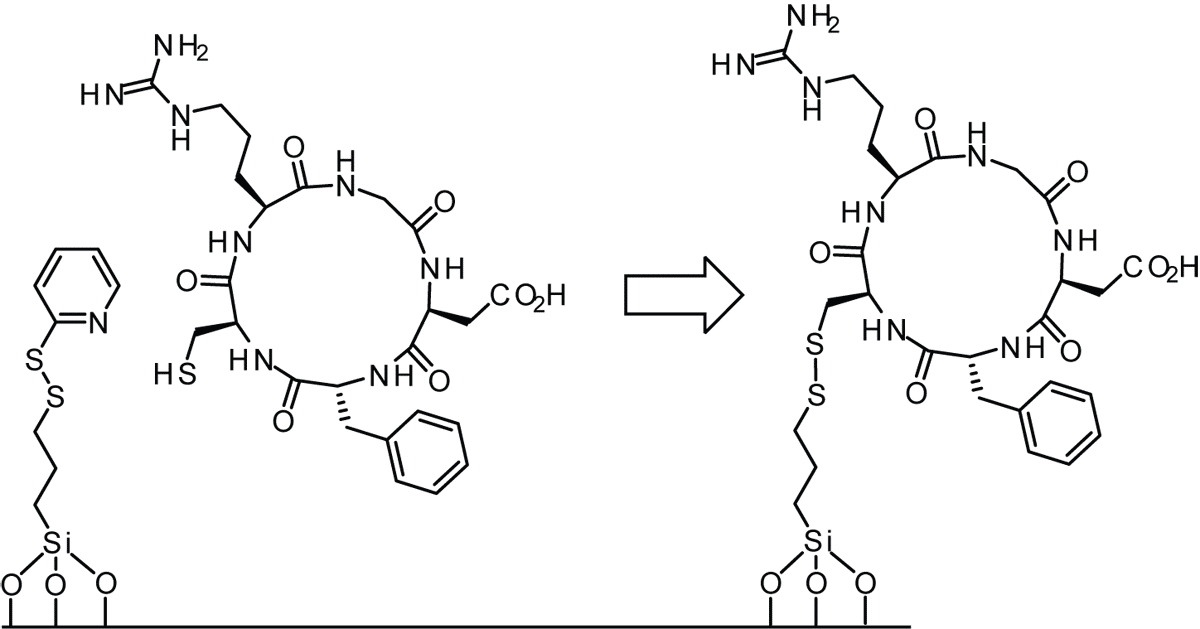
Ferris, Daniel P., Jie Lu, Chris Gothard, Rolando Yanes, Courtney R. Thomas, John‐Carl Olsen, J. Fraser Stoddart, Fuyuhiko Tamanoi, and Jeffrey I. Zink. Small 7, no. 13 (2011): 1816-1826.
By designing and attaching a synthetic cyclic-RGD, selectivity between primary cancer cells (BT-549) and metastatic cancer cells (MDA-MB 435) is achieved with enhanced particle uptake by the metastatic cancer cell line. Incorporation of the hydrophobic drug Camptothecin into these two types of biomolecular-targeted nanoparticles causes an increase in mortality of the targeted cancer cells compared to that caused by both the free drug and nontargeted particles.
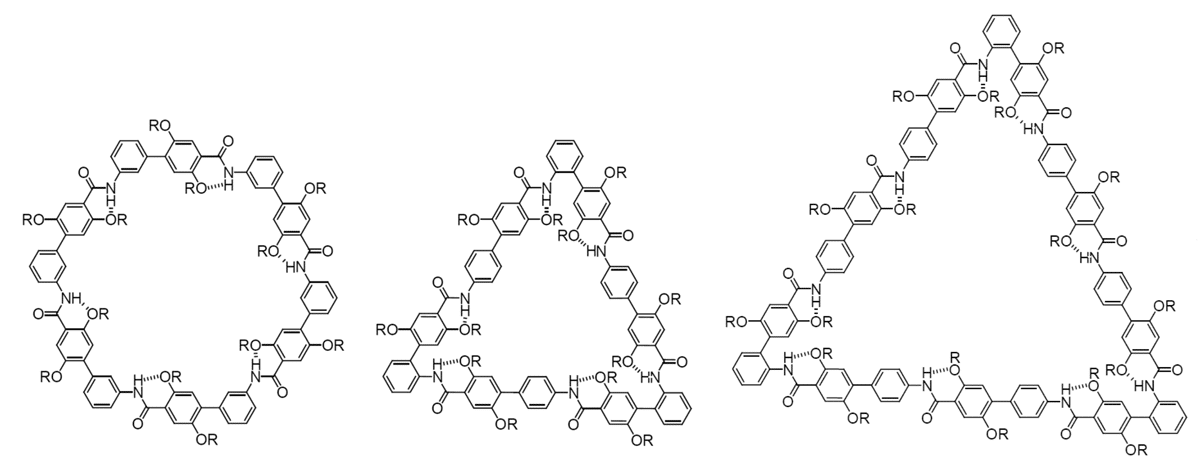
Gothard, Chris M., and James S. Nowick. The Journal of Organic Chemistry 75.6 (2009): 1822-1830.
This paper introduces the unnatural amino acids m-Abc2K and o-Abc2K as nanometer-sized building blocks for the creation of water-soluble macrocycles with well-defined shapes. m-Abc2K and o-Abc2K are homologues of the nanometer-sized amino acid Abc2K, which we recently introduced for the synthesis of water-soluble molecular rods of precise length. [J. Am. Chem. Soc. 2007, 129, 7272]. Abc2K is linear (180°), m-Abc2K creates a 120° angle, and o-Abc2K creates a 60° angle. m-Abc2K and o-Abc2K are derivatives of 3’-amino-[1,1’-biphenyl]-4-carboxylic acid and 2’-amino-[1,1’-biphenyl]-4-carboxylic acid, with two propyloxyammonium side chains for water solubility.
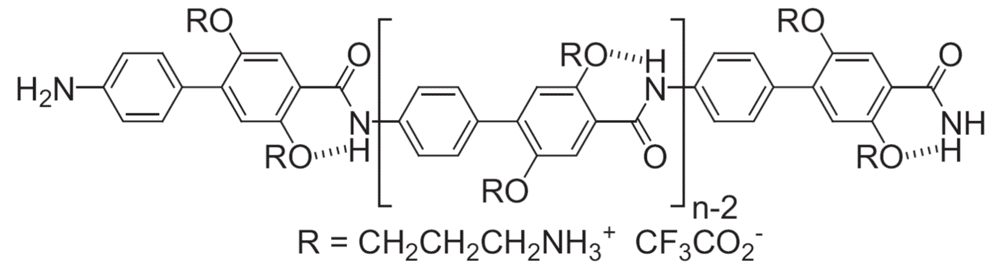
Gothard, Chris M., Nosheen A. Rao, and James S. Nowick. Journal of the American Chemical Society 129, no. 23 (2007): 7272-7273.
This paper introduces the unnatural amino acid Abc2K as a nanometer-length building block for the creation of water-soluble molecular rods of exceptional size. Abc2K is a water-soluble variant of the unnatural amino acid 4’-amino-[1,1’-biphenyl]-4-carboxylic acid (Abc) with lysinelike propyloxyammonium side chains at the 2- and 5-positions. The protected building block Fmoc-Abc2K(Boc)-OH (1) can be used in standard Fmoc-based solid-phase peptide synthesis to create water-soluble rodlike peptides in nanometer unit lengths up to at least ten nanometers.