
Hydrocarbon stapled peptides are peptides locked into their bioactive alpha-helical conformation through site-specific introduction of a chemical brace, an all-hydrocarbon staple. The idea of peptide stapling was introduced to overcome the limitations of two broad classes of therapeutic agents (small molecules and protein biologics) in targeting intracellular protein-protein interactions. Small molecules only work on proteins with a specific feature on their surfaces and most protein biologics do not penetrate into cells. Because stapled peptides are locked into a stabilized α-helical structure (the most common element of protein secondary structures), they can easily penetrate cells. As a rapidly emerging class of next-generation drugs, stapled peptides are expected to combine the synthetic manipulability and cell-penetrating ability of small molecules with the three-dimensionality and versatile target recognition ability of biologics. CPC Scientific has extensively developed stapled peptide structures and is the company of choice to manufacture your stapled peptide requirements. Our technical consultants would be happy to discuss your structural design needs with you at any time.
Stapled Peptide Chemistry
The first-generation Grubbs catalyst (left) with tricyclohexylphosphine (PCy3) ligands and apical positioned carbene carbon is a relatively stable ruthenium complex used for olefin metathesis in peptides. Subsequent investigations led to the design of a more thermally stable Grubbs second-generation catalyst (middle). A 3rd generation catalyst, also known as the Hoveyda–Grubbs catalyst (right), replaces the N-heterocyclic carbene ligand for a benzylidene ligands that have a chelating ortho-isopropoxy group attached to the benzene ring.

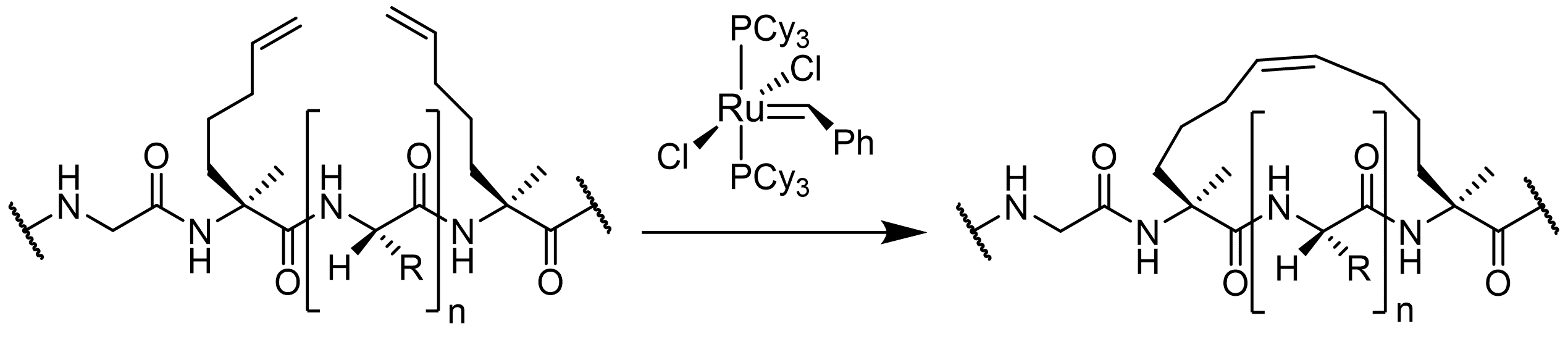
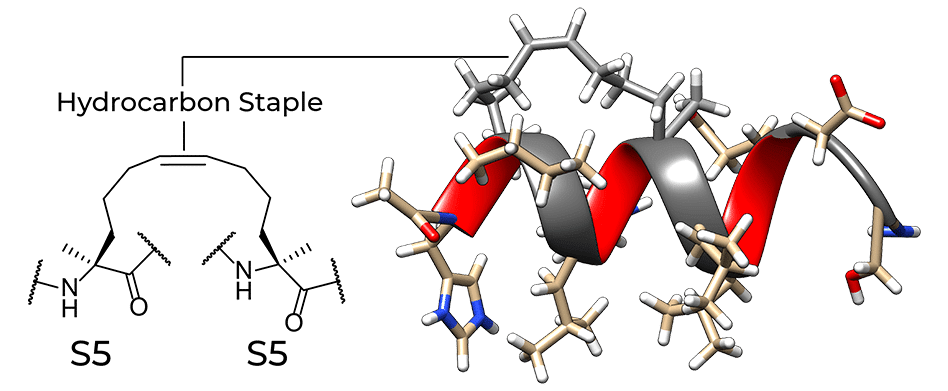
Single stapled peptide reaction. The incorporation of two alpha-4-n-pentenylalanine (S5) residues into a peptide strand enables ring-closure metathesis (i.e., Grubbs reaction) to create a single stapled peptide. When n = 3 (i.e. with 3 amino acids between the S5 residues) the staple type is known as an i, i + 4.
Phillips, Chris, et al. Journal of the American Chemical Society 133.25 (2011): 9696-9699.
"Synthetic peptides that specifically bind nuclear hormone receptors offer an alternative approach to small molecules for the modulation of receptor signaling and subsequent gene expression. [..] Using a number of biophysical techniques, including crystal structure analysis of receptor–stapled peptide complexes, we describe in detail the molecular interactions and demonstrate that all-hydrocarbon staples modulate molecular recognition events."
Grubbs catalyst’s are routinely used in olefin metathesis to incorporate hydrocarbon staples into peptides. Two distinct conformational strategies are utilized to induce and stabilize an α-helical structure, namely, α,α-di-substitution (helix nucleation by α-methylation) and macro-cyclic bridge formation (conformational constraint).
In a stapled peptide prepared by CPC Scientific, Phillips and co-workers designed the sequence, Ac-His-S5-Ile-Leu-His-S5-Leu-Leu-Gln-Asp-Ser-NH2 (olefin bond between S5 and S5) where S5 represents alpha-4-n-pentenylalanine before olefin metathesis (figure 2). The Grubbs reaciton is carried out while the peptide is fully protected and attached to the resin as Ac-His(Trt)-S5-Ile-Leu-His(Trt)-S5-Leu-Leu-Gln(Trt)-Asp(otBu)-Ser(tBu)-Rink Amide MBHA Resin. 20 mL of 1mg/mL solution of bis(tricyclohexylphosphine)benzylidine ruthenium (IV) dichloride (Grubbs 1st Generation Catalyst) in DCE was added to the peptide resin and reacted for 2 hours at 50 °C. In this example, the stapling step (i.e. Grubbs Metathesis) is performed while the peptide is attached to the resin.
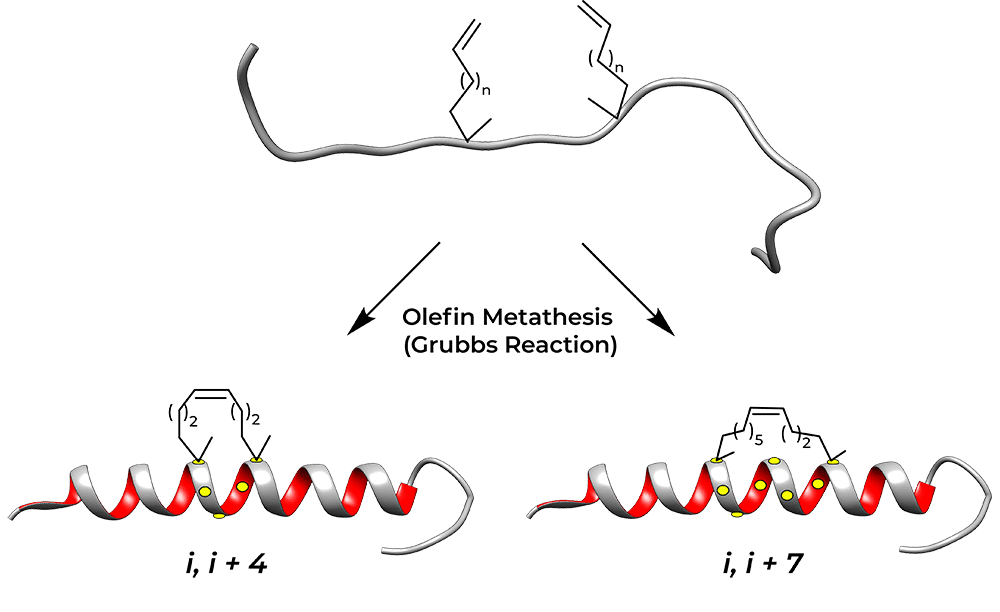
Two different types of hydrocarbon staples are shown in the figure, demonstrating the creation of a stabilized α-helix in a peptide. Approximately one turn of the helix would be i and i+4 and two turns of the helix would be i, i+7. For information about the R/S descriptors shown in the figure, please see the Cahn-Ingold-Prelog priority rules for naming stereoisomers.
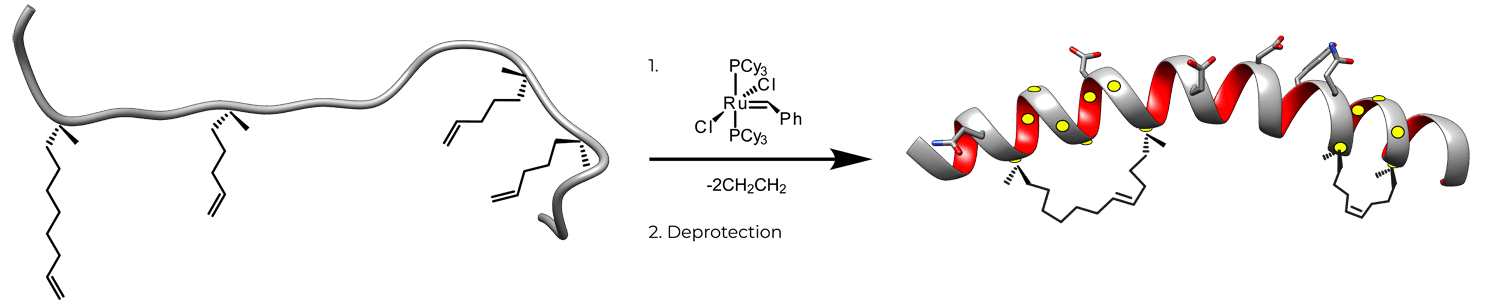
In a collaboration between the Laboratory of Molecular Modeling & Drug Design, Lindsley F. Kimball Research Institute, New York Blood Center and CPC Scientific, a double stapled peptide was developed to mimic the binding domain of the human angiotensin-converting enzyme 2 (ACE2) receptor for SARS-CoV-2. A i + 7 and i + 4 double staple motif was required to span the 30-amino acid long binding region of ACE2.
Single Staple Configurations
Grubb’s ring-closure metathesis may result in two types of stapled peptides, i, i + 4 and i, i + 7.
Double Staple Configurations
Curreli, Francesca, Sofia MB Victor, Shahad Ahmed, Aleksandra Drelich, Xiaohe Tong, Chien-Te K. Tseng, Christopher D. Hillyer, and Asim K. Debnath. Mbio 11, no. 6 (2020): e02451-20.
We have synthesized (CPC Scientific, Inc.) four stapled peptides, as depicted in Figure 2. We also synthesized the linear peptide, NYBSP-C, as a control. Besides, we purchased a linear peptide, SBP1, to use as a control, which was reported recently to bind to SARS-CoV-2 RBD with high affinity (KD = 47nM).
Stapled Peptides in Drug Design
The introduction of a hydrocarbon staple confers high levels of α-helical content and results in:
- Better target affinity (5 to 5,000-fold increase)
- Increased proteolytic resistance and serum half- life
- Cell penetration through endocytic vesicle trafficking
- Targeting of either extracellular or intracellular proteins
- Disruption of protein-protein interactions
- Non-immunogenicity
- Viable pharmacokinetics and in vivo stability
Protein Targets
Stapled peptides have been studied in the targeting of several proteins relevant in diseases such as cancer, diabetes, HIV, and atherosclerosis. These proteins include:
- B-cell lymphoma 2 (Bcl-2)
- B-cell lymphoma-extra large (Bcl-xL)
- Bcl-2-associated X protein (Bax)
- Induced myeloid leukemia cell differentiation(Mcl-1)
- Glucokinase (GK)
- Murine double minute 2 (Mdm2)
- Notch/CSL
- HIV-1 capsid and HIV-1 gp41
- ATP-binding cassette transporter (ABCA1)
- Estrogen receptor
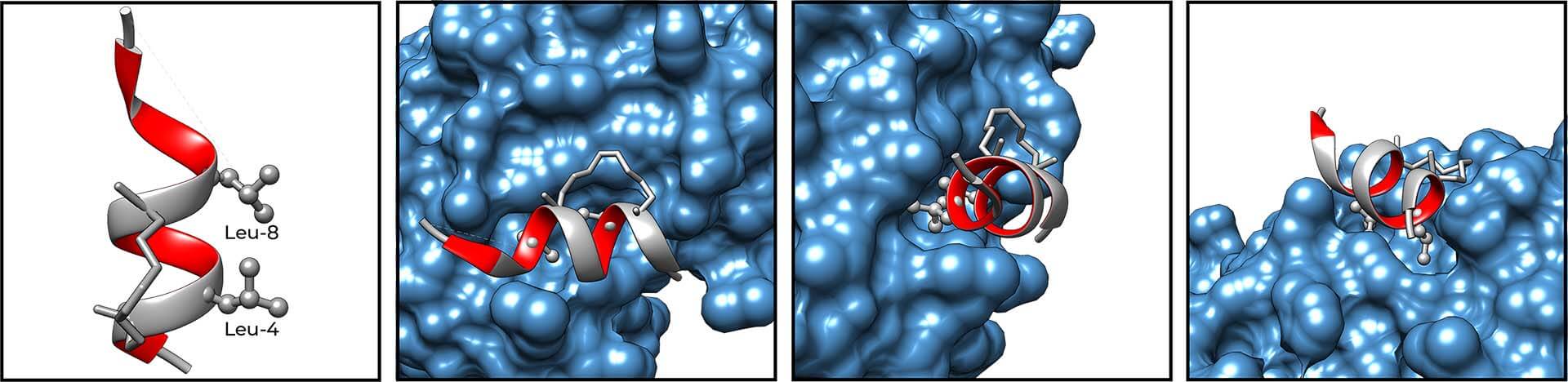
Figure 5. i, i + 4 Stapled peptide (Ac-His-S5-Ile-Leu-His-S5-Leu-Leu-Gln-Asp-Ser-NH2) bound to estrogen receptor. Stapling organizes non-adjacent leucine side chains (Leu-4 and Leu-8) project from the same side into the hydrophobic pocket of estrogen protein.[1]
Modifications of Stapled Peptides
Stapled peptide modifications typically fall into two categories: a fluorescent label or an affinity tag. Two of the most common moieties appended to the N-terminus of stapled peptides are fluorescein, which can be used for studies of intracellular uptake and biophysical characterization, and biotin, which can be used for biophysical characterization and assessment of in vitro target interaction. It is generally desired to include a flexible molecular spacer to isolate the modification from the core of the stapled peptide.
- N-acetylation
- Linker attachment (β-alanine, mini-PEG, etc.)
- Fluorescent labeling (FITC, 5-FAM, etc.)
Template-Assisted Β-Sheet Stapled Peptide
Other secondary protein structures such a β-sheets can also be replicated by peptide stapling. In the example below, terminal olefins are transformed into internal olefins in a template-assisted olefin metathesis reaction involving the 3rd generation Hoveyda-Grubbs catalyst. Only one conformer is observed due to stabilization of the anti-parallel β-sheet arrangement formed by the six hydrogen bonds.[3]
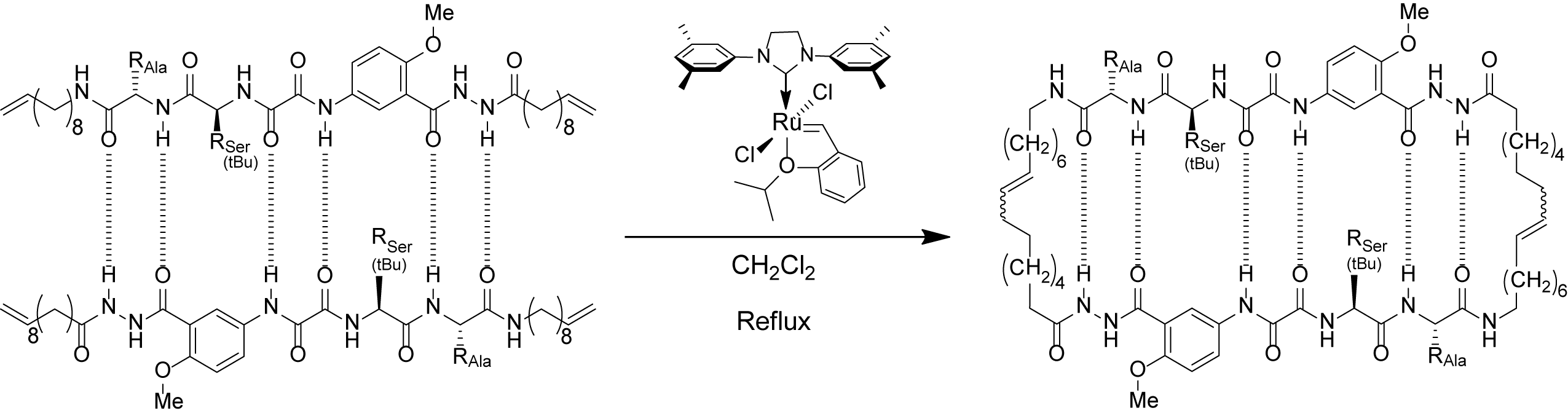
Unpublished Work. Nowick Group 2003.
Stapled Peptides by Click Chemistry
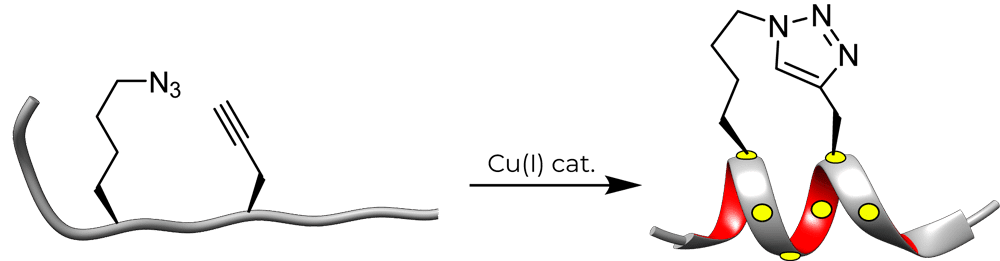
The high efficiency and mild conditions of “click” reaction (Copper-catalyzed Huisgen 1,3-dipolar cycloaddition reaction) combined with the ease of synthesis of the necessary unnatural amino acids, allows for facile synthesis of triazole-stapled peptides. For example, a combination of L- Nle (εN3) and D-Pra (D-propargylalanine) substituted at the i and i+4 positions can be used for the generation of single triazole-stapled peptides.
References
- Phillips, Chris, et al. Journal of the American Chemical Society 133.25 (2011): 9696-9699 (PDB: 2YJA).
- Curreli, Francesca, Sofia MB Victor, Shahad Ahmed, Aleksandra Drelich, Xiaohe Tong, Chien-Te K. Tseng, Christopher D. Hillyer, and Asim K. Debnath. Mbio 11, no. 6 (2020): e02451-20.
- Gothard, Chris. Unpublished work in the Nowick Group (2005).
Stapled Peptide Publications and Citations
Stapled peptides have emerged as a powerful tool in drug discovery and therapeutic development due to their ability to overcome the limitations associated with traditional peptide drugs, such as poor stability and low cell permeability. By introducing staples into the peptide backbone, researchers can stabilize peptide conformations and enhance their interactions with target proteins, resulting in improved efficacy and specificity. This approach not only addresses the challenges of peptide drug design but also opens new avenues for targeting challenging biomolecular interactions that are difficult to modulate with small molecules or antibodies. The development of stapled peptides has led to significant advancements in targeting protein-protein interactions, addressing previously intractable diseases, and enhancing the precision of therapeutic interventions.
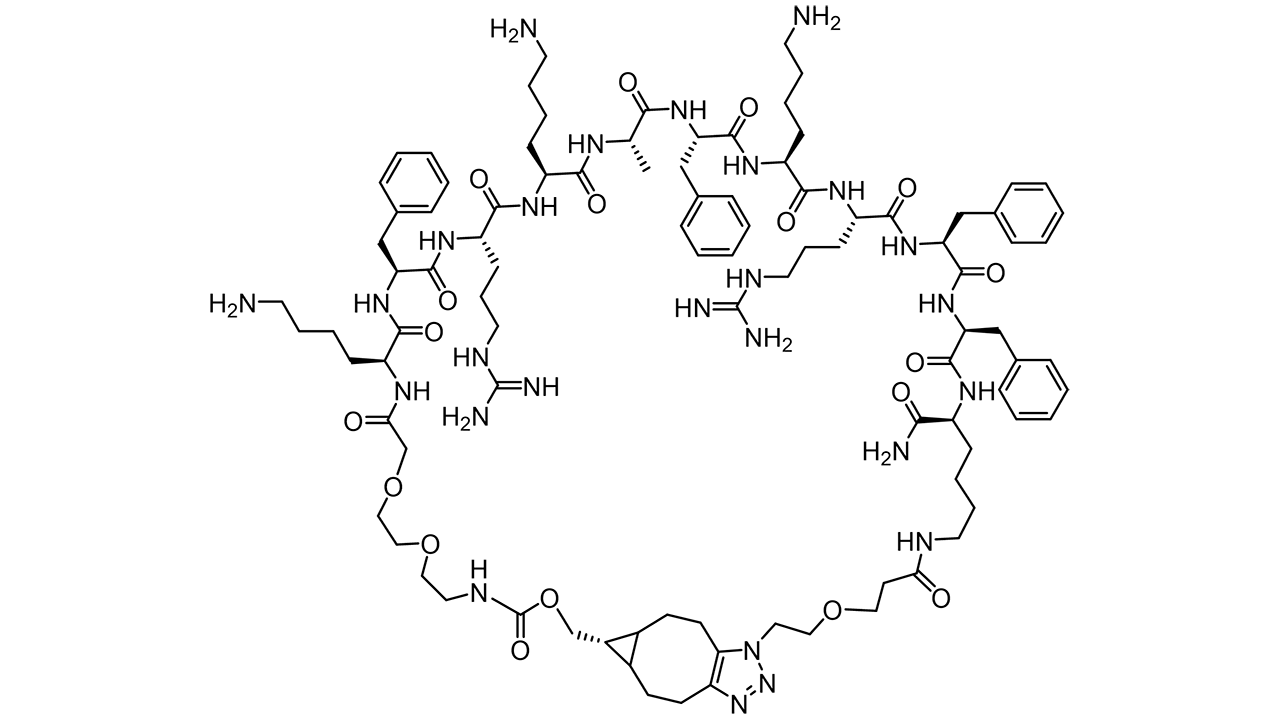
Singh, S.S., Calvo, R., Kumari, A., Sable, R.V., Fang, Y., Tao, D., Hu, X., Castle, S.G., Nahar, S., Li, D. and Major, E. Molecular Cancer Therapeutics (2024).
- CPC Scientific Inc., 160E Tasman Dr., Suite 200, San Jose, CA 95134
[..] assembling the peptide on the Rink Amide resin and attaching the PEG azide moiety to the N-terminal Lys, the Dde group was removed as previously shown and coupled to the Fmoc-PEG2-acid. Removal of the Fmoc followed by simultaneously click/coupling to bicyclo[6.1.0]non-4-yn-9-ylmethyl (2,5-dioxopyrrolidin-1-yl) carbonate gave 1c which was deprotected and cleaved from the resin to give 1c.
Design-rules for stapled peptides with in vivo activity and their application to Mdm2/X antagonists.
Chandramohan, A., Josien, H., Yuen, T.Y., Duggal, R., Spiegelberg, D., Yan, L., Juang, Y.C.A., Ge, L., Aronica, P.G., Kaan, H.Y.K. and Lim, Y.H. Nature Communications 15, no. 1 (2024): 489.
- Merck & Co., Inc., Kenilworth, NJ 07033, USA.
- Merck & Co., Inc., Boston, MA 02115, USA
- Merck & Co., Inc., West Point, PA 19486, USA
- Genentech, South San Francisco, CA 94080, USA
We thank Evans (Chen) Ge, Mike (Dixin) Xue, and Simon (Junhua) Li at Chinese Peptide Company (CPC) for peptide synthesis support.
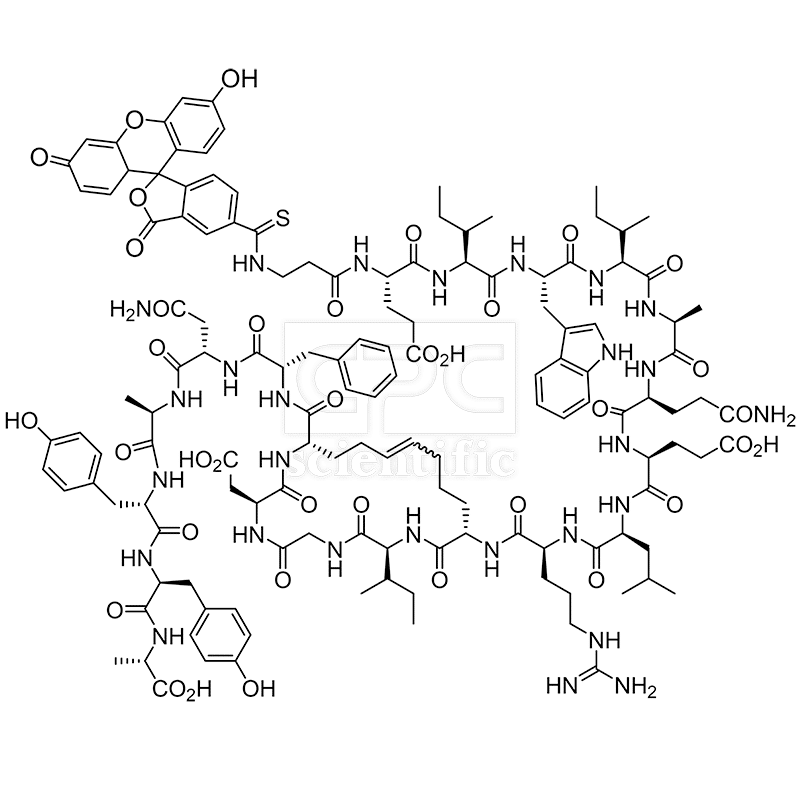
Lopez, Andrea, Denis E. Reyna, Nadege Gitego, Felix Kopp, Hua Zhou, Miguel A. Miranda-Roman, Lars Ulrik Nordstrøm et al. Nature Communications 13, no. 1 (2022): 1-18.
"Hydrocarbon-stapled peptide corresponding to the BH3 domain of BIM, FITC-BIM SAHBA2: FITC-βAla-EIWIAQELRS5IGDS5F’NAYYA-CONH2, where S5 represents the non-natural amino acid inserted for olefin metathesis, was synthesized, purified at >95% purity by CPC Scientific Inc."
Spitz, A. Z.; Zacharioudakis, E.; Reyna, D. E.; Garner, T. P.; Gavathiotis, E., Nature Communications 2021, 12 (1), 1-15.
Hydrocarbon-stapled peptides corresponding to the BH3 domain of BIM, BIM SAHB: FITC-Ahx-EIWIAQELRS5IGDS5FNAYYA-CONH, where S5 represents the non-natural amino acid inserted for olefin metathesis, were synthesized and purified at >95% purity by CPC Scientific Inc.
Curreli, Francesca, Sofia MB Victor, Shahad Ahmed, Aleksandra Drelich, Xiaohe Tong, Chien-Te K. Tseng, Christopher D. Hillyer, and Asim K. Debnath. Mbio 11, no. 6 (2020): e02451-20.
We have synthesized (CPC Scientific, Inc.) four stapled peptides, as depicted in Figure 2. We also synthesized the linear peptide, NYBSP-C, as a control. Besides, we purchased a linear peptide, SBP1, to use as a control, which was reported recently to bind to SARS-CoV-2 RBD with high affinity (KD = 47nM).
Marion, Vincent, and Nikolai Petrovsky. U.S. Patent Application 16/627,389, filed July 9, 2020.
H-VECTM-R8-EKRVLA-S5-LDKPPFLTQLHS-OH (SEQ ID NO: 21) [..] H-VECTM-R8-EKRVLA-S5-LDKPPFLTQLHS-NH2 [..]
Garner, Thomas P., Dulguun Amgalan, Denis E. Reyna, Sheng Li, Richard N. Kitsis, and Evripidis Gavathiotis. Nature Chemical Biology 15, no. 4 (2019): 322.
"Hydrocarbon-stapled peptides corresponding to the BH3 domain of BIM, BIM SAHBA2: N-acetylated- and FITC-Ahx-EIWIAQELRS5IGDS5FNAYYA-CONH2, where S5 represents the non-natural amino acid inserted for olefin metathesis, were synthesized, purified at >95% purity by CPC Scientific Inc. and characterized as previously described."
Gavathiotis, E., Albert Einstein College of Medicine, 2017. U.S. Patent Application 15/311,861.
"Hydrocarbon-stapled peptide corresponding to the BH3 domain of BIM, BIM SAHBA2: N-acetylated 145EIWIAQELRS5IGDS5FNAYYA164-CONH2 (SEQ ID NO:2), where S5 represents the non-natural amino acid inserted for olefin metathesis, was synthesized, purified and characterized as previously described by CPC Scientific (11)."
Garner, Thomas P., et al. Molecular Cell 63.3 (2016): 485-497.
"Hydrocarbon-stapled peptide corresponding to the BH3 domain of BIM, BIM SAHBA: N-acetylated 145EIWIAQELRS5IGDS5FNAYYA164-CONH2, where S5 represents the non-natural amino acid inserted for olefin metathesis, was synthesized, purified and characterized as previously described by CPC Scientific (Gavathiotis et al., 2008)."
Hongtao Zhang, Francesca Curreli, Abdul A Waheed, Peter Y Mercredi, Mansi Mehta, Pallavi Bhargava, Daniel Scacalossi, Xiaohe Tong, Shawn Lee, Alan Cooper, Michael F Summers, Eric O Freed & Asim K Debnath Retrovirology 10.1 (2013).
In this report, we expanded the study to i,i+7 hydrocarbon-stapled peptides to delineate their mechanism of action and antiviral activity. We identified three potent inhibitors, NYAD-36, -66 and -67, which showed strong binding to CA in NMR and isothermal titration calorimetry (ITC) studies and disrupted the formation of mature-like particles. They showed typical α-helical structures and penetrated cells; however, the cell penetration was not as efficient as observed with the i,i+4 peptides.
Sun, Tzu-Lin, et al. Biophysical Journal 104.9 (2013): 1923-1932.
"NYAD-1 is H - Ile - Thr - Phe - X - Asp - Leu - Leu - X - Tyr - Tyr - Gly - Pro - NH2 (with special cyclization to get double bond, X = (S) - alpha - (2′-pentenyl)alanine) (4). NYAD-1 and CAI (H-Ile-Thr-Phe-Glu-Asp-Leu-Leu-Asp-Tyr-Tyr-Gly-Pro-NH2) were synthesized by CPC Scientific (San Jose, CA) under the supervision of Xiaohe Tong"
Bhattacharya, Shibani, et al. Biopolymers 97.5 (2012): 253-264.
"The stapled peptides with greater than 90% purity were synthesized by.. CPC Scientific, CA"
Phillips, Chris, et al. Journal of the American Chemical Society 133.25 (2011): 9696-9699.
"Synthetic peptides that specifically bind nuclear hormone receptors offer an alternative approach to small molecules for the modulation of receptor signaling and subsequent gene expression. [..] Using a number of biophysical techniques, including crystal structure analysis of receptor–stapled peptide complexes, we describe in detail the molecular interactions and demonstrate that all-hydrocarbon staples modulate molecular recognition events."