
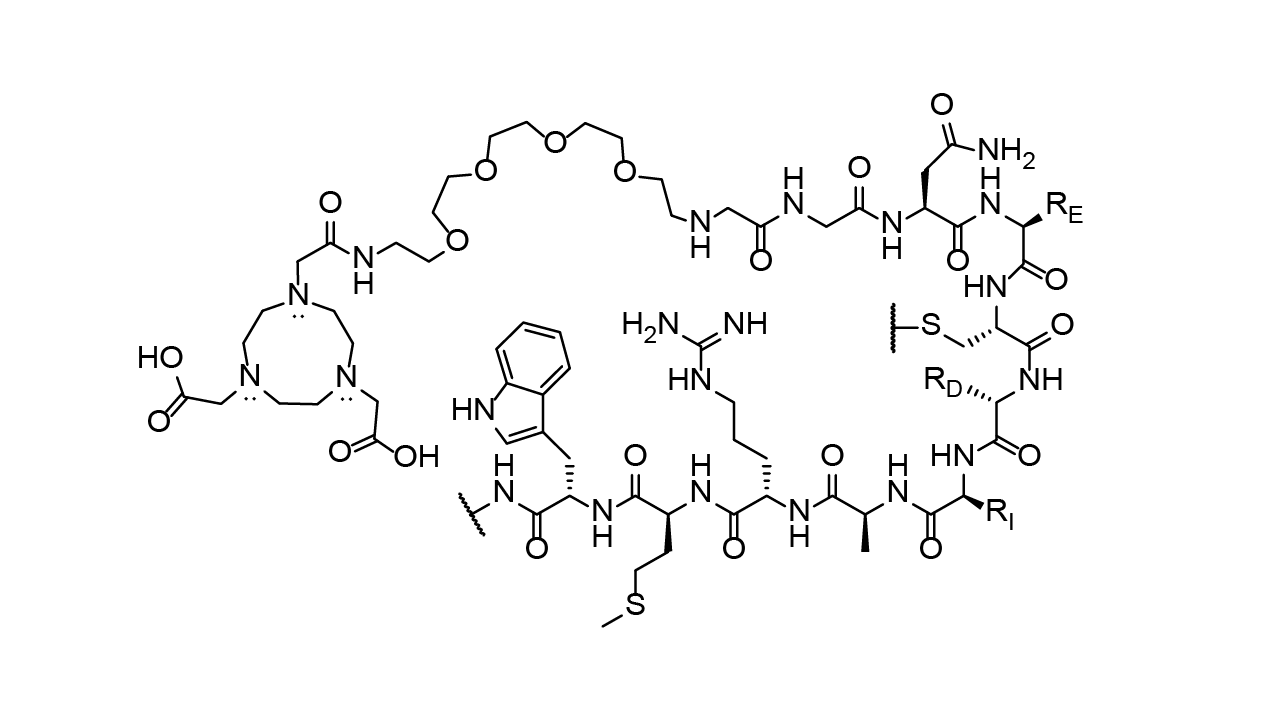
Cancer cells that express or overexpress specific receptors have lead to the development of synthetic peptides that target these receptors. Peptides conjugated to metal chelates (e.g, DOTA, NOTA, etc.) offer an attractive approach for both imaging of cancer tissues and as therapies that deliver cytotoxic cargo to cancer cells. The interleukin-13 receptor alpha 2 (IL13RA2) is a receptor that is abundantly overexpressed in most GBMs but not present in healthy brain cells. Ligands that specifically target this receptor may offer new approaches to the treatment of GBM. Because IL13RA2 is internalized upon binding IL13, this receptor is an attractive target for therapies involving the delivery of cytotoxic cargo to Glioblastoma (GBM) cells. Peptide-1 linear (Pep-1L) has been evaluated for its ability to localize at IL13RA2 and deliver cytotoxic alpha-particle emitters (Actinium-225, Ac-225) to GBM cells (right).
Chemical Structures of Common Chelates
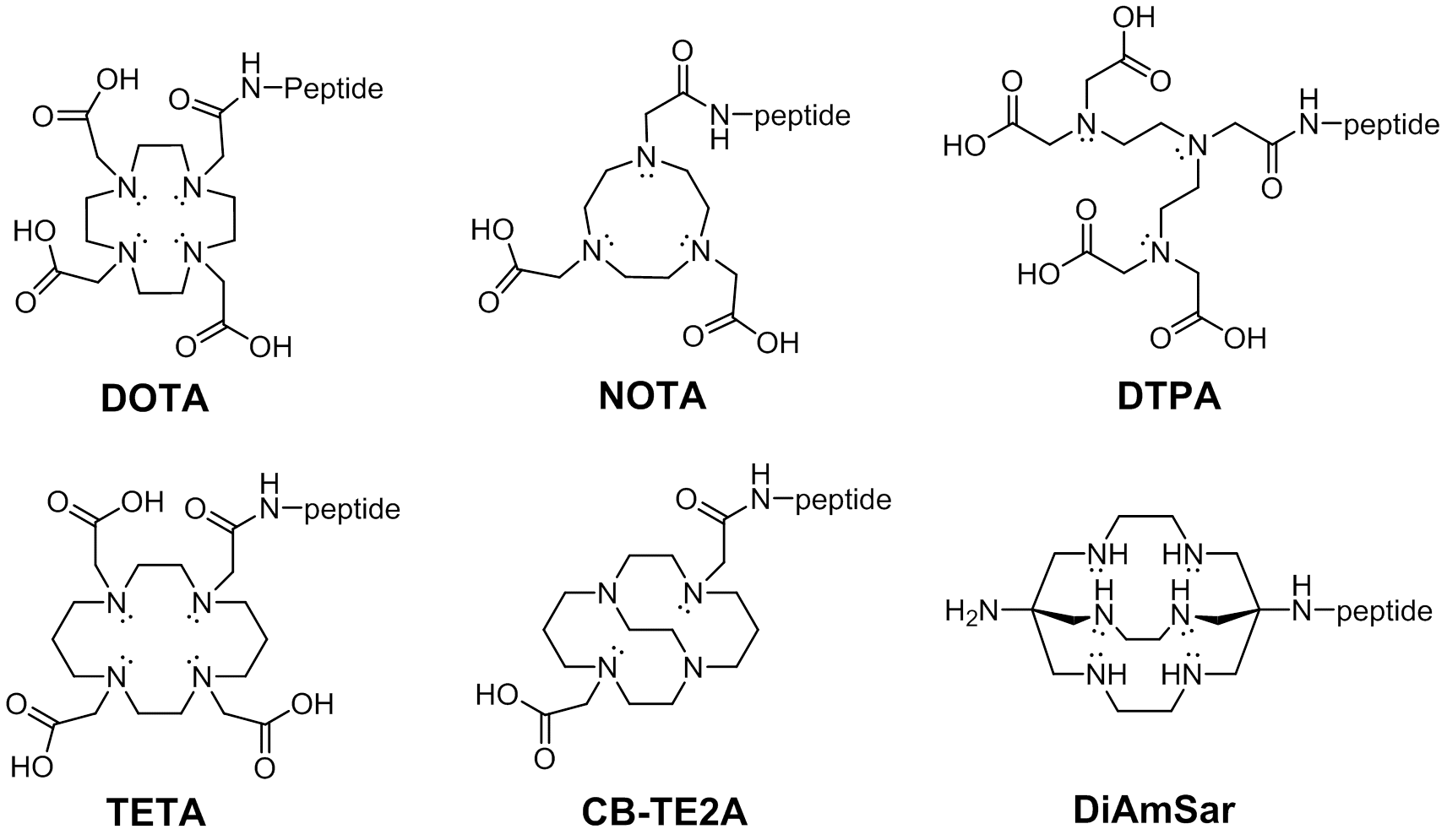
Table of Common Metal Chelates
| ACRONYM | FULL CHELATE NAME |
|---|---|
| DOTA | 1,4,7,10-tetraazacyclododecane-N,N,N,N-tetraacetic acid |
| NOTA | 1,4,7-triazacyclononane-N,N,N-triacetic acid |
| TETA | 1,4,8,11-tetraazacyclotetradecane-1,4,8,11-tetraacetic acid |
| DTPA | diethylenetriaminepentaacetic acid |
| IDA | Iminodiacetic acid |
| CB-TE2A | 4,11-bis(carboxymethyl)-1,4,8,11-tetraazabicyclo[6.6.2]hexadecane |
| DiAmSar | 1,8-Diamino-3,6,10,13,16,19-hexaazabicyclo[6,6,6]-eicosane |
| TRAP | 3,3′,3”-(((1,4,7-triazonane-1,4,7-triyl)tris(methylene))tris(hydroxyphosphoryl))tripropanoic acid |
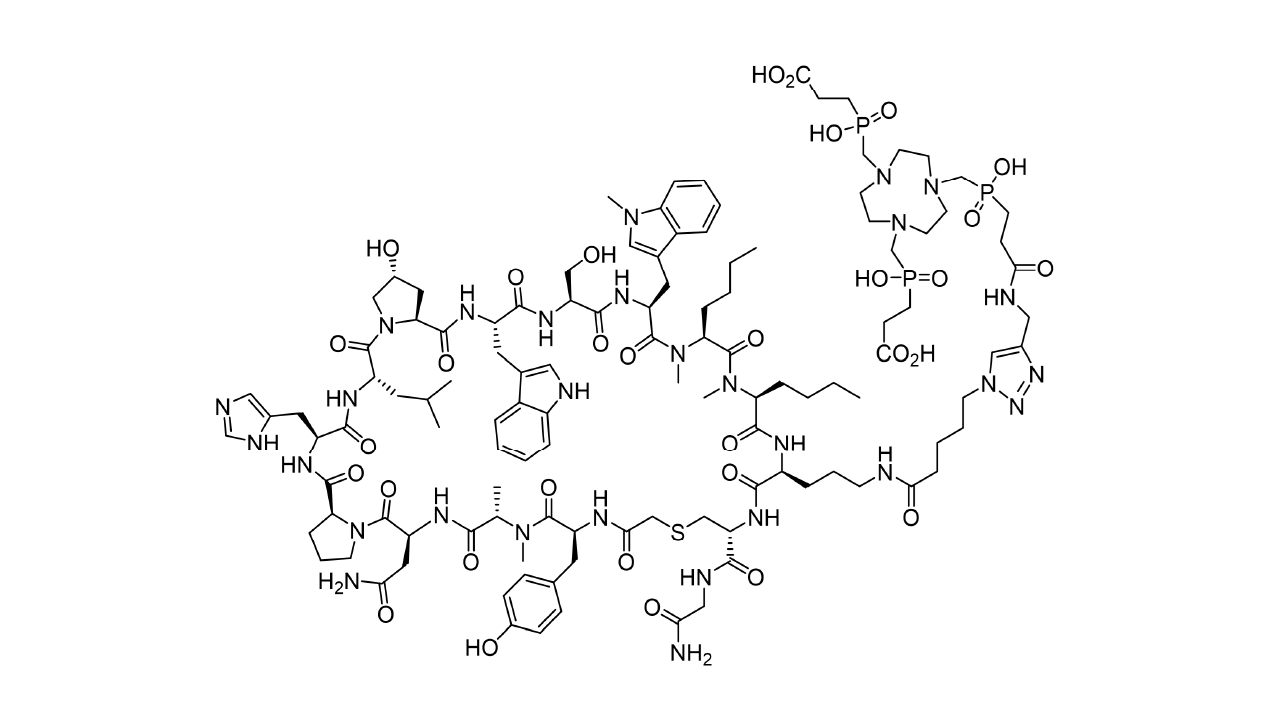
Quigley, Neil Gerard, Katja Steiger, Stefanie Felicitas Färber, Frauke Richter, Wilko Weichert, and Johannes Notni. Molecular Pharmaceutics (2024), 21(4), 1827-1837.
… by positron emission tomography (PET) imaging and ex vivo … clinical PD-L1 PET imaging because it detects even very low … The peptide WL12 was purchased from CPC Scientific (San …
PD-L1 Binding Peptides
An immune checkpoint protein called programmed cell death ligand (PD-L1) is a common biomarker for cancer because it is over-expressed in many tumor cells as an adaptive immune response to cytotoxic T-cells. Binding of PD-L1 to programmed cell death protein 1 (PD-1) receptors of infiltrating host immune cells triggers deactivation and immune suppression. Rapid and non-invasive positron emission topography (PET) imaging that can monitor PD-L1 expression levels and distribution would enable more efficient treatment options for cancer patients. Current immunotherapies rely on radiolabeled anti-PD-L1 antibodies to determine PD-L1 expression levels non-invasively in human tumors. Radiolabeled antibody conjugates, however, have long clearance times that limit the amount of imaging agents that can be injected and increases diagnosis time. Peptide-based PET tracers, on the other hand, have lower molecular weights compared to proteins and show enhanced clearance rates.
Chatterjee and co-workers hypothesized that PD-L1 binding peptides would more efficiently and rapidly detect PD-L1 expression levels in tumors. From a library of PD-L1 binding peptides, peptide WL12 (below) was selected to test their hypothesis. The peptide has several structural features that make it more resistant to proteolytic metabolism, namely: (1) macrocyclization (thioether), (2) N-methylated substituents and (3) the incorporation of unnatural amino acids. The single primary amine of the ornithine side chain provides a relatively easy method in which to conjugate a DOTA chelator for radiolabeling with 64Cu.
Peptide Receptor Radionuclide Citations
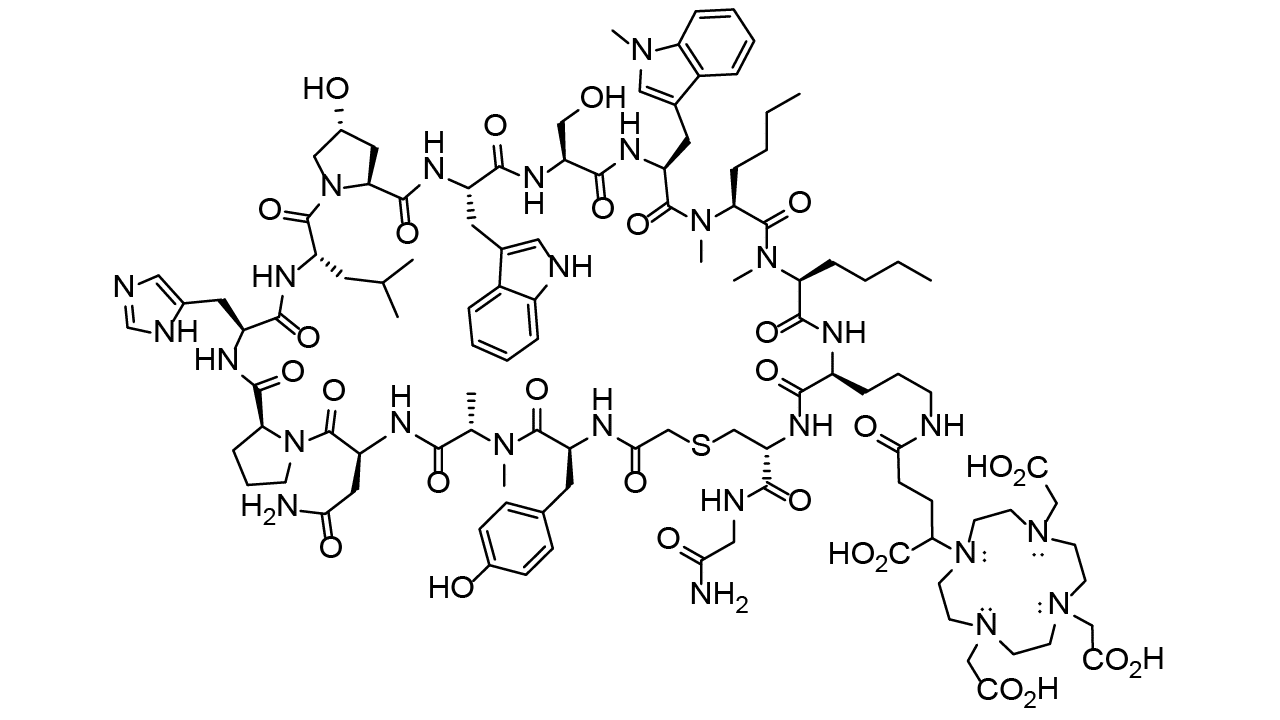
Lesniak, W. G.; Mease, R. C.; Chatterjee, S.; Kumar, D.; Lisok, A.; Wharram, B.; Kalagadda, V. R.; Emens, L. A.; Pomper, M. G.; Nimmagadda, S., Molecular Imaging 2019, 18, 1536012119852189.
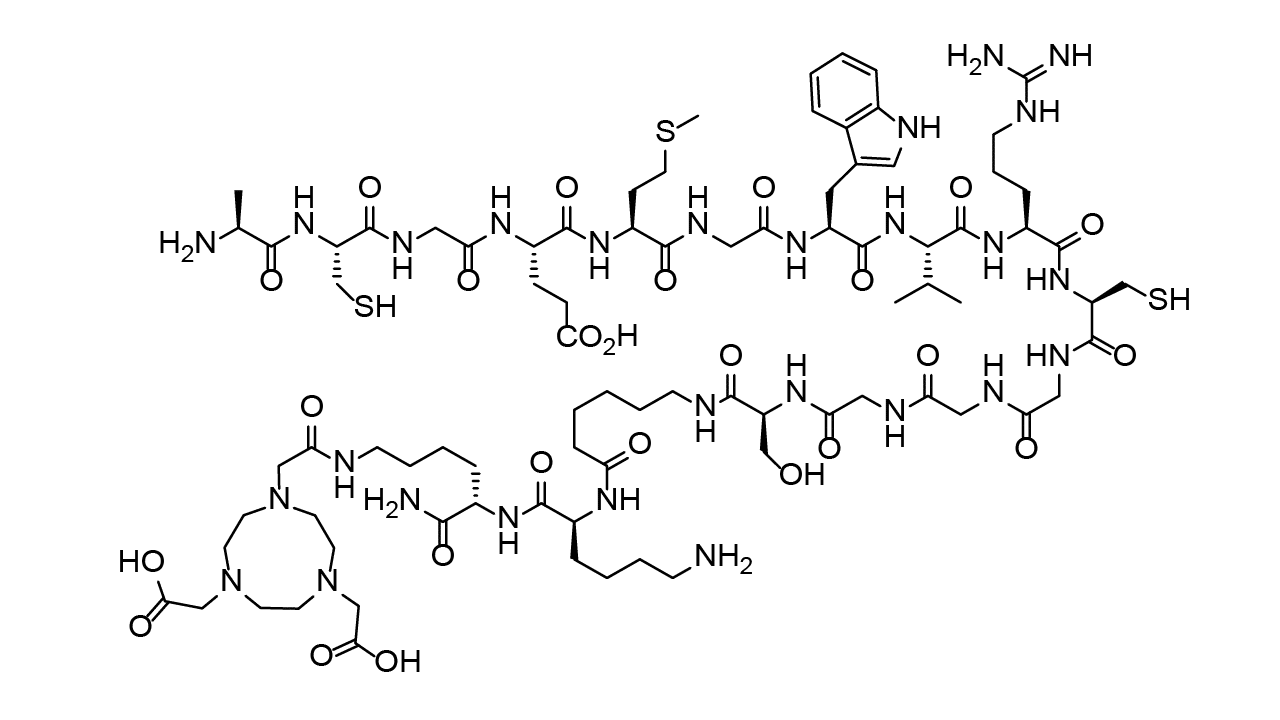
Sattiraju, A., et al. Oncotarget 2017, 8 (26), 42997-43007.
Marquez, B. V., et al. J Nucl Med 2014, 55 (6), 1029-34.
Mebrahtu, Efrem, et al. Nuclear Medicine and Biology 40.2 (2013): 190-196.
F.-H. Guo, et al. Journal of Nuclear and Radiochemistry, 34(3), 157-165 (2012)
RGD-DOTA Peptide Conjugates
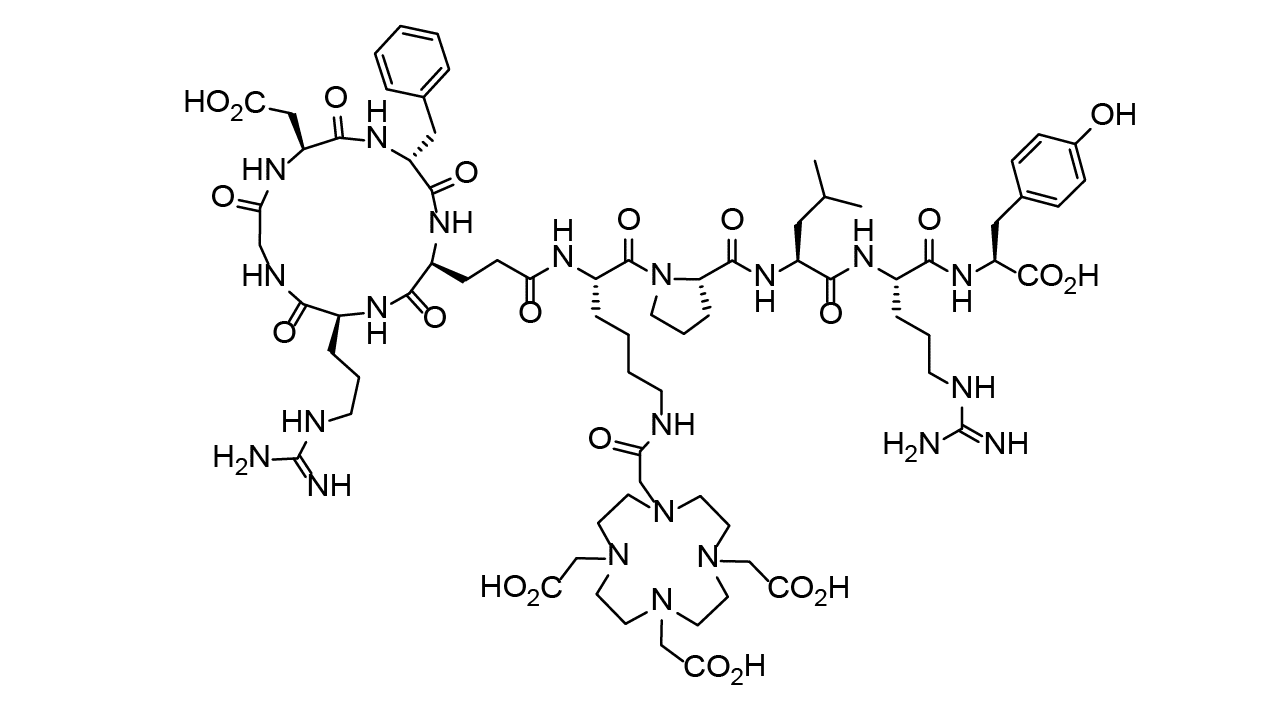
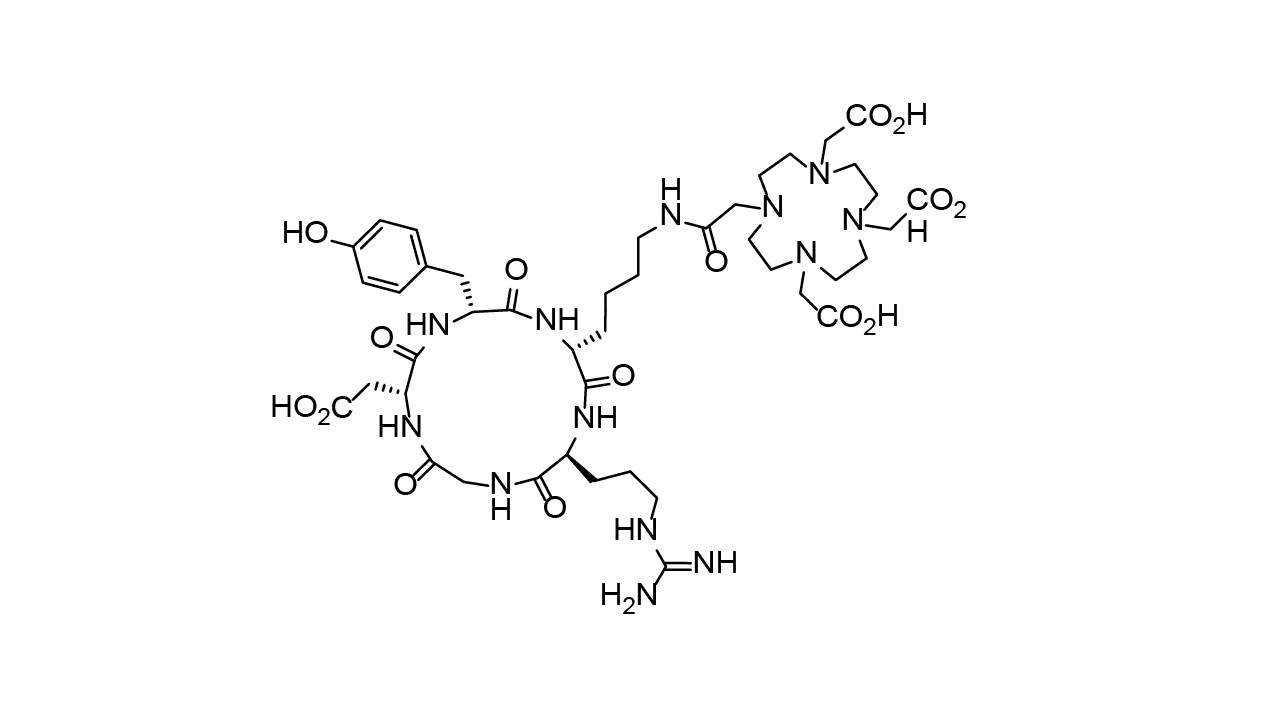
Cell-targeting peptides (CTPs) have emerged as effective tools for targeting cancer cells that overexpress certain receptor proteins that recognize and internalize CTPs. Inhibition of αvβ3 integrin receptors has been associated with tumor prevention and reduced tumor growth by antagonizing angiogenesis. RGD peptides, ligands which bind αvβ3 integrin receptors, are the most well studied for their importance in tumor angiogenesis and metastasis regulation. One of the most potent and selective of these peptide antagonists, cyclo[Arg-Gly-Asp-D-Phe-Val] (c[RGDfV]), was developed by Kessler and co-workers.[2]
The binding of RGD peptides to αvβ3 integrin receptors has been exploited in positron emission tomography (PET) for early detection and diagnosis of cancer. αvβ3 Integrins are co-localized with MMP-2 (a matrix metalloproteinases) in a variety of cancer cells and the expression level of MMP-2 has been correlated with tumor stage, invasiveness, and metastasis. To study the co-localization αvβ3 Integrin and MMP-2, Mebrahtu (left) designed an RGD-DOTA peptide conjugate that incorporates both integrin targeting and MMP-2 substrate moieties. Combining the peptide with DOTA provides the PET agent: cyclo(RGDfE)K-(DOTA)PLGVRY. The incorporation of a C-terminal tyrosine, for radio-halogenation (123I), enables the peptide to give a SPECT (single photon emission computed tomography) signal. The dually radiolabeled peptide provides a diagnostic tool for simultaneous imaging of cancer cells and monitoring of their pathophysiologic activity.
Selected Peptide Chelate Citations
Quigley, Neil Gerard, Katja Steiger, Stefanie Felicitas Färber, Frauke Richter, Wilko Weichert, and Johannes Notni. Molecular Pharmaceutics (2024), 21(4), 1827-1837.
… by positron emission tomography (PET) imaging and ex vivo … clinical PD-L1 PET imaging because it detects even very low … The peptide WL12 was purchased from CPC Scientific (San …
Holt, Daniel P., Dhiraj Kumar, Sridhar Nimmagadda, and Robert F. Dannals. Journal of Labelled Compounds and Radiopharmaceuticals 66, no. 2 (2023): 47-54.
to current Good Manufacturing Practice (cGMP) requirements. In addition, the production is … -NODA; Figure 1) was custom synthesized from CPC Scientific (San Jose, CA). The authentic …
Lin, Wilson, Eduardo Aluicio-Sarduy, Hailey A. Houson, Todd E. Barnhart, Volkan Tekin, Justin J. Jeffery, Ashley M. Weichmann, Kendall E. Barrett, Suzanne E. Lapi, and Jonathan W. Engle. Nuclear Medicine and Biology) 118 (2023): 108329.
Lyophilized NOTA-NT-20.3 (Ac-Lys(NOTA)-Pro-NMeArg-Arg-Pro-Tyr-Tle-Leu, 1383.6 g/mol, “NT”, CPC Scientific) was diluted to 1 mg/mL in ultrapure water (Milli-Q, >18.2 MΩ-cm) and used without further purification.
Makris, G.; Bandari, R. P.; Kuchuk, M.; Jurisson, S. S.; Smith, C. J.; Hennkens, H. M., Molecular Imaging and Biology, 2021, 23 (1), 52-61.
"NOTA/NODAGA-6Ahx- DPhe-Gln-Trp-Ala-Val-Gly-His-Sta-Leu-NH2 ; NOTA: 2,2′,2″-(1,4,7-triazacyclononane-1,4,7-triyl)triacetic acid and NODAGA: 2-(4,7-bis( carboxymethyl)-1,4,7-triazonan-1-yl)pentanedioic acid] were purchased from CPC Scientific [..]"
Capaccione, Kathleen M., Mikhail Doubrovin, Nikunj Bhatt, Akiva Mintz, and Andrei Molotkov. Molecules 25, no. 13 (2020): 3102.
NOTA–β-Ala–Gly–Gly–Ile–Glu–Phe–Asp–CHO (NOTA-GZP) was purchased from CPC scientific, Sunnyvale, CA, USA.
Lesniak, W. G.; Mease, R. C.; Chatterjee, S.; Kumar, D.; Lisok, A.; Wharram, B.; Kalagadda, V. R.; Emens, L. A.; Pomper, M. G.; Nimmagadda, S., Molecular Imaging 2019, 18, 1536012119852189.
The PD-L1-binding peptide, WL12 (sequence shown in Figure 1A), was custom synthesized by CPC Scientific (Sunnyvale, California) with >95% purity.
Sattiraju, A., et al. Oncotarget 2017, 8 (26), 42997-43007.
For Ac-225 labeling, the prepared DOTA-Pep-1L (CPC-scientific, San Jose, CA) was incubated with Ac-225 at 70°C for 50 minutes. The TLC plates were scanned on a BioScan Imaging Scanner. Cu-64 was purchased from Washington University in St. Louis. The custom peptide specific to IL13RA2 and a scrambled peptide were conjugated with NOTA by CPC scientific Inc (San Jose, CA). Both the peptides, Pep-1L and scrambled peptide-NOTA were radiolabeled with Cu-64 according to the previously reported methods [15].
Marquez, B. V., et al. J Nucl Med 2014, 55 (6), 1029-34.
"L19K was synthesized by CPC Scientific and comprised the sequence NO2A-PEG4-GGNECDIARMWEWECFERK-CONH2, with Cys-Cys disulfide bridge and polyethylene glycol (PEG4) as a spacer between peptide and chelator. "
Liu, Yongjian, et al. Radiology (2017): 161409.
"Synthesis, Labeling, and Stability of ECL1i. The ECL1i peptide (LGTFLKC) was synthesized from d-form amino acids by CPC Scientific (Sunnyvale, Calif)."
Skerratt, Sarah E., Sian Humphreys, Rita Ferreira, Csilla Jorgensen, Joe Warmus, Lei Zhao, Xiaohe Tong, and Sarah A. Nickolls. MedChemComm 7, no. 8 (2016): 1564-1571.
- Pfizer Neusentis, The Portway Building, Granta Park, Cambridge, UK.
- Pfizer Worldwide Research & Development, Eastern Point Road, Groton, Connecticut 06340, USA.
- CPC Scientific Inc., 1245 Reamwood Avenue, Sunnyvale, CA 94089, USA.
"antipeptide (EGVYVHPV), angiotensin II, human (DRVYIHPF), and isotopically (13C) labeled heptapeptide (AAAAHAA-NH2 [where “A” indicates a carbon thirteen (13C) "Synthesis was conducted at CPC Scientific Inc. Ac-Asp(OtBu)-Thr(tBu)-His(Trt)-Phe-Pro-Ile-Cys(Trt)-Ile-PhePEG3-Arg(Pbf)-Arg(Pbf)-Lys(Boc)-wang resin (2).. Ac-Asp-Thr-His-Phe-Pro-Ile-Cys-Ile-Phe-PEG3-Arg-Arg-Lys(BODIPY_TMR_C6)."
References
- Aumailley, M.; Gurrath, M.; Müller, G.; Calvete, J.; Timpl, R.; Kessler, H. FEBS Lett. 291 (1991): 50.
- Chatterjee, Samit, et al. “Rapid PD-L1 detection in tumors with PET using a highly specific peptide.” Biochemical and Biophysical Research Communications 483.1 (2017): 258-263.
CPC Scientific PRRT Citations
- Suthiram, J.; Pieters, A.; Mohamed Moosa, Z.; Zeevaart, J. R.; Sathekge, M. M.; Ebenhan, T.; Anderson, R. C.; Newton, C. L., Tachykinin Receptor-Selectivity of the Potential Glioblastoma-Targeted Therapy, DOTA-[Thi8, Met (O2) 11]-Substance P. International Journal of Molecular Sciences 2023, 24 (3), 2134.
- Mishra, A.; Kumar, D.; Gupta, K.; Lofland, G.; Sharma, A. K.; Banka, D. S.; Hobbs, R. F.; Dannals, R. F.; Rowe, S. P.; Gabrielson, E.; Nimmagadda, S., Gallium-68-labeled Peptide PET Quantifies Tumor Exposure of PD-L1 Therapeutics. Clin Cancer Res 2023, 29 (3), 581-591.
- Lin, W.; Aluicio-Sarduy, E.; Houson, H. A.; Barnhart, T. E.; Tekin, V.; Jeffery, J. J.; Weichmann, A. M.; Barrett, K. E.; Lapi, S. E.; Engle, J. W., Theranostic cobalt-55/58m for neurotensin receptor-mediated radiotherapy in vivo: A pilot study with dosimetry. Nuclear Medicine and Biology 2023, 118, 108329.
- Houson, H.; Tekin, V.; Lin, W.; Aluicio-Sarduy, E.; Engle, J.; Lapi, S., PET Imaging of the Neurotensin Targeting Peptide NOTA-NT-20.3 Using Cobalt-55, Copper-64 and Gallium-68. Pharmaceutics 2022, 14, 2724. s Note: MDPI stays neutral with regard to jurisdictional claims in published …: 2022.
- Esposito, T. V. F.; Rodriguez-Rodriguez, C.; Blackadar, C.; Haney, E. F.; Pletzer, D.; Hancock, R. E. W.; Saatchi, K.; Hafeli, U. O., Biodistribution and toxicity of innate defense regulator 1018 (IDR-1018). Eur J Pharm Biopharm 2022, 179, 11-25.
- Ducharme, M.; Houson, H. A.; Fernandez, S. R.; Lapi, S. E., Evaluation of 68Ga-Radiolabeled Peptides for HER2 PET Imaging. Diagnostics 2022, 12 (11), 2710.
- Makris, G.; Shegani, A.; Kankanamalage, P. H.; Kuchuk, M.; Bandari, R. P.; Smith, C. J.; Hennkens, H. M., Preclinical evaluation of novel 64Cu-labeled gastrin-releasing peptide receptor bioconjugates for PET imaging of prostate cancer. Bioconjugate Chemistry 2021, 32 (7), 1290-1297.
- Kumar, D.; Mishra, A.; Lisok, A.; Kureshi, R.; Shelake, S.; Plyku, D.; Sen, R.; Doucet, M.; De Silva, R. A.; Mease, R. C., Pharmacodynamic measures within tumors expose differential activity of PD (L)-1 antibody therapeutics. Proceedings of the National Academy of Sciences 2021, 118 (37), e2107982118.
- Hao, L.; Rohani, N.; Zhao, R. T.; Pulver, E. M.; Mak, H.; Kelada, O. J.; Ko, H.; Fleming, H. E.; Gertler, F. B.; Bhatia, S. N., Microenvironment-triggered multimodal precision diagnostics. Nat Mater 2021, 20 (10), 1440-1448.
- Mac, Q. D.; Xu, C.; Bowen, J. R.; Sivakumar, A.; Phuengkham, H.; Su, F.-Y.; Stentz, S. Z.; Sim, H.; Harris, A. M.; Li, T. T., Activity-based urinary biomarkers of response and resistance to checkpoint blockade immunotherapy. BioRxiv 2020, 2020.12. 10.420265.
- English, S. J.; Sastriques, S. E.; Detering, L.; Sultan, D.; Luehmann, H.; Arif, B.; Heo, G. S.; Zhang, X.; Laforest, R.; Zheng, J.; Lin, C. Y.; Gropler, R. J.; Liu, Y., CCR2 Positron Emission Tomography for the Assessment of Abdominal Aortic Aneurysm Inflammation and Rupture Prediction. Circ Cardiovasc Imaging 2020, 13 (3), e009889.
- Lesniak, W. G.; Mease, R. C.; Chatterjee, S.; Kumar, D.; Lisok, A.; Wharram, B.; Kalagadda, V. R.; Emens, L. A.; Pomper, M. G.; Nimmagadda, S., Development of [18F] FPy-WL12 as a PD-L1 specific PET imaging peptide. Molecular imaging 2019, 18, 1536012119852189.
- Kumar, D.; Lisok, A.; Dahmane, E.; McCoy, M.; Shelake, S.; Chatterjee, S.; Allaj, V.; Sysa-Shah, P.; Wharram, B.; Lesniak, W. G.; Tully, E.; Gabrielson, E.; Jaffee, E. M.; Poirier, J. T.; Rudin, C. M.; Gobburu, J. V.; Pomper, M. G.; Nimmagadda, S., Peptide-based PET quantifies target engagement of PD-L1 therapeutics. J Clin Invest 2019, 129 (2), 616-630.
- Zhao, Y.; Pang, B.; Detering, L.; Luehmann, H.; Yang, M.; Black, K.; Sultan, D.; Xia, Y.; Liu, Y., Melanocortin 1 Receptor Targeted Imaging of Melanoma With Gold Nanocages and Positron Emission Tomography. Mol Imaging 2018, 17, 1536012118775827.
- De Silva, R. A.; Kumar, D.; Lisok, A.; Chatterjee, S.; Wharram, B.; Venkateswara Rao, K.; Mease, R.; Dannals, R. F.; Pomper, M. G.; Nimmagadda, S., Peptide-based 68Ga-PET radiotracer for imaging PD-L1 expression in cancer. Molecular pharmaceutics 2018, 15 (9), 3946-3952.
- de Oliveira, E. A.; Faintuch, B. L.; Seo, D.; Barbezan, A. B.; Funari, A.; Targino, R. C.; Moro, A. M., Radiolabeled GX1 Peptide for Tumor Angiogenesis Imaging. Appl Biochem Biotechnol 2018, 185 (4), 863-874.
- Bandara, N.; Reynolds, T. J. S.; Schehr, R.; Bandari, R. P.; Diebolder, P. J.; Krieger, S.; Xu, J.; Miao, Y.; Rogers, B. E.; Smith, C. J., Matched-pair, 86Y/90Y-labeled, bivalent RGD/bombesin antagonist,[RGD-Glu-[DO3A]-6-Ahx-RM2], as a potential theranostic agent for prostate cancer. Nuclear medicine and biology 2018, 62, 71-77.
- Sattiraju, A.; Solingapuram Sai, K. K.; Xuan, A.; Pandya, D. N.; Almaguel, F. G.; Wadas, T. J.; Herpai, D. M.; Debinski, W.; Mintz, A., IL13RA2 targeted alpha particle therapy against glioblastomas. Oncotarget 2017, 8 (26), 42997-43007.
- Liu, Y.; Gunsten, S. P.; Sultan, D. H.; Luehmann, H. P.; Zhao, Y.; Blackwell, T. S.; Bollermann-Nowlis, Z.; Pan, J. H.; Byers, D. E.; Atkinson, J. J.; Kreisel, D.; Holtzman, M. J.; Gropler, R. J.; Combadiere, C.; Brody, S. L., PET-based Imaging of Chemokine Receptor 2 in Experimental and Disease-related Lung Inflammation. Radiology 2017, 283 (3), 758-768.
- Chatterjee, S.; Lesniak, W. G.; Miller, M. S.; Lisok, A.; Sikorska, E.; Wharram, B.; Kumar, D.; Gabrielson, M.; Pomper, M. G.; Gabelli, S. B., Rapid PD-L1 detection in tumors with PET using a highly specific peptide. Biochemical and biophysical research communications 2017, 483 (1), 258-263.
- Zhao, Y.; Pang, B.; Luehmann, H.; Detering, L.; Yang, X.; Sultan, D.; Harpstrite, S.; Sharma, V.; Cutler, C. S.; Xia, Y., Gold nanoparticles doped with 199Au atoms and their use for targeted cancer imaging by SPECT. Advanced healthcare materials 2016, 5 (8), 928-935.
- Pandya, D. N.; Hantgan, R.; Budzevich, M. M.; Kock, N. D.; Morse, D. L.; Batista, I.; Mintz, A.; Li, K. C.; Wadas, T. J., Preliminary therapy evaluation of 225Ac-DOTA-c (RGDyK) demonstrates that Cerenkov radiation derived from 225Ac daughter decay can be detected by optical imaging for in vivo tumor visualization. Theranostics 2016, 6 (5), 698.
- Malamas, A. S.; Gameiro, S. R.; Knudson, K. M.; Hodge, J. W., Sublethal exposure to alpha radiation (223Ra dichloride) enhances various carcinomas’ sensitivity to lysis by antigen-specific cytotoxic T lymphocytes through calreticulin-mediated immunogenic modulation. Oncotarget 2016, 7 (52), 86937.
- Jiang, Z.; Bandari, R. P.; Reynolds, T. J. S.; Xu, J.; Miao, Y.; Rold, T. L.; Szczodroski, A. F.; Jurisson, S. S.; Smith, C. J., Molecular imaging investigations of a 67Ga/64Cu labeled bivalent ligand,[RGD-Glu-(DO3A)-6-Ahx-RM2], targeting GRPR/α v β 3 biomarkers: a comparative study. Radiochimica Acta 2016, 104 (7), 499-512.
- Reynolds, T. J. S.; Schehr, R.; Liu, D.; Xu, J.; Miao, Y.; Hoffman, T. J.; Rold, T. L.; Lewis, M. R.; Smith, C. J., Characterization and evaluation of DOTA-conjugated Bombesin/RGD-antagonists for prostate cancer tumor imaging and therapy. Nuclear Medicine and Biology 2015, 42 (2), 99-108.
- Oliveira, E. A.; Faintuch, B. L., Radiolabeling and biological evaluation of the GX1 and RGD-GX1 peptide sequence for angiogenesis targeting. Nucl Med Biol 2015, 42 (2), 123-30.
- Mastren, T.; Marquez, B. V.; Sultan, D. E.; Bollinger, E.; Eisenbeis, P.; Voller, T.; Lapi, S. E., Cyclotron Production of High-Specific Activity 55Co and In Vivo Evaluation of the Stability of 55Co Metal-Chelate-Peptide Complexes. Mol Imaging 2015, 14 (10), 526-33.
- Lesniak, W. G.; Sikorska, E.; Shallal, H.; Behnam Azad, B.; Lisok, A.; Pullambhatla, M.; Pomper, M. G.; Nimmagadda, S., Structural characterization and in vivo evaluation of β-hairpin peptidomimetics as specific CXCR4 imaging agents. Molecular pharmaceutics 2015, 12 (3), 941-953.
- Warren, A. D.; Gaylord, S. T.; Ngan, K. C.; Dumont Milutinovic, M.; Kwong, G. A.; Bhatia, S. N.; Walt, D. R., Disease detection by ultrasensitive quantification of microdosed synthetic urinary biomarkers. J Am Chem Soc 2014, 136 (39), 13709-14.
- Marquez, B. V.; Ikotun, O. F.; Parry, J. J.; Rogers, B. E.; Meares, C. F.; Lapi, S. E., Development of a Radiolabeled Irreversible Peptide Ligand for PET Imaging of Vascular Endothelial Growth Factor. J Nucl Med 2014, 55 (6), 1029-34.
- Luehmann, H. P.; Pressly, E. D.; Detering, L.; Wang, C.; Pierce, R.; Woodard, P. K.; Gropler, R. J.; Hawker, C. J.; Liu, Y., PET/CT imaging of chemokine receptor CCR5 in vascular injury model using targeted nanoparticle. J Nucl Med 2014, 55 (4), 629-34.
- Durkan, K.; Jiang, Z.; Rold, T. L.; Sieckman, G. L.; Hoffman, T. J.; Bandari, R. P.; Szczodroski, A. F.; Liu, L.; Miao, Y.; Reynolds, T. S., A heterodimeric [RGD-Glu-[64Cu-NO2A]-6-Ahx-RM2] αvβ3/GRPr-targeting antagonist radiotracer for PET imaging of prostate tumors. Nuclear medicine and biology 2014, 41 (2), 133-139.
- Mebrahtu, E.; Zheleznyak, A.; Hur, M. A.; Laforest, R.; Lapi, S. E., Initial characterization of a dually radiolabeled peptide for simultaneous monitoring of protein targets and enzymatic activity. Nucl Med Biol 2013, 40 (2), 190-6.
- Ng, Q. K.; Segura, T.; Ben-Shlomo, A.; Krause, T.; Mindt, T. L.; Walter, M. A., The influence of different metal-chelators on the biological profile of nanoparticles for gallium-68 based molecular imaging. Journal of Nano Research 2012, 20, 21-31.