LL37 (host defense peptide) (Table 2) was a purchased from (custom synthesized by CPC Scientific Inc., CA, USA)
Abstract
Wound treatment remains one of the most prevalent and economically burdensome healthcare concerns, often complicated by prolonged inflammation and bacterial infection, contributing to morbidity and mortality. Agents commonly used to treat chronic wound infections are limited due to their toxicity, multifactorial etiology of chronic wounds, deep skin infections, lack of sustained controlled delivery of drugs, and development of drug resistance. LL37 is an endogenous host defense peptide that has been shown to exhibit antimicrobial activity and is involved in the modulation of wound healing. Serpin A1 (A1) is a neutrophil elastase inhibitor and has been shown to demonstrate wound-healing property. Hence, our goal was to develop a topical combination nanomedicine for the controlled sustained delivery of LL37 and A1 that at precise combination ratios will significantly promote wound closure, reduce bacterial contamination, and enhance anti-inflammatory activity. We have successfully developed a solid lipid nanoparticle (SLN) formulation that can simultaneously deliver LL37 and A1 at specific ratios resulting in accelerated wound healing by promoting wound closure in BJ fibroblast cells and keratinocytes as well as synergistic enhancement of antibacterial activity against S. aureus and E. coli in comparison to LL37 or A1 alone.
SOCIAL MEDIA
Connect with us and stay updated by following our social media channels.
Latest Briefings from our Knowledge Center
Press Releases, Industry News, Articles, and Technical Content
Baba, Osamu, Andrew Elvington, Martyna Szpakowska, Deborah Sultan, Gyu Seong Heo, Xiaohui Zhang, Hannah Luehmann et al. bioRxiv (2020).
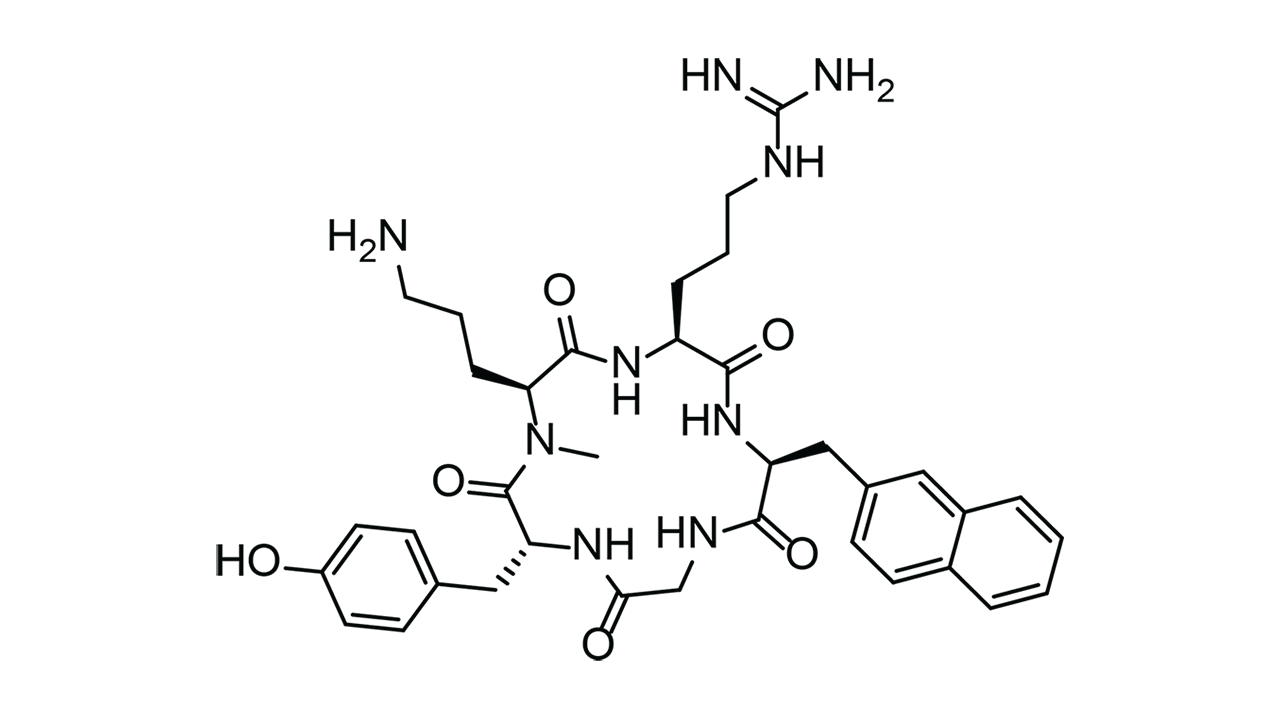
The FC131 peptide (cyclo[2-Nal-Gly-d-Tyr-NMe-d-Orn-Arg]) was synthesized by CPC Scientific (Sunnyvale, CA).
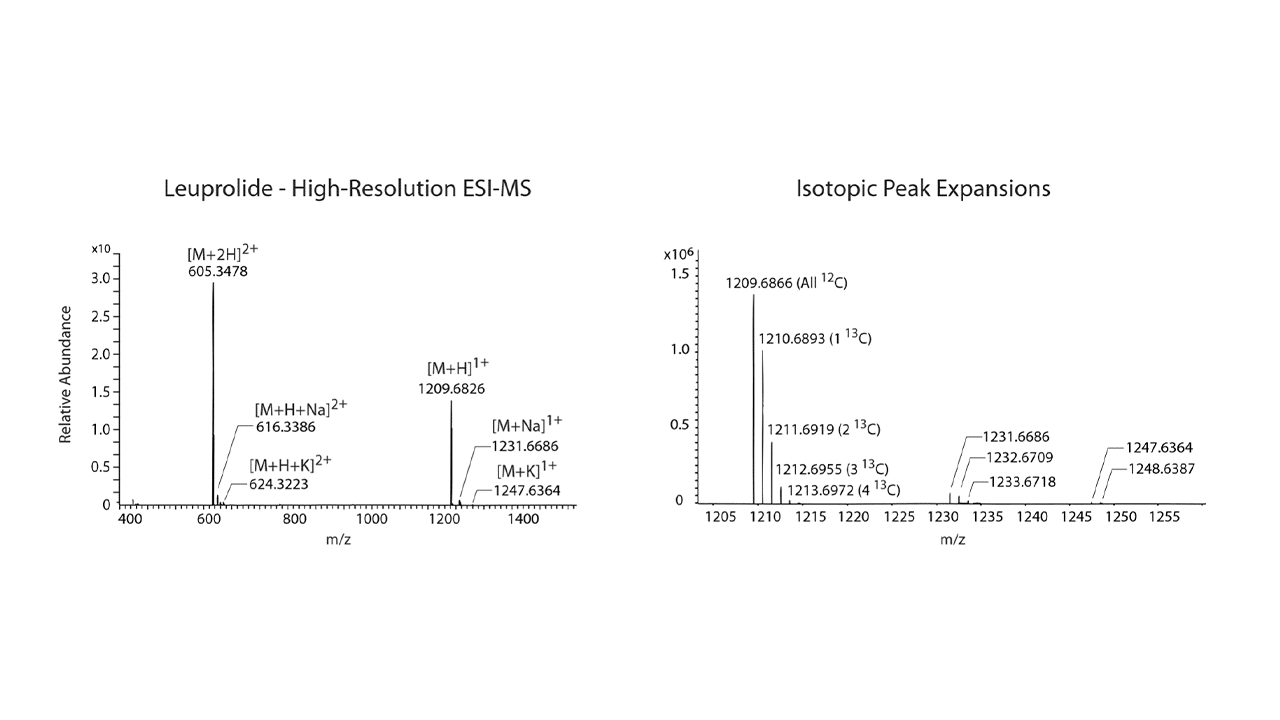
This guide will help you understand how to read ESI spectra for large and complex bio-molecules like peptides. Other techniques such as high-performance liquid chromatography (HPLC) show one major peak (i.e., absorbance and purity for RP-HPLC) in the spectra, making the interpretation straightforward. ESI-MS spectra are more complicated due to the multiplicity of the data. While most small molecules (100-500 AMU) behave well in ESI-MS and ionize as a single charged state, larger biomolecules, such as peptides, ionize as multiple charged variants. A major advantage of ESI-MS over other mass spectroscopy techniques is that molecular fragmentation is rare (t-Boc groups and a few other protection groups are an exception), which is why ESI-MS is often referred to as a soft ionization technique.
Vickers, Timothy A., Meghdad Rahdar, Thazha P. Prakash, and Stanley T. Crooke. Nucleic Acids Research (2019).
A solution of 1.5 umol SmBiT peptide (Val-Thr-Gly-Tyr-Arg-Leu-Phe-Glu-Glu-Ile-Leu-Gly-Gly-Ser-Gly-Gly-Lys(N3)-NH2) containing an azide group at the C-terminus (CPC Scientific, 1245 Reamwood Ave, Sunnyvale, CA, USA) in DMSO (0.5 ml) was added and the reaction mixture was stirred at room temperature for 5 h.
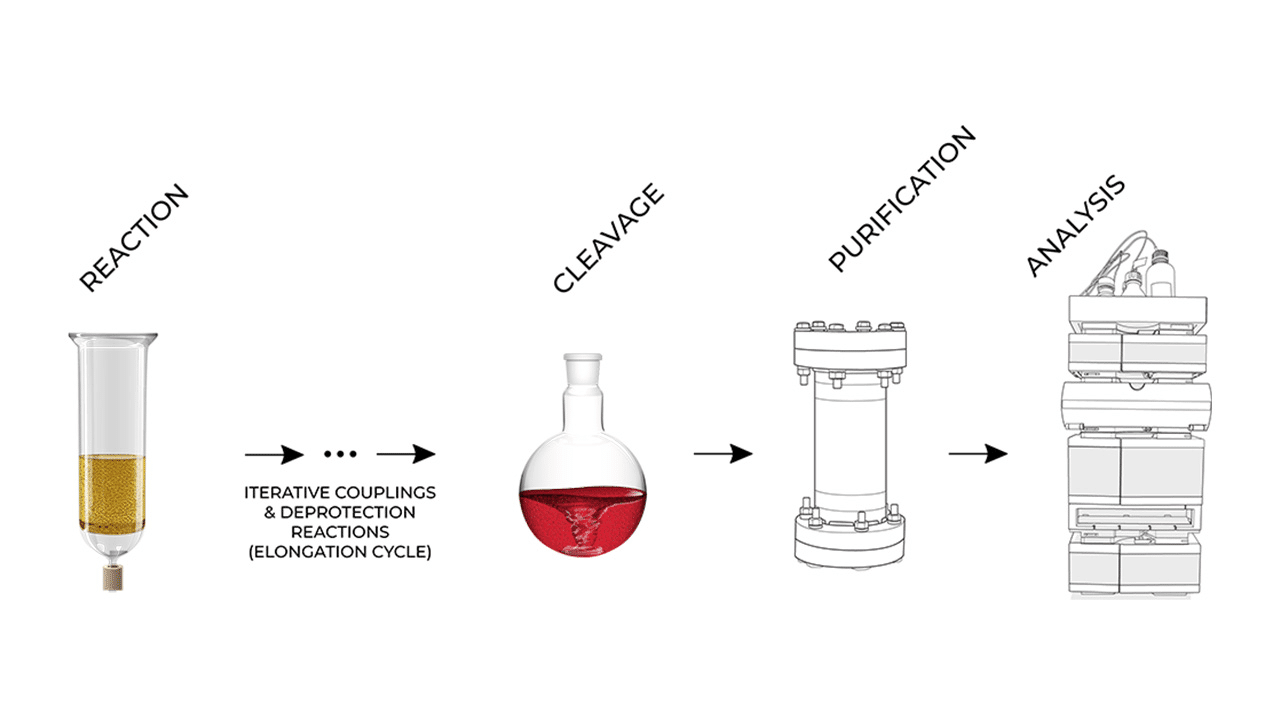
Solid-phase peptide synthesis (SPPS) has many advantages over liquid-phase peptide synthesis (LPPS) for preparing and manufacturing synthetic peptides. Except the synthesis of short peptide sequences (i.e., less than five amino acid residues), SPPS is faster, more efficient, and more economical than liquid-phase peptide synthesis (LPPS). Some of the advantages of SPPS include: (1) Excess reagents and products can be easily washed away, (2) using excess reagents to increase reaction rates and drive reactions to completion, (3) intermediates do not require isolation or characterization, (4) access to a broader range of solvents with low volatility and high polarity, (5) tethered peptide provides a ‘pseudo-dilute’ microenvironment, which can inhibit intermolecular reactions, making some modifications easier to accomplish, and (6) compatibility with automated synthesis technology.
Lo, J.H., Hao, L., Muzumdar, M.D., Raghavan, S., Kwon, E.J., Pulver, E.M., Hsu, F., Aguirre, A.J., Wolpin, B.M., Fuchs, C.S. and Hahn, W.C. Molecular Cancer Therapeutics 17, no. 11 (2018): 2377-2388.
pTP-TAMRA-iRGD (CH3(CH)15-[GWTLNSAGYLLGKINLKALAALAKKIL-GGK(TAMRA)GGCRGDKGPDC, Cys-Cys bridge]) used in all figures except Fig. S1 was synthesized by CPC Scientific.
Ng, Ee Xien, Myat Noe Hsu, Guoyun Sun, and Chia-Hung Chen. Methods in Enzymology 628 (2019): 59-94.
The peptide sequences of the four FRET-based substrates ([..] CPC Scientific) are as follows: UV: AlexaFluor405-Leu-Ala-Gln-Ala-HompheArg-Ser-Lys (QSY35)-NH2; Blue: Dabcyl-Gly-Pro-Leu-Gly-Met-Arg-Gly-Lys (5-FAM)-NH2; Green: QSY7-Ala-Pro-Phe-Glu..
West, J.A., Tsakmaki, A., Huang, J.H., Ghosh, S.S., Parkes, D.G., Wismann, P., Rigbolt, K.T., Pedersen, P.J., Pavlidis, P., Maggs, D. and Lopez-Talavera, J.C. bioRxiv (2019) 822122.
- Fractyl Laboratories Inc, Lexington, MA, 02421, USA
- Diabetes Research Group, School of Life Course Sciences, Faculty of Life Science and Medicine, King’s College London, London, WC2R 2LS, England, UK
[..] infusion of vehicle 2 via osmotic minipump; (2) glucagon-like peptide-1 receptor (GLP-1R) agonist (0.2 mg/kg liraglutide, SC, QD, Victoza (Novo Nordisk, Bagsværd, Denmark) and continuous infusion of vehicle 2 via osmotic minipump; (3) vehicle 1 (SC, QD) and continuous infusion of a glucose-dependent insulinotropic polypeptide receptor (GIPR) antagonist (∼4.5 mg/kg/day / 56.8 nmol/kg/h GIP[3-30]NH2, CPC Scientific Inc, Sunnyvale, CA, USA) via osmotic minipump;
Artur Javmen, Vladimir Y. Toshchakov, et al. Journal of Leukocyte Biology (2019).
All CPDPs included the N‐terminal Antennapedia homeodomain sequence RQIKIWFQNRRMKWKK.38 The Cy3‐labeled peptides were produced by CPC Scientific (Sunnyvale, CA, USA). The Cy3 label was placed at the peptide N‐terminus..
Gilles, Maud-Emmanuelle, Slack, Frank J, et al. Oncotarget, 2019, Vol. 10, (No. 51), pp: 5349-5358
"Tandem peptide (pTP-iRGD: CH3(CH)15-GWTLNSAGYLLGKINLKALAALAKKIL-GGK(TAMRA)GGCRGDKGPDC, Cys-Cys bridge) was synthesized by CPC Scientific."