
"Epitope mapping studies were carried out using an overlapping series of synthetic peptides (CPC Scientific, CA) designed based on the primary sequence of OPN. Peptides corresponding to the region 143-172 of human OPN are listed below [..]"
Abstract
Osteopontin (OPN), also known as SPP1 (secreted phosphoprotein), is an integrin binding glyco-phosphoprotein produced by a variety of tissues. In cancer patients expression of OPN has been associated with poor prognosis in several tumor types including breast, lung, and colorectal cancers. Despite wide expression in tumor cells and stroma, there is limited evidence supporting role of OPN in tumor progression and metastasis. Using phage display technology we identified a high affinity a nti-O PN m onoclonal antibody (hereafter AOM1). The binding site for AOM1 was identified as SVVYGLRSKS sequence which is immediately adjacent to the RGD motif and also spans the thrombin cleavage site of the human OPN. AOM1 efficiently inhibited OPNa binding to recombinant integrin αvβ3 with an IC50 of 65 nM. Due to its unique binding site, AOM1 is capable of inhibiting OPN cleavage by thrombin which has been shown to produce an OPN fragment that is biologically more active than the full length OPN. Screening of human cell lines identified tumor cells with increased expression of OPN receptors (αvβ3 and CD44v6) such as mesothelioma, hepatocellular carcinoma, breast, and non-small cell lung adenocarcinoma (NSCLC). CD44v6 and αvβ3 were also found to be highly enriched in the monocyte, but not lymphocyte, subset of human peripheral blood mononuclear cells (hPBMCs). In vitro, OPNa induced migration of both tumor and hPBMCs in a transwell migration assay. AOM1 significantly blocked cell migration further validating its specificity for the ligand. OPN was found to be enriched in mouse plasma in a number of pre-clinical tumor model of non-small cell lung cancers. To assess the role of OPN in tumor growth and metastasis and to evaluate a potential therapeutic indication for AOM1, we employed a KrasG12D-LSLp53fl/fl subcutaneously implanted in vivo model of NSCLC which possesses a high capacity to metastasize into the lung. Our data indicated that treatment of tumor bearing mice with AOM1 as a single agent or in combination with Carboplatin significantly inhibited growth of large metastatic tumors in the lung further supporting a role for OPN in tumor metastasis and progression.
“Epitope mapping studies were carried out using an overlapping series of synthetic peptides (CPC Scientific, CA) designed based on the primary sequence of OPN. Peptides corresponding to the region 143-172 of human OPN are listed below:
1. 143EVFTPVVPTVDTYDGRGDSVVYGLRSKSKK172
2. 143EVFTPVVPTVDTYDGRGDSVVYGLR167
3. 143EVFTPVVPTVDTYD156
4. 156DGRGDSVVYGLRSKSKK172″
SOCIAL MEDIA
Connect with us and stay updated by following our social media channels.
Latest Briefings from our Knowledge Center
Press Releases, Industry News, Articles, and Technical Content
Järveläinen, Harri A., Christian Schmithals, Maike von Harten, Bianca Kakoschky, Thomas J. Vogl, Stephen Harris, Claire Henson, Gemma Bullen-Clerkson, and Albrecht Piiper. International Journal of Molecular Sciences 24, no. 6 (2023): 5700.
The cyclic iRGD/CEND-1 peptide [sequence: CRGDKGPDC] and RGD control peptide (CRGDDGPKC) for pre-clinical use was sourced either from GenScript (Piscataway, NJ, USA) or CPC Scientific (Hangzhou, China).
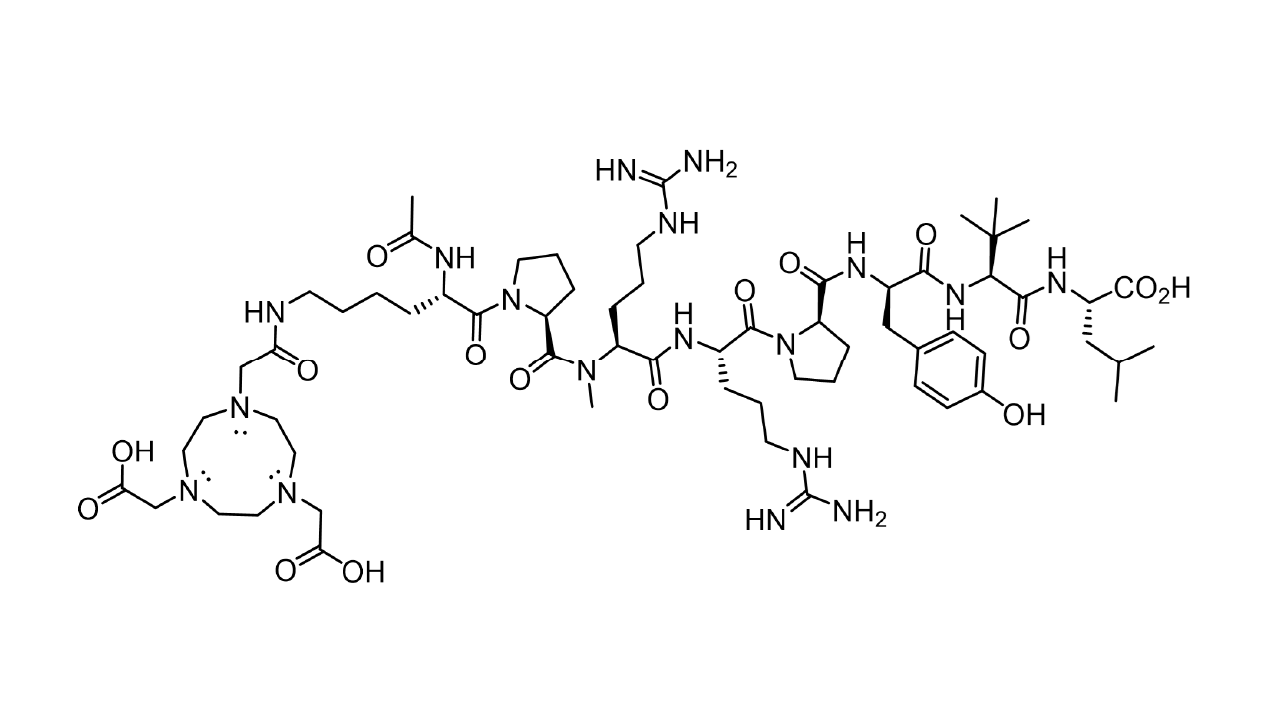
Lin, Wilson, Eduardo Aluicio-Sarduy, Hailey A. Houson, Todd E. Barnhart, Volkan Tekin, Justin J. Jeffery, Ashley M. Weichmann, Kendall E. Barrett, Suzanne E. Lapi, and Jonathan W. Engle. Nuclear Medicine and Biology) 118 (2023): 108329.
Lyophilized NOTA-NT-20.3 (Ac-Lys(NOTA)-Pro-NMeArg-Arg-Pro-Tyr-Tle-Leu, 1383.6 g/mol, “NT”, CPC Scientific) was diluted to 1 mg/mL in ultrapure water (Milli-Q, >18.2 MΩ-cm) and used without further purification.
Development of a selective, sensitive and robust oxyntomodulin dual monoclonal antibody immunoassay.
Umberger, T.S., Ming, W., Cox, J.M., Konrad, R.J. and Siegel, R.W. Bioanalysis 14, no. 18 (2022): 1229-1239.
- Lilly Research Laboratories, Eli Lilly & Company, Indianapolis, IN46285, USA
Human K2 EDTA and P800 plasma (500 μl) was spiked with proglucagon 33–61, 35–61 and 36–61 stable-isotope-labeled internal standard peptides (CPC Scientific, custom order) and diluted with I buffer (25 mmol/l Tris-HCl, 25 mmol/l HEPES, 300 mmol/l NaCl, 0.1% (v/v) octyl β-D-glucopyranoside, pH 7.5).
Line, J.E.; Seal, B.S.; Garrish, J.K. Appl. Microbiol. 2022, 2, 688–700.
Peptides were synthesized using standard solid-phase(Fmoc) chemistry with a peptide synthesizer (CPC Scientific Inc., Sunnyvale, CA 94089,USA, C12K-2β12 [..]
Kirk, N.S., Chen, Q., Wu, Y.G., Asante, A.L., Hu, H., Espinosa, J.F., Martínez-Olid, F., Margetts, M.B., Mohammed, F.A., Kiselyov, V.V. and Barrett, D.G. Nature Communications 13, no. 1 (2022): 5695.
- Eli Lilly and Company, Lilly Corporate Center, Indianapolis, IN 46285, USA.
Peptides were synthesized under contract by CPC Scientific, except for the N-terminally acetylated version of IM172N22 and the Glu3Arg, Glu3Ala, Glu4Arg, Glu4Ala, Glu5Ala, Glu5Arg, Trp6Ala, Gln8Ala, Ile9Ala, Glu10Ala, Glu10Arg and Tyr14Ala mutants of IM172N22
Coskun, T., Urva, S., Roell, W.C., Qu, H., Loghin, C., Moyers, J.S., O’Farrell, L.S., Briere, D.A., Sloop, K.W., Thomas, M.K. and Pirro, V. Cell Metabolism 34, no. 9 (2022): 1234-1247.
- Eli Lilly and Company, Lilly Corporate Center, Indianapolis, IN 46285, USA
Homologous and heterologous competition experiments were performed with non-radioactive peptide analogues[127I]-Tyr1-GIP(1-42) and [127]-Tyr10-GIP(1-42) to ensure quantification of the high-affinity binding site of the GIPR. Peptide analogues were generated using synthetic [127I]-Tyr amino acid building blocks (CPC Scientific).
Cecil, D.L., Curtis, B., Gad, E., Gormley, M., Timms, A.E., Corulli, L., Bos, R., Damle, R.N., Sepulveda, M.A. and Disis, M.L. Scientific Reports 12, no. 1 (2022): 13618.
- Cancer Vaccine Institute, University of Washington, 850 Republican Street, Brotman Bld., 2nd Floor, Box 358050, Seattle, WA 98195-8050, USA.
- Janssen Research and Development LLC, Spring House, PA, USA.
- Janssen Vaccines and Prevention, Leiden, The Netherlands.
The peptides were constructed and purified by high-performance liquid chromatography (> 90% pure; CPC Scientific).
Zonari, A., Brace, L.E., Alencar-Silva, T., Porto, W.F., Foyt, D., Guiang, M., Cruz, E.A.O., Franco, O.L., Oliveira, C.R., Boroni, M. and Carvalho, J.L. Toxicology Reports 9 (2022): 1632-1638.
Peptide 14 (ETAKHWLKGI) (Sup. Fig. 1) was purchased from CPC Scientific Inc. (USA), which synthesized the peptide by solid phase (Fmoc) on a Rink amide resin, with > 95% purity, in the form of acetate salt.