
In total 30 synthetic peptides covering a total of 22 SNP sites and two potential neoantigens, were purchased from CPC Scientific (Sunnyvale, CA) with a purity of >70%, dissolved in 0.1% FA and quality checked at a concentration of 250 fmol by mass spectrometry.
Abstract
All nucleated mammalian cells express major histocompatibility complex (MHC) proteins that present peptides on cell surfaces for immune surveillance. These MHC-presented peptides (pMHC) are necessary for directing T-cell responses against cells harboring non-self antigens derived from pathogens or from somatic mutations. Alterations in tumor-specific antigen repertoires — particularly novel MHC presentation of mutation-bearing peptides (neoantigens) — can be potent targets of anti-tumor immune responses. Here we employed an integrated genomic and proteomic antigen discovery strategy aimed at measuring how interferon gamma (IFN-γ) alters antigen presentation, using a human lymphoma cell line, GRANTA-519. IFN-γ treatment resulted in 126 differentially expressed proteins (2% of all quantified proteins), which included components of antigen presentation machinery and interferon signaling pathways, and MHC molecules themselves. In addition, several proteasome subunits were found to be modulated, consistent with previous reports of immunoproteasome induction by IFN-γ exposure. This finding suggests that a modest proteomic response to IFN-γ could create larger alteration to cells’ antigen/epitope repertoires. Accordingly, MHC immunoprecipitation followed by mass spectrometric analysis of eluted peptide repertoires revealed exclusive signatures of IFN-γ induction, with 951 unique peptides reproducibly presented by MHC-I and 582 presented by MHC-II. Furthermore, an additional set of pMHCs including several candidate neoantigens, distinguished control and the IFN-γ samples by their altered relative abundances. Accordingly, we developed a classification system to distinguish peptides which are differentially presented due to altered expression from novel peptides resulting from changes in antigen processing. Taken together, these data demonstrate that IFN-γ can re-shape antigen repertoires by identity and by abundance. Extending this approach to models with greater clinical relevance could help develop strategies by which immunopeptide repertoires are intentionally reshaped to improve endogenous or vaccine-induced anti-tumor immune responses and potentially anti-viral immune responses.
SOCIAL MEDIA
Connect with us and stay updated by following our social media channels.
Latest Briefings from our Knowledge Center
Press Releases, Industry News, Articles, and Technical Content
Järveläinen, Harri A., Christian Schmithals, Maike von Harten, Bianca Kakoschky, Thomas J. Vogl, Stephen Harris, Claire Henson, Gemma Bullen-Clerkson, and Albrecht Piiper. International Journal of Molecular Sciences 24, no. 6 (2023): 5700.
The cyclic iRGD/CEND-1 peptide [sequence: CRGDKGPDC] and RGD control peptide (CRGDDGPKC) for pre-clinical use was sourced either from GenScript (Piscataway, NJ, USA) or CPC Scientific (Hangzhou, China).
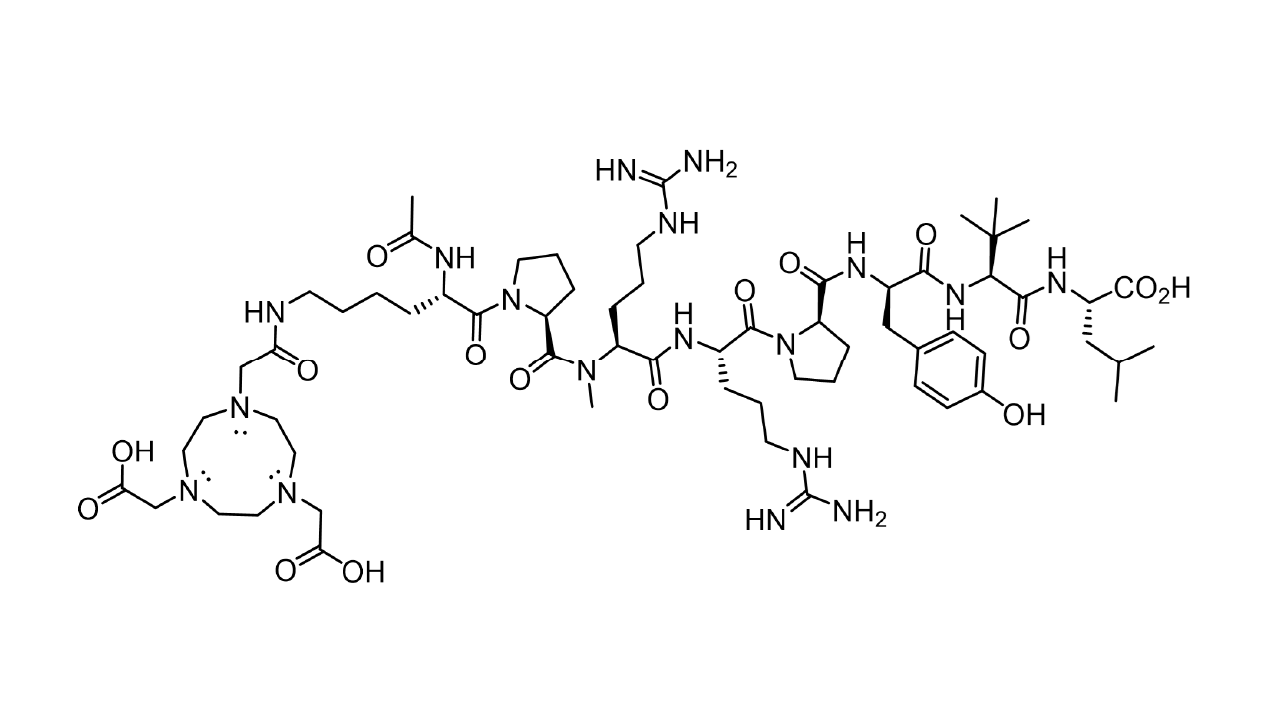
Lin, Wilson, Eduardo Aluicio-Sarduy, Hailey A. Houson, Todd E. Barnhart, Volkan Tekin, Justin J. Jeffery, Ashley M. Weichmann, Kendall E. Barrett, Suzanne E. Lapi, and Jonathan W. Engle. Nuclear Medicine and Biology) 118 (2023): 108329.
Lyophilized NOTA-NT-20.3 (Ac-Lys(NOTA)-Pro-NMeArg-Arg-Pro-Tyr-Tle-Leu, 1383.6 g/mol, “NT”, CPC Scientific) was diluted to 1 mg/mL in ultrapure water (Milli-Q, >18.2 MΩ-cm) and used without further purification.
Development of a selective, sensitive and robust oxyntomodulin dual monoclonal antibody immunoassay.
Umberger, T.S., Ming, W., Cox, J.M., Konrad, R.J. and Siegel, R.W. Bioanalysis 14, no. 18 (2022): 1229-1239.
- Lilly Research Laboratories, Eli Lilly & Company, Indianapolis, IN46285, USA
Human K2 EDTA and P800 plasma (500 μl) was spiked with proglucagon 33–61, 35–61 and 36–61 stable-isotope-labeled internal standard peptides (CPC Scientific, custom order) and diluted with I buffer (25 mmol/l Tris-HCl, 25 mmol/l HEPES, 300 mmol/l NaCl, 0.1% (v/v) octyl β-D-glucopyranoside, pH 7.5).
Line, J.E.; Seal, B.S.; Garrish, J.K. Appl. Microbiol. 2022, 2, 688–700.
Peptides were synthesized using standard solid-phase(Fmoc) chemistry with a peptide synthesizer (CPC Scientific Inc., Sunnyvale, CA 94089,USA, C12K-2β12 [..]
Kirk, N.S., Chen, Q., Wu, Y.G., Asante, A.L., Hu, H., Espinosa, J.F., Martínez-Olid, F., Margetts, M.B., Mohammed, F.A., Kiselyov, V.V. and Barrett, D.G. Nature Communications 13, no. 1 (2022): 5695.
- Eli Lilly and Company, Lilly Corporate Center, Indianapolis, IN 46285, USA.
Peptides were synthesized under contract by CPC Scientific, except for the N-terminally acetylated version of IM172N22 and the Glu3Arg, Glu3Ala, Glu4Arg, Glu4Ala, Glu5Ala, Glu5Arg, Trp6Ala, Gln8Ala, Ile9Ala, Glu10Ala, Glu10Arg and Tyr14Ala mutants of IM172N22
Coskun, T., Urva, S., Roell, W.C., Qu, H., Loghin, C., Moyers, J.S., O’Farrell, L.S., Briere, D.A., Sloop, K.W., Thomas, M.K. and Pirro, V. Cell Metabolism 34, no. 9 (2022): 1234-1247.
- Eli Lilly and Company, Lilly Corporate Center, Indianapolis, IN 46285, USA
Homologous and heterologous competition experiments were performed with non-radioactive peptide analogues[127I]-Tyr1-GIP(1-42) and [127]-Tyr10-GIP(1-42) to ensure quantification of the high-affinity binding site of the GIPR. Peptide analogues were generated using synthetic [127I]-Tyr amino acid building blocks (CPC Scientific).
Cecil, D.L., Curtis, B., Gad, E., Gormley, M., Timms, A.E., Corulli, L., Bos, R., Damle, R.N., Sepulveda, M.A. and Disis, M.L. Scientific Reports 12, no. 1 (2022): 13618.
- Cancer Vaccine Institute, University of Washington, 850 Republican Street, Brotman Bld., 2nd Floor, Box 358050, Seattle, WA 98195-8050, USA.
- Janssen Research and Development LLC, Spring House, PA, USA.
- Janssen Vaccines and Prevention, Leiden, The Netherlands.
The peptides were constructed and purified by high-performance liquid chromatography (> 90% pure; CPC Scientific).
Zonari, A., Brace, L.E., Alencar-Silva, T., Porto, W.F., Foyt, D., Guiang, M., Cruz, E.A.O., Franco, O.L., Oliveira, C.R., Boroni, M. and Carvalho, J.L. Toxicology Reports 9 (2022): 1632-1638.
Peptide 14 (ETAKHWLKGI) (Sup. Fig. 1) was purchased from CPC Scientific Inc. (USA), which synthesized the peptide by solid phase (Fmoc) on a Rink amide resin, with > 95% purity, in the form of acetate salt.