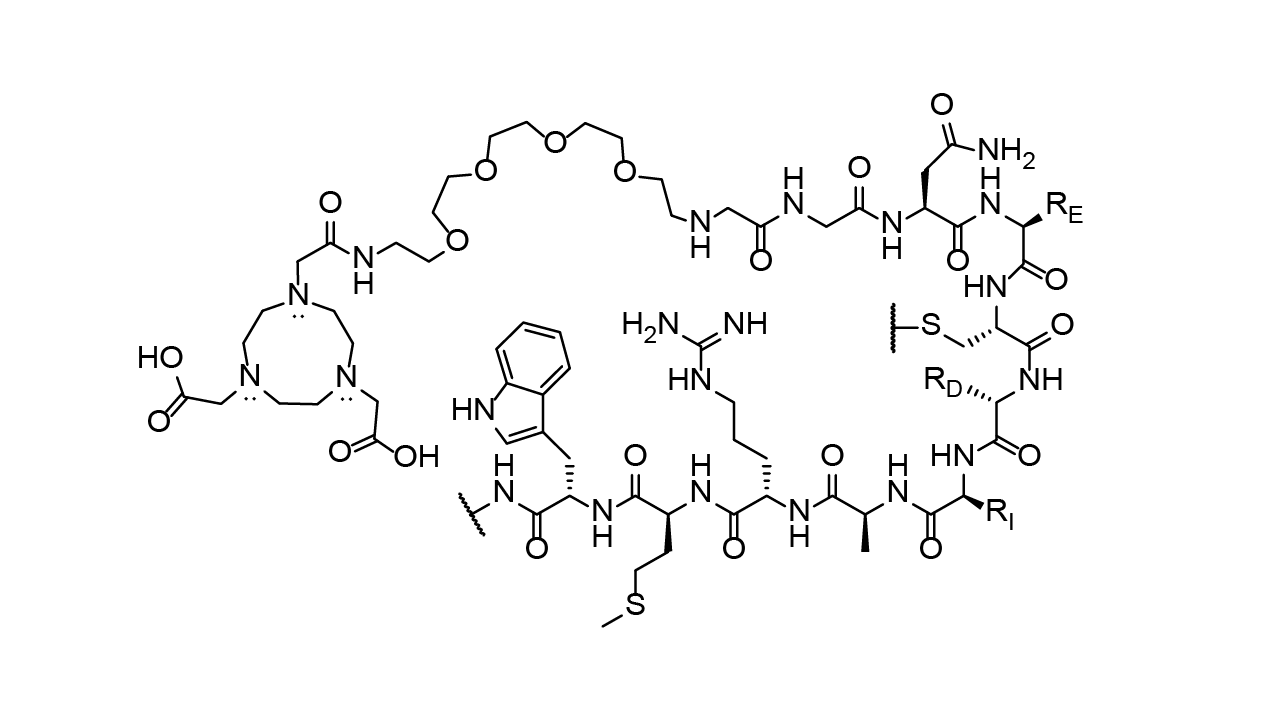
"L19K was synthesized by CPC Scientific and comprised the sequence NO2A-PEG4-GGNECDIARMWEWECFERK-CONH2, with Cys-Cys disulfide bridge and polyethylene glycol (PEG4) as a spacer between peptide and chelator. "
Abstract
Imaging agents based on peptide probes have desirable pharmacokinetic properties provided that they have high affinities for their target in vivo. An approach to improve a peptide ligand’s affinity for its target is to make this interaction covalent and irreversible. For this purpose, we evaluated a 64Cu-labeled affinity peptide tag, 64Cu-L19K-(5-fluoro-2,4-dinitrobenzene) (64Cu-L19K-FDNB), which binds covalently and irreversibly to vascular endothelial growth factor (VEGF) as a PET imaging agent. We compared the in vivo properties of 64Cu-L19K-FDNB in VEGF-expressing tumor xenografts with its noncovalent binding analogs, 64Cu-L19K-(2,4-dinitrophenyl) (64Cu-L19K-DNP) and 64Cu-L19K. Methods: The L19K peptide (GGNECDIARMWEWECFERK-CONH2) was constructed with 1,4,7-triazacyclononane-1,4,7-triacetic acid at the N terminus for radiolabeling with 64Cu with a polyethylene glycol spacer between peptide and chelate. 1,5-difluoro-2,4-dinitrobenzene was conjugated at the C-terminal lysine for cross-linking to VEGF, resulting in L19K-FDNB. 64Cu-L19K-FDNB was assayed for covalent binding to VEGF in vitro. As a control, L19K was conjugated to 1-fluoro-2,4-dinitrobenzene, resulting in L19K-DNP. PET imaging and biodistribution studies of 64Cu-L19K-FDNB, 64Cu-L19K-DNP, and the native 64Cu-L19K were compared in HCT-116 xenografts. Blocking studies of 64Cu-L19K-FDNB was performed with a coinjection of excess unlabeled L19K-FDNB. Results: In vitro binding studies confirmed the covalent and irreversible binding of 64Cu-L19K-FDNB to VEGF, whereas 64Cu-L19K-DNP and 64Cu-L19K did not bind covalently. PET imaging showed higher tumor uptake with 64Cu-L19K-FDNB than with 64Cu-L19K-DNP and 64Cu-L19K, with mean standardized uptake values of 0.62 ± 0.05, 0.18 ± 0.06, and 0.34 ± 0.14, respectively, at 24 h after injection (P < 0.05), and 0.53 ± 0.05, 0.32 ± 0.14, and 0.30 ± 0.09, respectively, at 48 h after injection (P < 0.05). Blocking studies with 64Cu-L19K-FDNB in the presence of excess unlabeled peptide showed a 53% reduction in tumor uptake at 48 h after injection. Conclusion: In this proof-of-concept study, the use of a covalent binding peptide ligand against VEGF improves tracer accumulation at the tumor site in vivo, compared with its noncovalent binding peptide analogs. This technique is a promising tool to enhance the potency of peptide probes as imaging agents.
SOCIAL MEDIA
Connect with us and stay updated by following our social media channels.
Latest Briefings from our Knowledge Center
Press Releases, Industry News, Articles, and Technical Content

CPC Scientific Inc., a leading global peptide CRDMO (Contract Research, Development, and Manufacturing Organization) has invested in a new peptide API (Active Pharmaceutical Ingredient) manufacturing site, bringing many new jobs to Rocklin, California. The 41,000 sq ft facility located at 3880 Atherton Rd, Rocklin, CA 95765 will be utilized to manufacture clinical to commercial grade peptide products for increased manufacturing capacity and will diversify CPC Scientific’s supply chain.
CPC Scientific is entering an exciting period of growth and innovation for peptide and oligonucleotide therapeutic development and manufacturing, and we will continue to provide therapeutic APIs to pharmaceutical and biotech companies around the world. We are very pleased to partner with the City of Rocklin, California to bring manufacturing and Life-Science jobs to local American workers,” said Shawn Lee, PhD, CEO.
Ikeda, Z., Kakegawa, K., Kikuchi, F., Itono, S., Oki, H., Yashiro, H., Hiyoshi, H., Tsuchimori, K., Hamagami, K., Watanabe, M. and Sasaki, M. Journal of Medicinal Chemistry 65, no. 12 (2022): 8456-8477.
- Research, Takeda Pharmaceutical Company Limited, 26-1, Muraokahigashi 2-chome, Fujisawa, Kanagawa 251-8555, Japan
Subsequently, 5FAM–Abu–Gly–Asp–Asp–Asp–Lys–Ile–Val–Gly–Gly–Lys(CPQ2)–Lys–Lys–NH2 (purity: 97.2%, CPC Scientific, Inc.) was diluted with an assay buffer to prepare a 2.1 μM substrate solution.
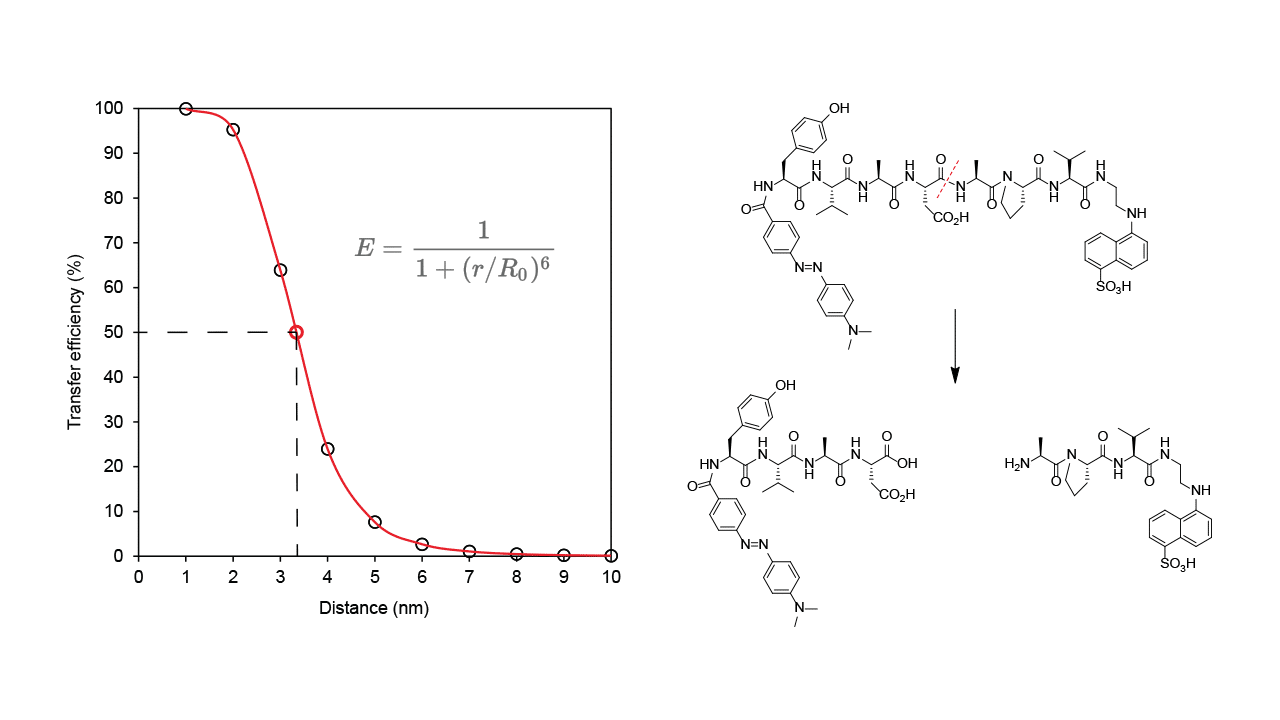
The transferred energy from a fluorescent donor is converted into molecular vibrations if the acceptor is a non-fluorescent dye (quencher). When the FRET is terminated (by separating donor and acceptor), an increase of donor fluorescence can be detected. The design and synthesis work at CPC for FRET and TR-FRET peptide substrates include modification of sequences, selection of donor/quencher pairs, improvement of FRET substrate solubility and quenching efficiency.
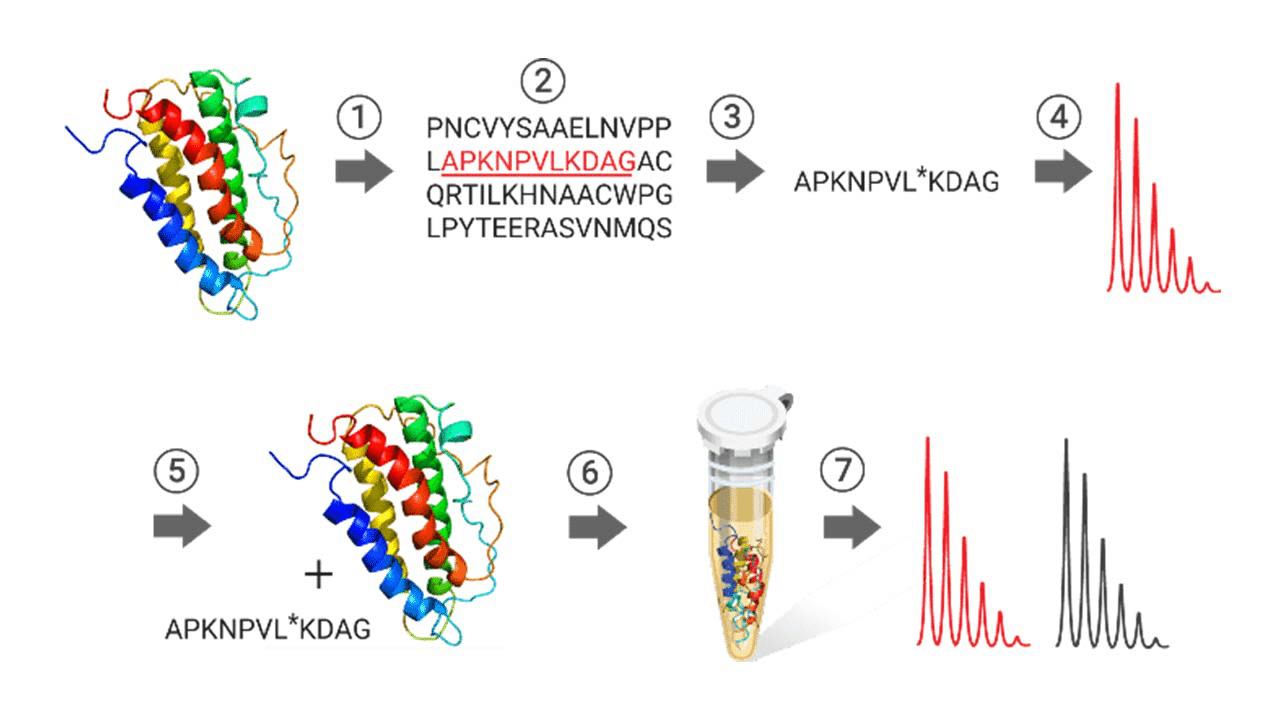
Genomics research shows that more than a million proteins are encoded by approximately 30,000 human genes. Proteomics, the study of proteins encoded by the genome, includes identifying post-translational modifications, structural analyses, protein localization studies, and protein quantitation. Mass spectroscopybased techniques have evolved as a powerful tool in proteomics. Stable isotope-labeled peptides (SIL peptides) are chemically and physically indistinguishable from their endogenous counterparts concerning retention time, ionization efficiency, and fragmentation pathways.
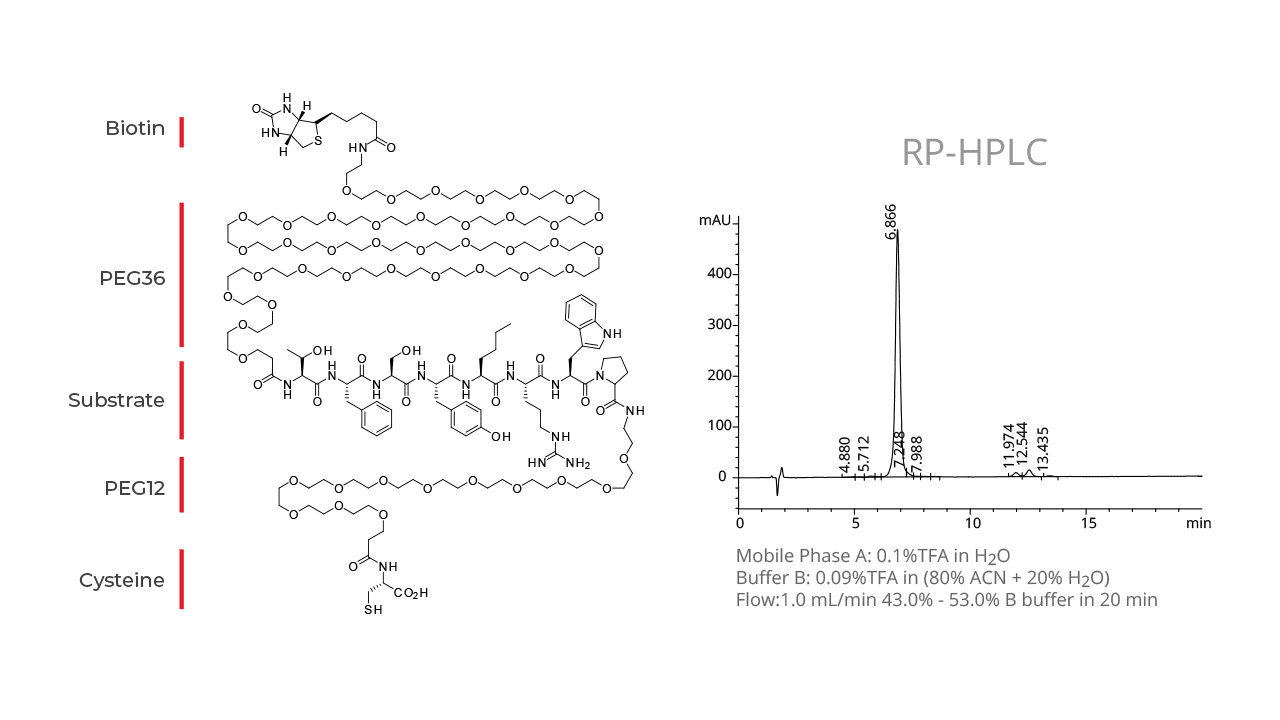
Peptides play a vital role in the pharmaceutical industry and drug therapeutic development; however, their in vivo applications are sometimes limited due to fast degradation by proteases, poor solubility, antigenic responses, and glomerular filtration in the kidney. The covalent attachment of polyethylene glycol (PEG) chains to peptides is one approach that can reduce immunogenicity, improve solubility, and reduce renal clearance.
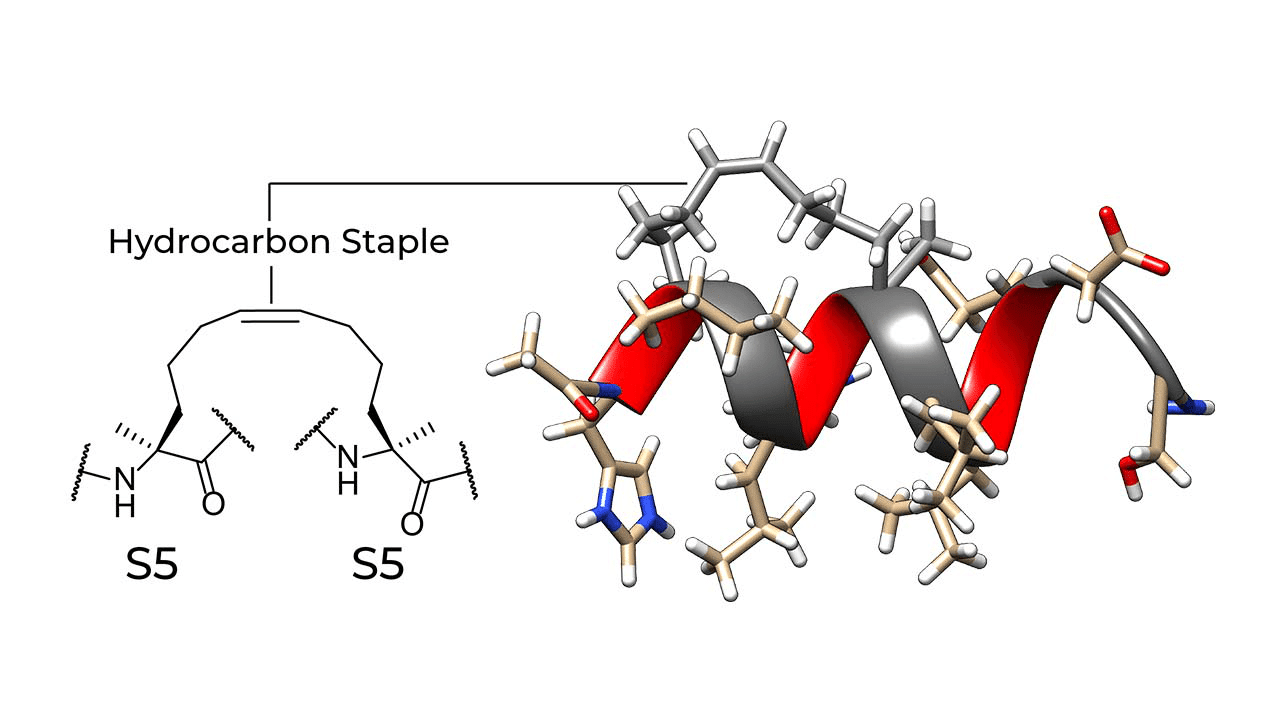
Hydrocarbon-stapled peptides are locked into their bioactive alpha-helical conformation through the site-specific introduction of a chemical brace, an all-hydrocarbon staple. The idea of peptide stapling was introduced to overcome the limitations of two broad classes of therapeutic agents (small molecules and protein biologics) in targeting intracellular protein-protein interactions. Small molecules only work on proteins with a specific surface feature, and most protein biologics do not penetrate cells. Because stapled peptides are locked into a stabilized α-helical structure (the most common element of protein secondary structures), they can easily penetrate cells.
![Locmi-AKH-I, cycloAKH (cyclo[LNFTPNWG]](https://test.cpcscientific.com/wp-content/uploads/2022/05/cyclo-LNFTPNWG-v2-1500sm.png)
Mogford, Jon E., George E. Davis, Steven H. Platts, and Gerald A. Meininger. Circulation research 79, no. 4 (1996): 821-826.
Locmi-AKH-I, cycloAKH (cyclo[LNFTPNWG]

CPC Scientific is pleased to announce and welcome David A. Godkin as VP of Business Operations! David will be responsible for the growth and development of our HR department and facilities management division. He brings 20+ years of experience in human resources and facility operations from the peptide industry. We are confident David will have […]
Bekdemir, Ahmet, Eden EL Tanner, Jesse Kirkpatrick, Ava P. Soleimany, Samir Mitragotri, and Sangeeta N. Bhatia Advanced Healthcare Materials (2022): 2102685.
Peptides [TDN-qFAM, C-(PEG)2-K(CPQ2)-GGGSRPfGG-5FAM] were obtained from Tufts University Peptide Core Facility or CPC Scientific, Inc (USA)