

To date only two entry inhibitors are available, Maraviroc which targets the co-receptor CCR5 3;4 and Enfuvirtide, a peptide drug which interacts with the N-terminal heptad repeat of gp41 of HIV to form an inactive hetero six-helix bundle preventing infection of host cells 5;6. Despite the success achieved with the HAART the emergence of resistant viruses and the side effects of these therapies highlight the need of novel anti-retroviral agents to overcome these problems.
Abstract
One of the most critical requirements of the infection of the human immunodeficiency virus type 1 (HIV-1) is the interaction of its surface envelope glycoprotein gp120 with the cellular receptor CD4, which initiates virus entry to cells. Therefore, envelope glycoprotein gp120 has been validated as a potential target to develop HIV-1 entry inhibitors. Here we report the evaluation of a novel non-natural amino acid, termed 882376, reported earlier as a precursor of a CD4-mimetic miniprotein, as HIV-1 entry inhibitor. 882376 showed HIV-1 inhibitory activity against a large panel of primary isolates of different subtype. Moreover, genotyping of 882376 resistant HIV-1 virus revealed three amino acid substitutions in the gp120 including one in the CD4 binding site suggesting that this molecule may bind to gp120 and prevent its binding to CD4. Additional neutralization experiments indicate that 882376 is not active against mutant pseudoviruses carrying the amino acid substitutions S375H and S375Y located in the “Phe43 cavity” which is the major site of CD4 binding, suggesting that this compound may interfere with the interaction between gp120 and CD4. The unnatural amino acid, 882376, is expected to serve as a lead for further optimization to more potent HIV-1 entry inhibitors.
SOCIAL MEDIA
Connect with us and stay updated by following our social media channels.
Latest Briefings from our Knowledge Center
Press Releases, Industry News, Articles, and Technical Content
There is no excerpt because this is a protected post.
There is no excerpt because this is a protected post.
There is no excerpt because this is a protected post.

CPC Scientific had a fantastic time connecting with partners this year at DCAT Week 2026. See our standout highlights from New York, featuring generic API scale-up, the 98th DCAT Annual Dinner, and more...
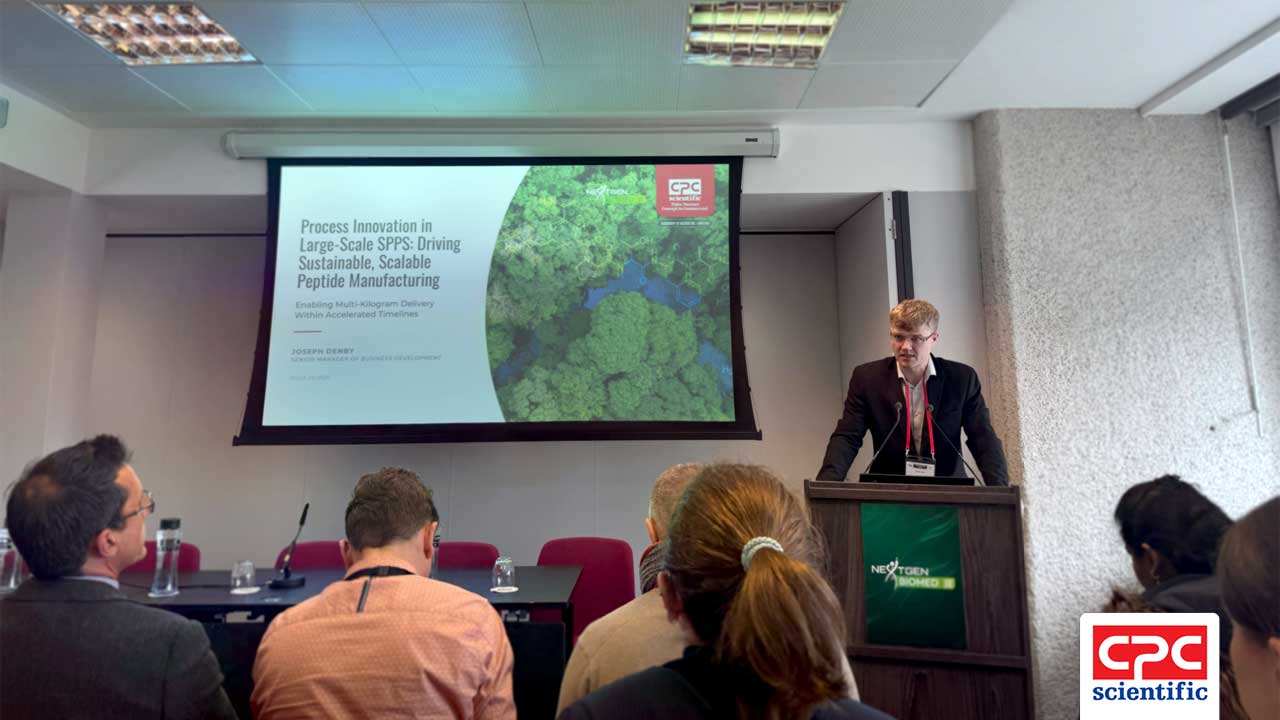
Catch CPC Scientific's key highlights from NextGen Biomed 2026, where we showcased how our advanced process design is accelerating production timelines and cost efficiency for greener TIDES manufacturing at scale...

Delivery of polypeptides in multi-kilogram quantities within tight timescales is extremely challenging, especially when coupled with a desire to minimize environmental and economic impact. This case study explores how CPC Scientific’s advanced process improvements during synthesis, cleavage, and final purification of solid-phase peptide synthesis (SPPS) have enabled multi-kilogram delivery of a pharmaceutically-relevant decapeptide within a short timescale. These innovative modifications reduced environmental footprint and delivered substantial cost savings for the client, ultimately enhancing market competitiveness of the product.

As 2025 draws to a close, we want to extend our heartfelt thanks to our partners and colleagues around the world! Your trust and collaboration enabled CPC Scientific to make meaningful progress across our CDMO thought leadership, operational scale, and global business milestones this year. Explore featured highlights and resources from the year to see how our people, partners, and platforms drove innovation and impact throughout 2025.

President Theresa Cheng spoke to PhD students at Weill Cornell Graduate School, sharing industry insights and exploring how academic research today can translate into tomorrow’s cutting-edge healthcare leadership.
CPC Scientific has developed an innovative dimethylformamide (DMF) recycling strategy that substantially reduces solvent consumption during solid-phase peptide synthesis (SPPS), achieving both improved process sustainability and enhanced cost efficiency. Through minimizing use of DMF, a major environmental and cost contributor in peptide manufacturing, we demonstrate how targeted green chemistry practices can be successfully integrated into large-scale SPPS to support environmentally responsible, economically viable peptide production.