
"antipeptide (EGVYVHPV), angiotensin II, human (DRVYIHPF), and isotopically (13C) labeled heptapeptide (AAAAHAA-NH2 [where “A” indicates a carbon thirteen (13C) isotope on the alanine carbonyl group]) were purchased from CPC Scientific Incorporated (Sunnyvale, CA)"
Abstract
It is shown that y-type ions, after losing C-terminal H2O or NH3, can lose an internal backbone carbonyl (CO) from different peptide positions and yield structurally different product fragment ions upon collision-induced dissociation (CID). Such CO losses from internal peptide backbones of y-fragment ions are not unique to a single peptide and were observed in four of five model peptides studied herein. Experimental details on examples of CO losses from y-type fragment ions for an isotopically labeled AAAAHAA-NH2 heptapeptide and des-acetylated-α-melanocyte-stimulating hormone (dα-MSH) (SYSMEHFRWGKPV-NH2) are reported. Results from isotope labeling, tandem mass spectrometry (MSn), and ion mobility-mass spectrometry (IM-MS) confirm that CO losses from different amino acids of m/z-isolated y-type ions yield structurally different ions. It is shown that losses of internal backbone carbonyls (as CID products of m/z-isolated y-type ions) are among intermediate steps towards formation of rearranged or permutated product fragment ions. Possible mechanisms for generation of the observed sequence-scrambled a-“like” ions, as intermediates in sequence-scrambling pathways of y-type ions, are proposed and discussed.
SOCIAL MEDIA
Connect with us and stay updated by following our social media channels.
Latest Briefings from our Knowledge Center
Press Releases, Industry News, Articles, and Technical Content
Shurtleff, V.W., Layton, M.E., Parish, C.A., Perkins, J.J., Schreier, J.D., Wang, Y., Adam, G.C., Alvarez, N., Bahmanjah, S., Bahnck-Teets, C.M. and Boyce, C.W. Journal of Medicinal Chemistry 67, no. 5 (2024): 3935-3958.
- Center for Discovery and Innovation, Hackensack Meridian Health. 111 Ideation Way. Nutley, New Jersey 07110, United States.
- Merck & Co., Inc., Rahway, New Jersey 07065, United States.
The enzymatic activity of recombinantly expressed 3CLPro enzymes from different coronaviruses was measured using the following synthetic quenched FRET peptide: CP488-ESATLQSGLRKAK- (CPQ2)-NH2 (CPC Scientific, San Jose, CA.
Goh, Joleen Pei Zhen. Nanyang Technological University (2023)
9 generic fluorogenic substrates (CPC Scientific) (Figure S4) were added to the final concentration of 20 μM. Fluorescence was measured at Excitation/Emission=330/390 nm on BioTek Synergy H1 microplate reader and proteolytic activity was calculated as a change in relative fluorescence units per sec using the slope of the linear range for this signal.
Design-rules for stapled peptides with in vivo activity and their application to Mdm2/X antagonists.
Chandramohan, A., Josien, H., Yuen, T.Y., Duggal, R., Spiegelberg, D., Yan, L., Juang, Y.C.A., Ge, L., Aronica, P.G., Kaan, H.Y.K. and Lim, Y.H. Nature Communications 15, no. 1 (2024): 489.
- Merck & Co., Inc., Kenilworth, NJ 07033, USA.
- Merck & Co., Inc., Boston, MA 02115, USA
- Merck & Co., Inc., West Point, PA 19486, USA
- Genentech, South San Francisco, CA 94080, USA
We thank Evans (Chen) Ge, Mike (Dixin) Xue, and Simon (Junhua) Li at Chinese Peptide Company (CPC) for peptide synthesis support.
Hao, Liangliang, Renee T. Zhao, Nicole L. Welch, Edward Kah Wei Tan, Qian Zhong, Nour Saida Harzallah, Chayanon Ngambenjawong et al. Nature Nanotechnology (2023): 1-10.
All peptides and oligonucleotides were synthesized and HPLC purified by CPC Scientific and Integrated DNA Technologies (IDT), respectively. Peptide–oligonucleotide conjugates were generated by copper-free click chemistry.
Kikuchi, F., Ikeda, Z., Kakegawa, K., Nishikawa, Y., Sasaki, S., Fukuda, K., Takami, K., Banno, Y., Nishikawa, H., Taya, N. and Nakahata, T. Bioorganic & Medicinal Chemistry 93 (2023): 117462.
- Research, Takeda Pharmaceutical Company Limited, 26-1, Muraoka-Higashi 2-chome, Fujisawa, Kanagawa 251-8555, Japan
- Pharmaceutical Sciences, Takeda Pharmaceutical Company Ltd., 26-1, Muraoka-Higashi 2-chome, Fujisawa, Kanagawa 251-8555, Japan
5FAM-Abu-Gly-Asp-Asp-Asp-Lys-Ile-Val-Gly-Gly-Lys(CPQ2)-Lys-Lys-NH2 (purity: 97.2%, CPC Scientific, Inc.) was diluted with an assay buffer to prepare a 5.4 μM substrate solution.
Senotherapeutic peptide treatment reduces biological age and senescence burden in human skin models.
Zonari, A.; Brace, L. E.; Al-Katib, K.; Porto, W. F.; Foyt, D.; Guiang, M.; Cruz, E. A. O.; Marshall, B.; Gentz, M.; Guimaraes, G. R.; Franco, O. L.; Oliveira, C. R.; Boroni, M.; Carvalho, J. L., NPJ Aging 2023, 9 (1), 10.
The top hit peptides selected (Pep 14, 144, 156, 195, and 393) from the screening and the fluorescence labeled peptide (5FAM-PEG2-Pep 14) were purchased from CPC Scientific Inc. (USA), which synthesized the peptide by solid phase (Fmoc) on a Rink amide resin, with >95% purity, in the form of acetate salt.
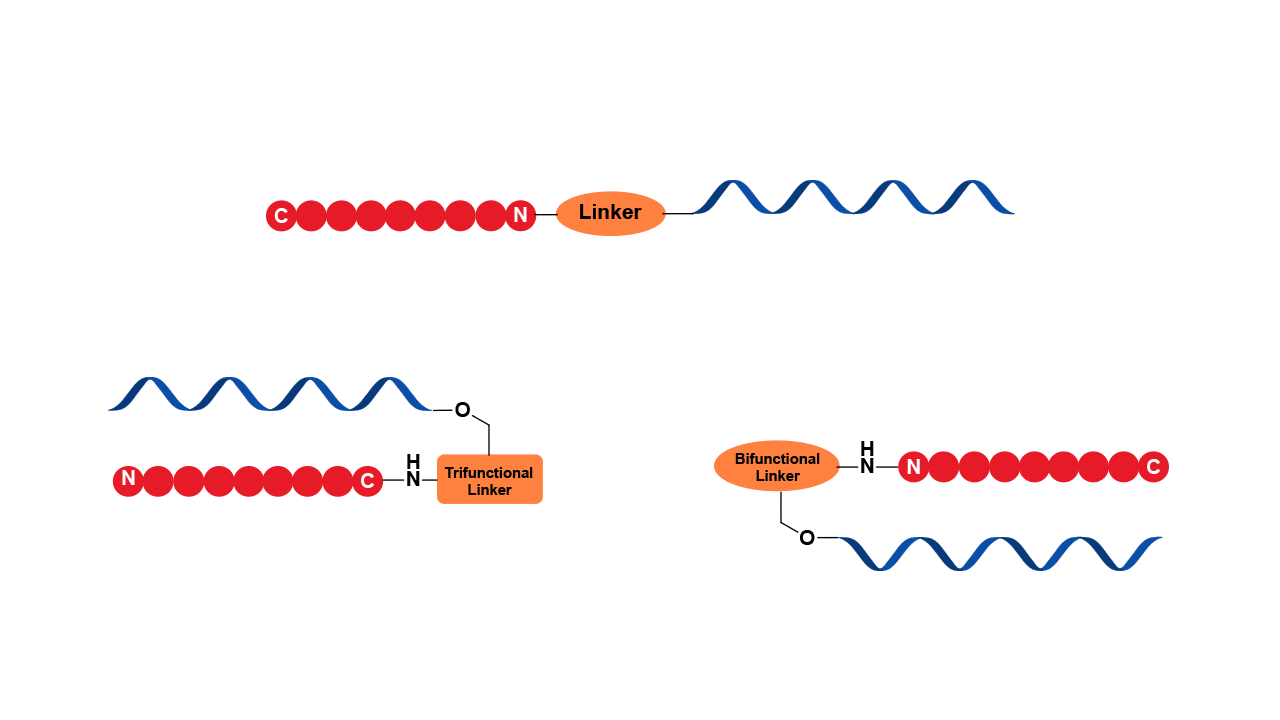
Synthetic oligonucleotides constitute an important class of therapeutics developed to treat a variety of indications. Two main synthetic approaches exist for the conjugation of a peptide to an oligonucleotide: parallel and linear. The primary benefit of the linear approach is the one-pot solid-phase assembly and compatibility with machine automation. However, in cases where poor compatibility of peptide and oligo chemistries exist or long peptide and oligo fragments are required, preparing both components separately and linking both compounds together may offer the simplest solution.
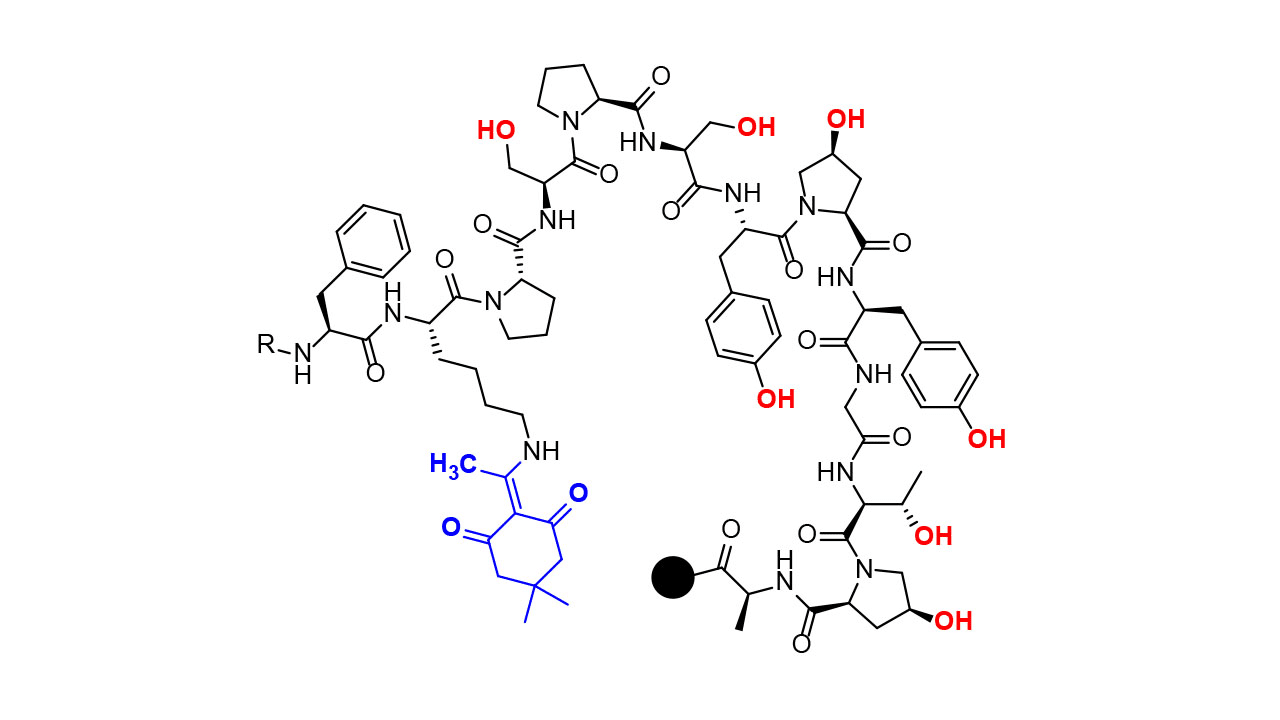
Solid-phase peptide synthesis (SPPS) approaches require that the side chains of certain amino acids be protected from undesired reactivity during synthesis. The installation and removal of these protection groups results in a lower atom economy in the production process. Removal of the protection groups often requires large volumes of trifluoroacetic acid (TFA) or other strong acids which can result in lower yields and pose a significant risk to the environment.
Schiemer, J., Maxwell, A., Horst, R., Liu, S., Uccello, D.P., Borzilleri, K., Rajamohan, N., Brown, M.F. and Calabrese, M.F. Nature Communications 14, no. 1 (2023): 1189.
- Discovery Sciences, Pfizer Worldwide Research and Development, Groton, CT, USA
After 3 h the resin was washed with binding buffer until no protein was detected, followed by elution with 0.2 mg ml−1 FLAG peptide DYKDDDDK (CPC Scientific Peptide company)