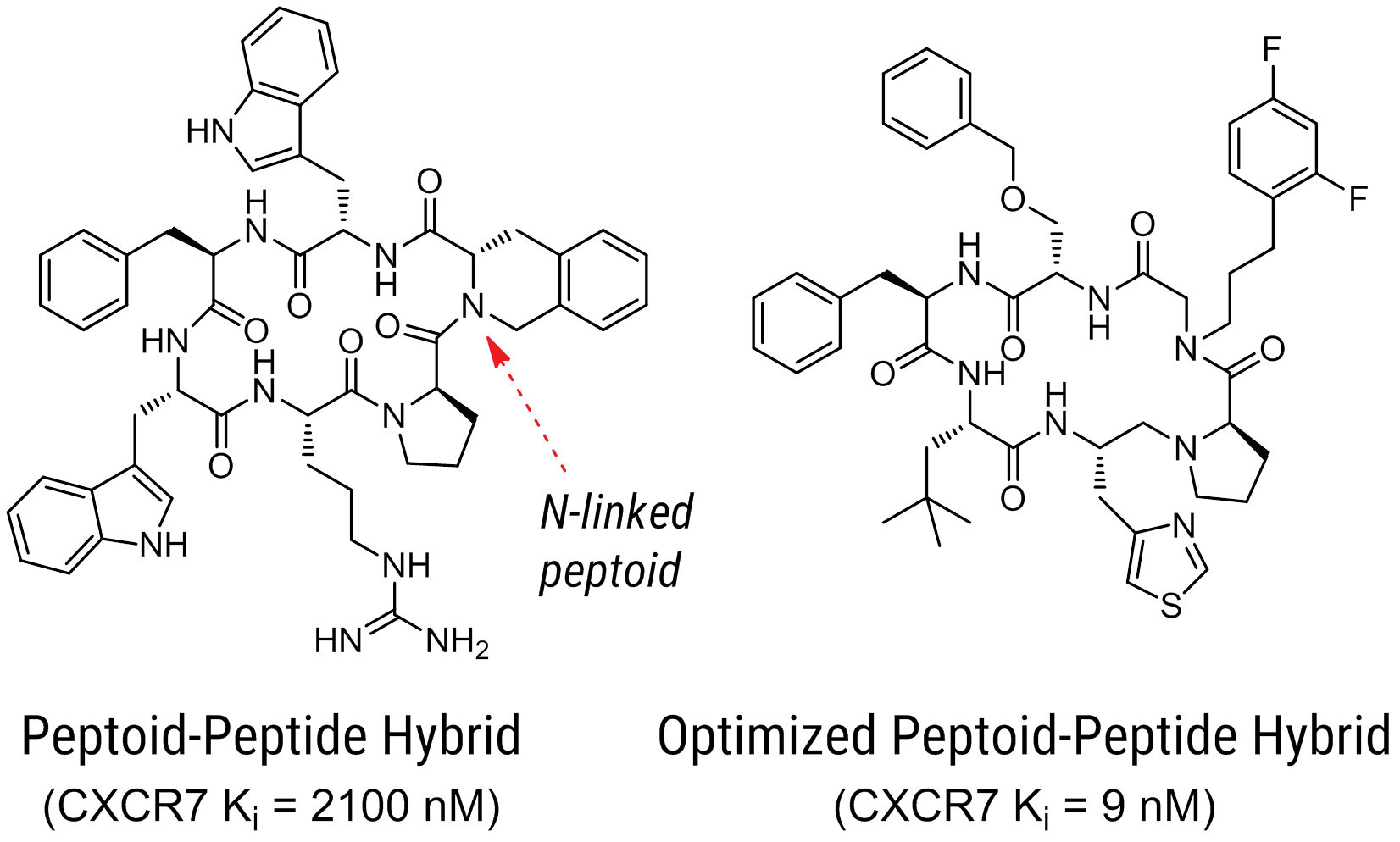
The chemokine receptor CXCR7 is an attractive target for a variety of diseases. While several small-molecule modulators of CXCR7 have been reported, peptidic macrocycles may provide advantages in terms of potency, selectivity, and reduced off-target activity
Abstract
The chemokine receptor CXCR7 is an attractive target for a variety of diseases. While several small-molecule modulators of CXCR7 have been reported, peptidic macrocycles may provide advantages in terms of potency, selectivity, and reduced off-target activity. We produced a series of peptidic macrocycles that incorporate an N-linked peptoid functionality where the peptoid group enabled us to explore side-chain diversity well beyond that of natural amino acids. At the same time, theoretical calculations and experimental assays were used to track and reduce the polarity while closely monitoring the physicochemical properties. This strategy led to the discovery of macrocyclic peptide–peptoid hybrids with high CXCR7 binding affinities (Ki 5 × 10⁻⁶ cm/s). Moreover, bioactive peptide 25 (Ki = 9 nM) achieved oral bioavailability of 18% in rats, which was commensurate with the observed plasma clearance values upon intravenous administration.
SOCIAL MEDIA
Connect with us and stay updated by following our social media channels.
Latest Briefings from our Knowledge Center
Press Releases, Industry News, Articles, and Technical Content
There is no excerpt because this is a protected post.
There is no excerpt because this is a protected post.
There is no excerpt because this is a protected post.

CPC Scientific had a fantastic time connecting with partners this year at DCAT Week 2026. See our standout highlights from New York, featuring generic API scale-up, the 98th DCAT Annual Dinner, and more...
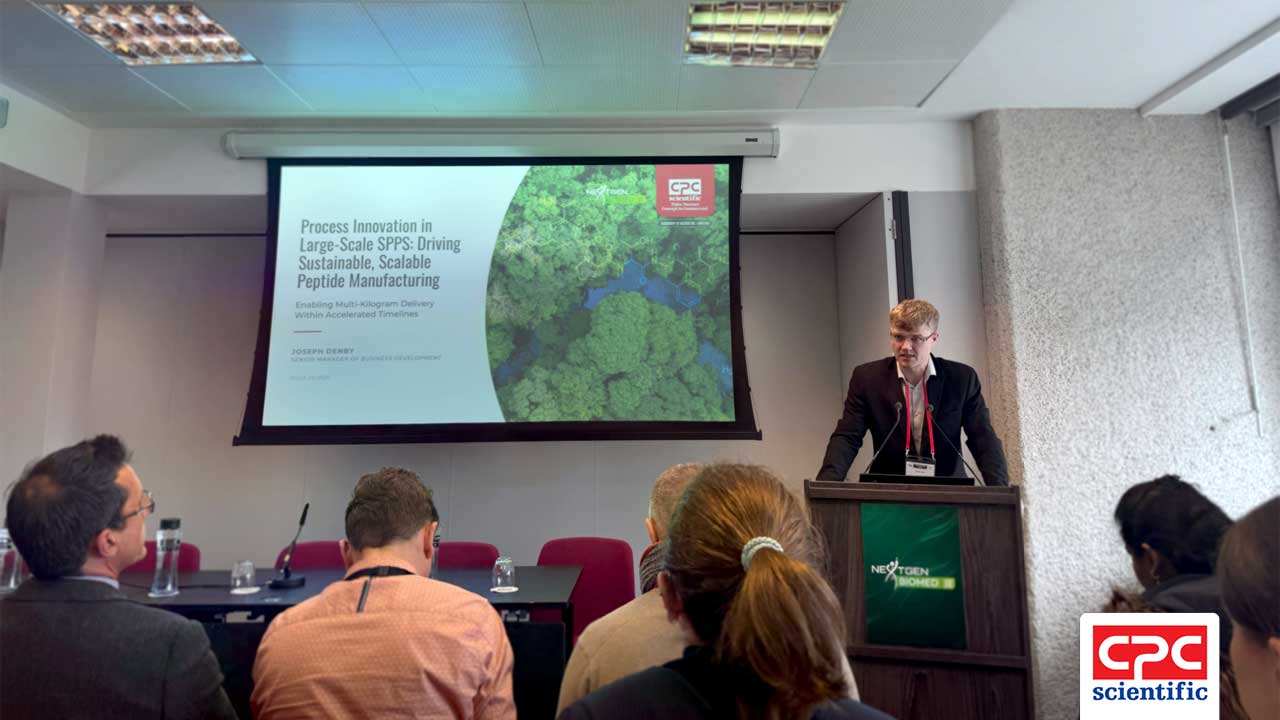
Catch CPC Scientific's key highlights from NextGen Biomed 2026, where we showcased how our advanced process design is accelerating production timelines and cost efficiency for greener TIDES manufacturing at scale...
Delivery of polypeptides in multi-kilogram quantities within tight timescales is extremely challenging, especially when coupled with a desire to minimize environmental and economic impact. This case study explores how CPC Scientific’s advanced process improvements during synthesis, cleavage, and final purification of solid-phase peptide synthesis (SPPS) have enabled multi-kilogram delivery of a pharmaceutically-relevant decapeptide within a short timescale. These innovative modifications reduced environmental footprint and delivered substantial cost savings for the client, ultimately enhancing market competitiveness of the product.

As 2025 draws to a close, we want to extend our heartfelt thanks to our partners and colleagues around the world! Your trust and collaboration enabled CPC Scientific to make meaningful progress across our CDMO thought leadership, operational scale, and global business milestones this year. Explore featured highlights and resources from the year to see how our people, partners, and platforms drove innovation and impact throughout 2025.

President Theresa Cheng spoke to PhD students at Weill Cornell Graduate School, sharing industry insights and exploring how academic research today can translate into tomorrow’s cutting-edge healthcare leadership.
CPC Scientific has developed an innovative dimethylformamide (DMF) recycling strategy that substantially reduces solvent consumption during solid-phase peptide synthesis (SPPS), achieving both improved process sustainability and enhanced cost efficiency. Through minimizing use of DMF, a major environmental and cost contributor in peptide manufacturing, we demonstrate how targeted green chemistry practices can be successfully integrated into large-scale SPPS to support environmentally responsible, economically viable peptide production.