
"The peptides, shown in Figure 1, were designed and synthesized. MPER (RRRNEQELLELDKWASLWNWFDITNWLWYIRRRR), TT peptide (FNNFTVSFWLRVPKVSASHLE), T10HE peptide (FNNFTVSFWLRVPKVSASHLE-PEG2-LWNWF-S5-ITN-S5-LWYIR-PEG2-KK), and T10E peptide (FNNFTVSFWLRVPKVSASHLEPEG2-LWNWFDITNWLWYIR-PEG2-KK) were purchased from CPC Scientific Inc. (Sunnyvale, CA, USA)."
Abstract
Recent studies have demonstrated that the membrane-proximal external region (MPER) of human immunodeficiency virus 1 (HIV-1) glycoprotein 41 contains a series of epitopes for human monoclonal antibodies, including 2F5, Z13e1, 4E10, and 10E8, which were isolated from HIV-1-infected individuals and show broad neutralizing activities. This suggests that MPER is a good target for the development of effective HIV-1 vaccines. However, many studies have shown that it is difficult to induce antibodies with similar broad neutralizing activities using MPER-based peptide antigens. Here, we report that 10E8-like neutralizing antibodies with effective anti-HIV-1 activity were readily induced using a precisely designed conformational immunogenic peptide containing the 10E8-specific epitope. This immunogenic peptide (designated T10HE) contains a 15-mer MPER-derived 10E8-specific epitope fused to T-helper-cell epitopes from tetanus toxin (tt), which showed a significantly stabilized α-helix structure after a series of modifications, including substitution with an (S)-α-(2′-pentenyl) alanine containing an olefin-bearing tether and ruthenium-catalyzed olefin metathesis, compared with the unmodified T10E peptide. The stabilized α-helix structure of T10HE did not affect its capacity to bind the 10E8 antibody, as evaluated with an enzyme linked immunosorbent assay (ELISA) and surface plasmon resonance binding assay (SPR assay). The efficacies of the T10HE and T10E epitope vaccines were evaluated after a standard vaccination procedure in which the experimental mice were primed with either the T10HE or T10E immunogen and boosted with HIV-1 JRFL pseudoviruses. Higher titers of 10E8-like antibodies were induced by T10HE than that by T10E. More importantly, the antibodies induced by T10HE showed enhanced antiviral potency against HIV-1 strains with both X4 and R5 tropism and a greater degree of broad neutralizing activity than the antibodies induced by T10E. These results indicate that a 10E8-epitope-based structure-specific peptide immunogen can elicit neutralizing antibodies when used as a vaccine prime.
SOCIAL MEDIA
Connect with us and stay updated by following our social media channels.
Latest Briefings from our Knowledge Center
Press Releases, Industry News, Articles, and Technical Content

CPC Scientific Inc., a leading global peptide CRDMO (Contract Research, Development, and Manufacturing Organization) has invested in a new peptide API (Active Pharmaceutical Ingredient) manufacturing site, bringing many new jobs to Rocklin, California. The 41,000 sq ft facility located at 3880 Atherton Rd, Rocklin, CA 95765 will be utilized to manufacture clinical to commercial grade peptide products for increased manufacturing capacity and will diversify CPC Scientific’s supply chain.
CPC Scientific is entering an exciting period of growth and innovation for peptide and oligonucleotide therapeutic development and manufacturing, and we will continue to provide therapeutic APIs to pharmaceutical and biotech companies around the world. We are very pleased to partner with the City of Rocklin, California to bring manufacturing and Life-Science jobs to local American workers,” said Shawn Lee, PhD, CEO.
Ikeda, Z., Kakegawa, K., Kikuchi, F., Itono, S., Oki, H., Yashiro, H., Hiyoshi, H., Tsuchimori, K., Hamagami, K., Watanabe, M. and Sasaki, M. Journal of Medicinal Chemistry 65, no. 12 (2022): 8456-8477.
- Research, Takeda Pharmaceutical Company Limited, 26-1, Muraokahigashi 2-chome, Fujisawa, Kanagawa 251-8555, Japan
Subsequently, 5FAM–Abu–Gly–Asp–Asp–Asp–Lys–Ile–Val–Gly–Gly–Lys(CPQ2)–Lys–Lys–NH2 (purity: 97.2%, CPC Scientific, Inc.) was diluted with an assay buffer to prepare a 2.1 μM substrate solution.
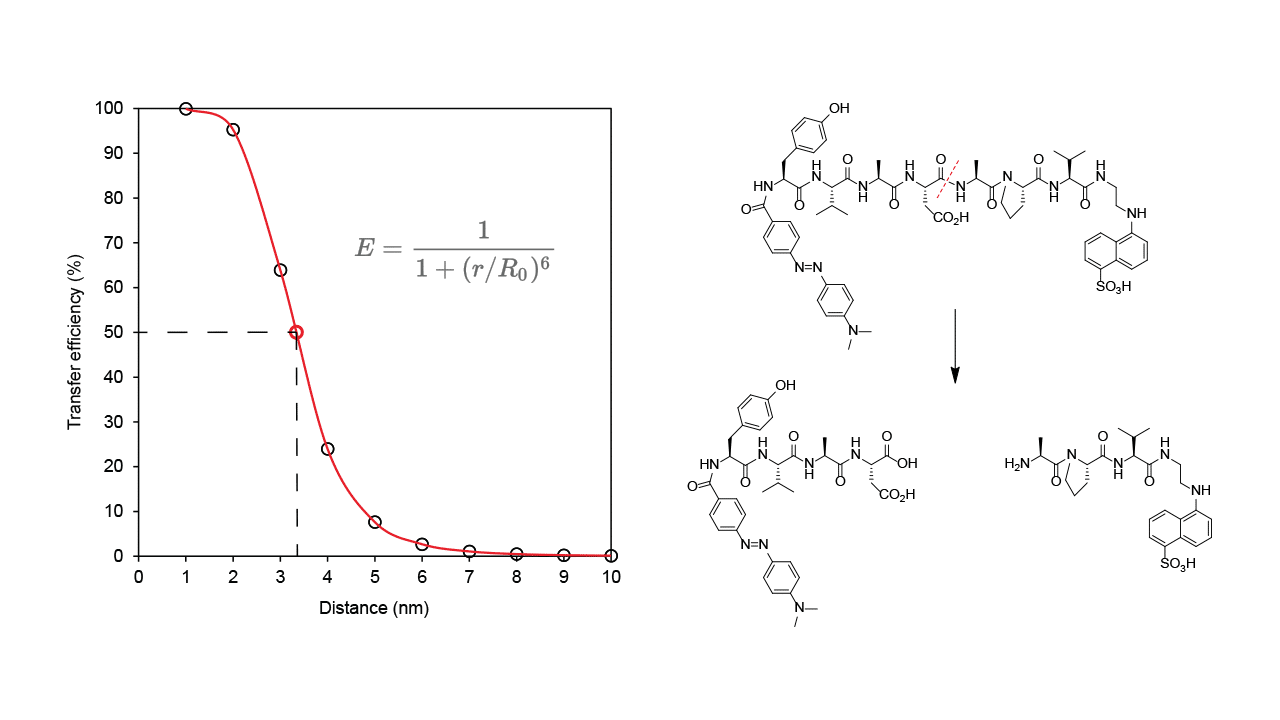
The transferred energy from a fluorescent donor is converted into molecular vibrations if the acceptor is a non-fluorescent dye (quencher). When the FRET is terminated (by separating donor and acceptor), an increase of donor fluorescence can be detected. The design and synthesis work at CPC for FRET and TR-FRET peptide substrates include modification of sequences, selection of donor/quencher pairs, improvement of FRET substrate solubility and quenching efficiency.
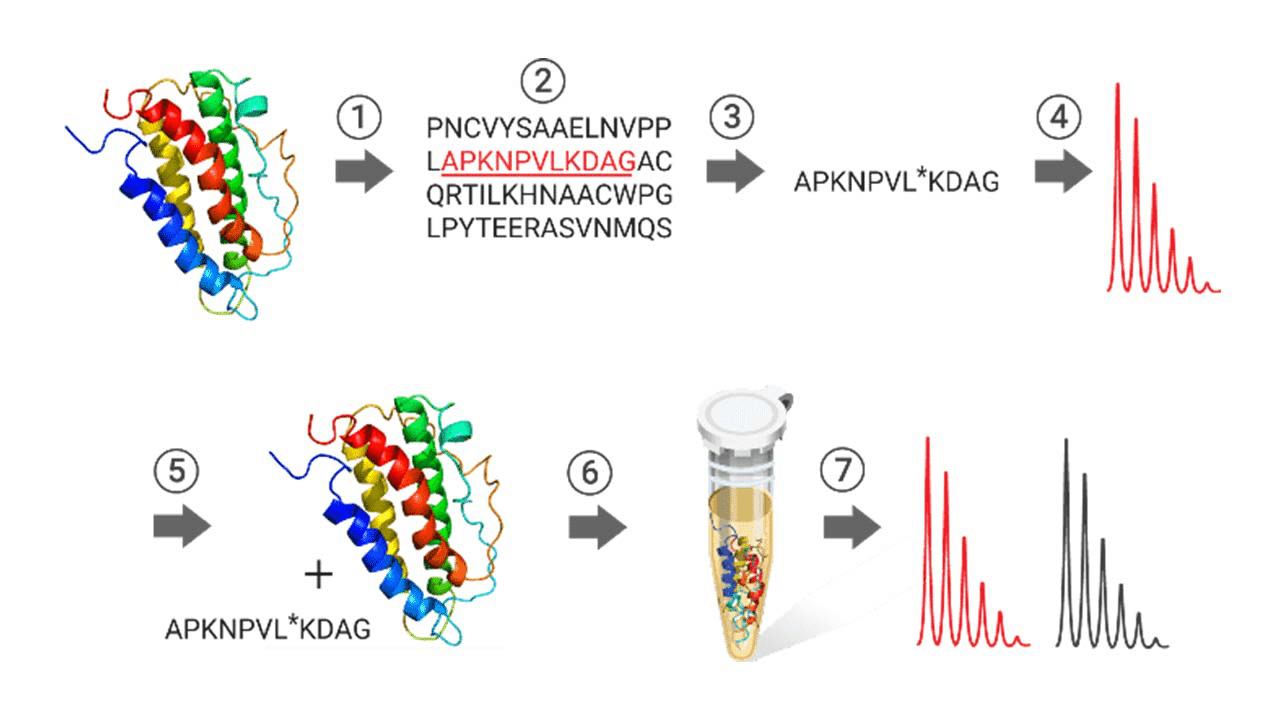
Genomics research shows that more than a million proteins are encoded by approximately 30,000 human genes. Proteomics, the study of proteins encoded by the genome, includes identifying post-translational modifications, structural analyses, protein localization studies, and protein quantitation. Mass spectroscopybased techniques have evolved as a powerful tool in proteomics. Stable isotope-labeled peptides (SIL peptides) are chemically and physically indistinguishable from their endogenous counterparts concerning retention time, ionization efficiency, and fragmentation pathways.
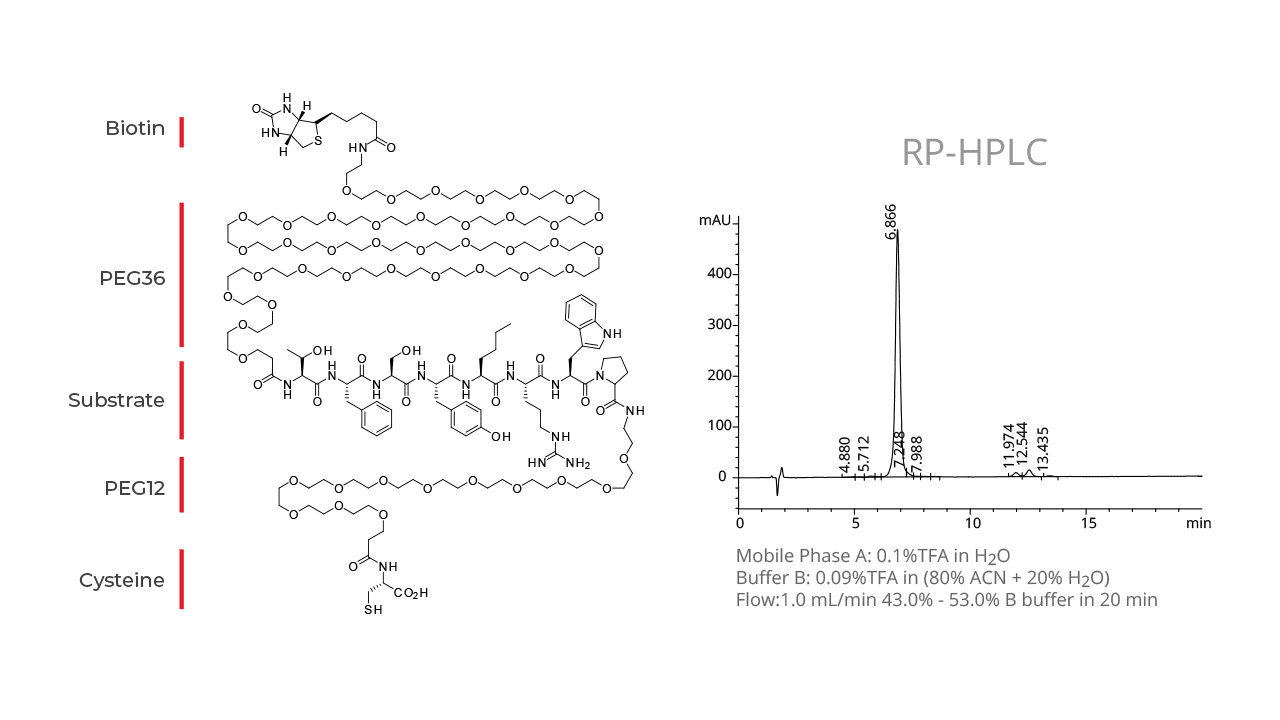
Peptides play a vital role in the pharmaceutical industry and drug therapeutic development; however, their in vivo applications are sometimes limited due to fast degradation by proteases, poor solubility, antigenic responses, and glomerular filtration in the kidney. The covalent attachment of polyethylene glycol (PEG) chains to peptides is one approach that can reduce immunogenicity, improve solubility, and reduce renal clearance.
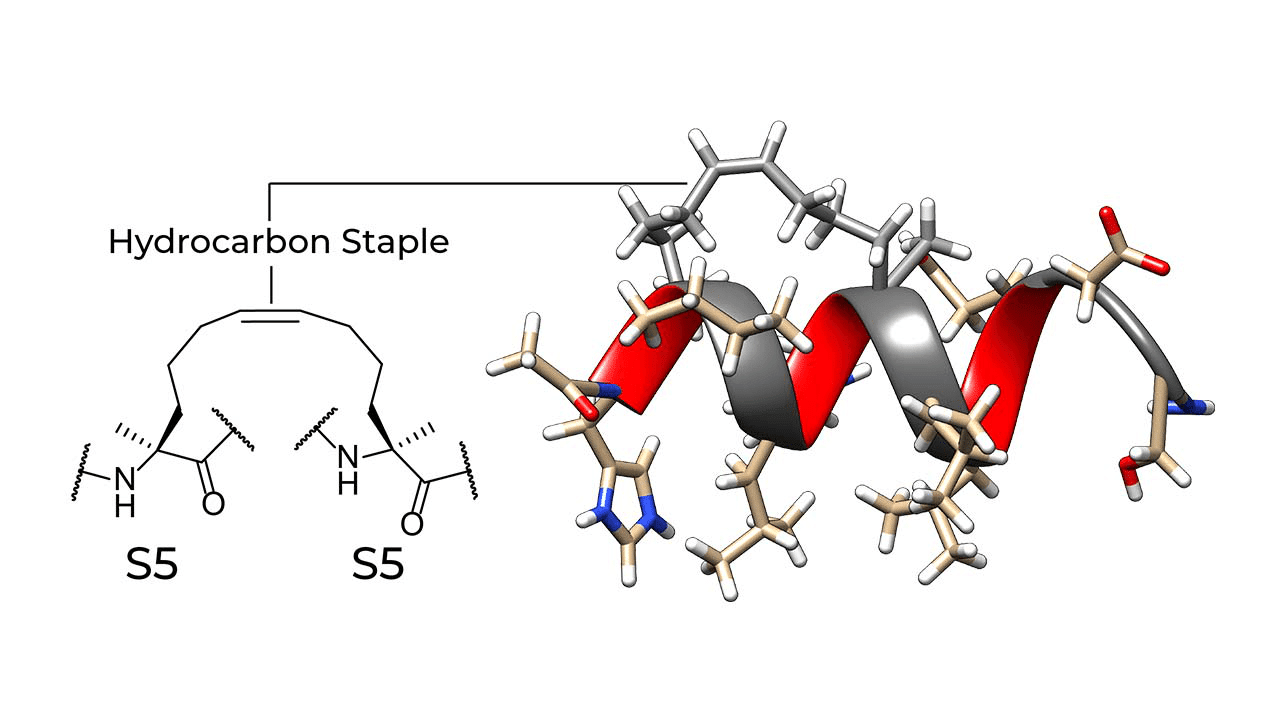
Hydrocarbon-stapled peptides are locked into their bioactive alpha-helical conformation through the site-specific introduction of a chemical brace, an all-hydrocarbon staple. The idea of peptide stapling was introduced to overcome the limitations of two broad classes of therapeutic agents (small molecules and protein biologics) in targeting intracellular protein-protein interactions. Small molecules only work on proteins with a specific surface feature, and most protein biologics do not penetrate cells. Because stapled peptides are locked into a stabilized α-helical structure (the most common element of protein secondary structures), they can easily penetrate cells.
![Locmi-AKH-I, cycloAKH (cyclo[LNFTPNWG]](https://test.cpcscientific.com/wp-content/uploads/2022/05/cyclo-LNFTPNWG-v2-1500sm.png)
Mogford, Jon E., George E. Davis, Steven H. Platts, and Gerald A. Meininger. Circulation research 79, no. 4 (1996): 821-826.
Locmi-AKH-I, cycloAKH (cyclo[LNFTPNWG]

CPC Scientific is pleased to announce and welcome David A. Godkin as VP of Business Operations! David will be responsible for the growth and development of our HR department and facilities management division. He brings 20+ years of experience in human resources and facility operations from the peptide industry. We are confident David will have […]
Bekdemir, Ahmet, Eden EL Tanner, Jesse Kirkpatrick, Ava P. Soleimany, Samir Mitragotri, and Sangeeta N. Bhatia Advanced Healthcare Materials (2022): 2102685.
Peptides [TDN-qFAM, C-(PEG)2-K(CPQ2)-GGGSRPfGG-5FAM] were obtained from Tufts University Peptide Core Facility or CPC Scientific, Inc (USA)